Lisa Robbin Young

Early morning. You roll out of bed, feeling heavier than you did when you went to sleep. You got your 8 hours, but your brain is already racing through the daily to-do's before your feet even hit the floor.

“Let me check my email,” you mutter under your breath. But the thought of doing even that feels exhausting.

On your phone (because you're so "efficient"), you open your calendar and see all the tasks you planned yesterday—and start putting things off. Not because you don’t care, but because your mental energy is already taxed. That important client follow-up gets pushed to “later,” and you justify it:

“I’ll do it after I finish this big project.”

So, you skip breakfast and jump into that project, but your excitement is gone. Questions that used to energize you now feel irritating, and you find yourself thinking, “Why am I even doing this?” Small frustrations feel magnified, and the enthusiasm that once fueled your vision feels muted.

You grab food and eat lunch at your desk to squeeze in another task. Coffee replaces nourishment. A walk or a moment to breathe feels impossible. Energy dips, muscles ache, and your patience thins—yet you keep pushing.

a woman is passed out, head on desk, hot cup of coffee in hand. There are scattered notes, eye glasses, an open laptop, and other items on the desktop.

By early afternoon, even simple decisions feel heavy. Should you reply to that email now or wait? Should you tackle marketing or bookkeeping first? Your mind cycles endlessly, and your usual creative solutions feel out of reach.

Headaches creep in, shoulders tighten, and stomach discomfort reminds you that stress is taking its toll. You notice the small signs, but there’s no time to pause. You push through anyway, hoping it will pass.

"There's too much to do. I'll sleep when I'm dead," you joke.

But that joke's not funny anymore, and you're starting to think you're calling something into existence.

If this feels eerily familiar, you're not alone. What looks like just another day "on your hustle and grind" could also be the red flags of something else that's going to keep you stuck at a plateau indefinitely.

The point where effort stops equaling progress

You’re working harder, thinking you’re “doing what it takes,” but results stall—or worse, regress.

More effort doesn't always leads to more success.

Leaders often focus on enhancing their competencies—skills and knowledge—believing learning more or doing more will solve the problem. Fusion Creatives are known to be "credential collectors". And my neurospicy and multipassionate folks may also find it challenging to accept that knowing more isn't insurance against burnout. In my experience, it can sometimes even hasten the onset!

I kind of blame Einstein for this. He's the one who said we can't solve our problems with the same level of thinking that created them. This leads a lot of people to think that more thinking is the solution.

That only works if you've got the capacity to execute on that new way of thinking!

Capacity development involves building the internal resources to handle complexity and change. Without developing the capacity to manage increased demands, even the most competent leaders can struggle to maintain performance (source).

When your effort outpaces your capacity, you create drag. Systems strain, decision quality drops, and your creativity - the very thing that built your success - gets buried under exhaustion.

Before you know it, effort is outpacing capacity, and your business suffers. Recognizing this early can allow you to course-correct before burnout hits.

Signs that your effort is outpacing your actual capacity

It starts small... procrastination or task avoidance (source)—but then it compounds. Decision fatigue. Emotional friction, self-neglect, and physical fatigue slowly creep in.

Here's another scenario:

A colleague invites you to a connect. You decline. A friend texts to check in. You don’t respond. Engaging socially feels like extra work. Your world narrows to your tasks, leaving less energy for connection.

You feel like you’ve run a marathon in slow motion. Your mind is foggy, and your body aches. Sleep might come tonight, but even rest won’t fully restore you—because the cycle has been building for weeks.

Maybe months.

Mistakes you normally wouldn’t make have slipped through the cracks. Deadlines are missed or postponed. You know you’re capable of more, but your current capacity isn’t enough to support the level of effort you’re putting in. Anxiety creeps in as you think about tomorrow—and the day after.

This is the pattern your business can fall into when effort outpaces capacity. It starts small—a skipped break, a postponed task—but compounds into a full-blown misalignment between energy, attention, and output.

The good news? You don’t have to reach this point.

The relationship between effort and capacity

Many leaders equate increased effort with greater impact, assuming that doing more (working harder or longer) will yield better results. However, this overlooks the importance of aligning effort with capacity.

Without sufficient capacity (resources like time, energy, and money, among others), additional effort can lead to burnout, not to mention losing your effectiveness (source). Success, then is not just a function of effort. It's also a function of the capacity to execute effectively.

Or said differently, your strategy has to match your capacity.

"Success ...is not just a function of effort. It's also a function of the capacity to execute effectively."

- Lisa Robbin Young

More discipline isn't the answer

Look, I get it. When things get stressful, we often look to what we can do to fix things. Because not doing something feels wrong. We've heard "somebody do something" in so many crisis scenarios - in life and on TV - that it has become sort of a cultural default setting.

According to an article in the Harvard Business review, busyness has become some sort of status symbol. The article mentions research report that shows how, in various parts of the world, "people consider those who exert high effort to be 'morally admirable,' regardless of their output." So, this isn't just a U.S. phenomenon.

Why Leaders Often Miss These Patterns:

  • Invisible Cost: It’s hard to see the damage when people are still “showing up.” Mistakes, irritability, exhaustion are gradual.
  • Short-Term Pressure: Quarterly goals, showable metrics, immediate wins get rewarded; long-term health and capacity don’t.
  • Cultural Reinforcement: If everyone else is hustling, not hustling feels risky or lazy. So people conform.
  • Mindset Bias: Leaders (and many high-achievers) internalize an idea that effort should stretch capacity rather than matching to it.

The personal toll it took on me (and how I turned it around)

The past 6 months have been an emotional and physical roller coaster for me. Moving from Bloomington, Indiana to the Pacific Northwest was just the tip of the iceberg. The stress of caregiving for my partner after 4 heart procedures and surgery for cancer was a lot. Oh, and I am filming for a reality show while also trying to find a new editor for said show, because my editor went back to school to pursue an IT degree when federal funding for public media was cut.

Clients don't stop needing support just because things in my life go off the rails. There are still sessions, deliverables, and meetings that have to happen. And they do. And I still have to take care of myself.

Which... to be honest... wasn't happening. I was waking up with a sense of dread - not because I didn't love my work, but because it all felt like too much for one person to carry. I stopped saying yes to social invitations. Me. An extrovert who mostly LOVES being where people are.

That's when I remembered to review my Conditions for Success.

I'd fooled around with this concept in workshops in the past, in a somewhat generic way. There's a sheet in my annual planner where you record the things that help set you up for success. That helps you be intentional about creating an Environment of Empowerment that gives you as many advantages as possible.

Maybe that means starting the morning with coffee in your favorite mug. Or maybe that means getting the right amount of sleep in a bed that's actually comfortable. Whatever those things are for you, document them and start arranging your life to include them.

But this time, instead of just making a quick list, I went deeper. Because I'd seen where this surface-level ideation wasn't always helping my clients. Sure, a good cup of coffee can start you off right, but those effects wear off. What about things that would have more of a lingering effect?

Yes, your environment, but what else?

Turns out, your Conditions for Success aren’t just about energy, tools, or mindset—they include the world you choose to live and work in. Sometimes, the smartest move isn’t more effort, it’s moving toward contexts that naturally amplify your zone of genius or your ability to find success for yourself or your work.

In my exploration and research, I've identified 7 domains that range from the highly personal (that we can control) to the more global (where we have minimal individual influence).

  • Core Domains, which revolve around Identity and Purpose.
  • Personal Domains, which concern your physical, mental, emotional, and cognitive conditions.
  • Operational Domains, which are about your work environment, tools, resources, and logistics.
  • Relational/Social Domains, that deal with interactions with other people.
  • Capital Domains, which deal with interactions with institutions (like financial or legal).
  • Systemic/Macro Domains, think: industry trends, political environments, and cultural norms.

In all, there are about 25 different things inside these 7 domains to consider in your Conditions for Success. Even though you can't control or directly influence all of them, awareness that they even exist gives you the ability to better design your Conditions for Success.

By assessing your 7 Domains, you can identify where effort is exceeding capacity and course-correct before burnout, inefficiency, or frustration take hold.

What Changes When You’re Operating in Full Alignment

When you operate in full alignment - meaning your values, goals, energy, resources, and client work are all moving in sync - a number of shifts happen. These changes are often subtle at first but become deeply impactful over time, both internally (how you feel, how the team functions) and externally (client results, reputation, growth).

When your values and purpose are aligned, leaders report much greater clarity. Decisions become easier because they have a filter: does this align with what I care about? What I stand for?(source) You waste less time on deliberation - playing “should I or shouldn't I?” - because you have internal criteria for what fits.

Doing work that aligns with your values ignites intrinsic motivation — doing things because they matter, not just for money or recognition (though, that's great, too!). That gives you the ability to stick with things when it gets hard.

When your work, your client relationships, and your schedule all align with your values and capacity, you reduce internal friction. You tend to take more sustainable care of yourself: rest, breaks, saying “no” more often (because misalignment often forces those to fall by the wayside). Full alignment supports self-care, which helps you replenish your capacity (source).

Being aligned means you're more likely to show up as your true self. That builds credibility. Teams, clients, collaborators sense authenticity, and trust increases. when you are clear about your values, your way of working, and your goals, you attract clients who match (source). That means fewer misalignments over deliverables or expectations. Relationships become more collaborative and less draining.

That’s exactly what the Conditions for Success workshop will help you do: spot the gaps, understand the root causes, and create a plan to work smarter, not harder.

Immediate Action: Hit the “Reset & Reprioritize” Pause

Give yourself the gift of commitment to YOU. Set aside a minimum of 15 minutes in your weekly calendar. Treat this pause like a meeting with your most important client - you (or your business). Honor this commitment as best as you can.

Review your tasks and calendar commitments for the urgent and the important. What tasks are sucking up energy without delivering proportional value (busy work, low-leverage admin, etc.)? Be ruthless. Especially if you've got extra capacity constraints, it's important to focus your resources on the items you know are the most impactful and require the fewest resources. I call this HI-MR-C. You can see it in action in my One Move That Matters for Greater Visibility workbook. While that version is for your visibility efforts, the concept applies to any situation where you need to invest limited resources and need a positive return on that investment. So, really, anywhere. Focus, as much as you are able, on things that are high impact that also require the fewest resources.

Will other things slip onto your radar? Probably.

Sometimes you'll need all your spoons for something unexpected. That doesn't mean throw out your regular plan, it just means pause it, for now. Set a boundary to protect your capacity as you are able. And give yourself recovery time - even something small like a 5-minute reflection, stretching, or journaling.

Humans are not machines. We are not always predictable nor are we always built to be efficient. We are complex organisms, functioning inside a complex ecosystem. Hijinks will ensue.

-Lisa Robbin Young

Notice, I keep saying "as you are able" - because our capacity to "do" varies from day to day. Society wants us to believe something very different than that.

Why?

It's called the Capitalist "machine" for a reason. Machines are often predictable and built to be efficient, so creating metrics around "machine-like precision" are very attractive. But they also set up the very unrealistic expectations that underpin many of the problems with Capitalism.

Humans are not machines. We are not always predictable nor are we always built to be efficient. We are complex organisms, functioning inside a complex ecosystem. Hijinks will ensue.

The goal then, isn't to eliminate the complexity so much as to work with it. To have a strategy that matches the flexing capacity of our very human nature.

Make the commitment to take time for yourself... even small "stolen" moments make a difference and help build momentum. Over time, as your alignment improves, you'll find yourself "finding" more time and adjusting your capacity. Maybe even growing it.

But for now, awareness is a good place to start.


My latest workshop, Conditions For Success: The 7 Domains That Shape Sustainable Growth is happening Friday, November 7 at 11am Pacific US Time (2pm Eastern). It's free to all members of the Rising Tide community. Not a member? That's also free (for now)! Get signed up and save your spot!

I've been looking for reminders lately.

Things that remind me who I really am... who I really WANT to be in the world.

That happens sometimes when you start questioning everything. When everything starts to feel unsteady, uncertain, unsure.

Two things from my annual Creative Freedom retreat this year keep coming back to me.

​The SWOT Analysis​ - where several folks listed the outcome of this year's election as a potential threat to their business - and the reminder I shared with everyone on repeat:

Remember who you are.

When the world is off-kilter, dangerous, and hard to take...

Remember who you are.

Stand moored. Resolute in what it is that you stand for, what you believe in, and what you're about in this world.

Remember who you are.

Don't let the "slings and arrows of outrageous fortune" take you out of the race.

Remember who you are.

Gird your loins, light your torch.

Remember who you are.

Mount your horse, draw your bow, raise your shield.

Remember who you are.

Sing your song. Create your art. Dance your dance. Speak your mind.

Remember who you are.

Protect your peace. Honor your boundaries. Rest. Then RISE.

Remember who you are.

Don't let the bastards get you down.

Remember who you are.

I wasn't trying to wax poetic when I started this. I was actually trying to get you to think more about who you are. What YOU stand for. What you WON'T stand for. Where do you draw those lines in the sand?

Believe it or not, those are important questions for your business, too. I'll share more tomorrow, but for now...

Remember who you are.

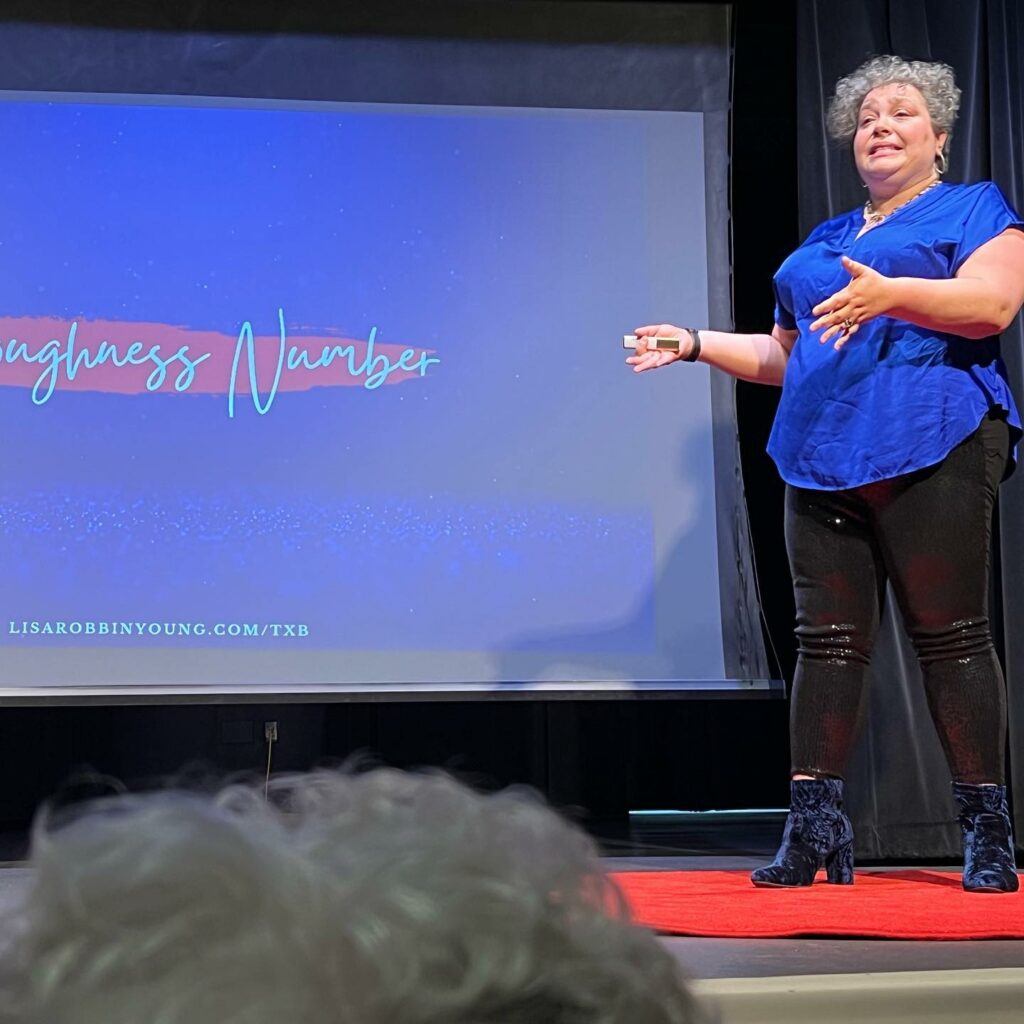
At the end of March, I had the honor of speaking at the TEDxBloomington Salon and it was amazing.

Salons are generally smaller scale TED-style events that are locally curated, like any TEDx event. Unlike a larger, full-day event where the talks can range pretty widely, Salons are generally on a more focused topic. Our topic was (sustain)ABILITY.
The theme still lends itself to some pretty wide-ranging topics, including a sonnet on sustainability, the importance of preserving indigenous language for future generations (and the tech to make it accessible to everyone), how kindness and generosity can sustain us, the 3 steps to find healing in business, and more. I look forward to sharing the talks once they're all uploaded, but for now, I can share my talk on How the Marginalization Tax impacts finding Enoughness for micro businesses. You can also access the bonus resources for my TEDx talk here.

My life is a paradox. As a business coach and entrepreneur, I rely on Capitalism to keep food on the table. And I help my clients to do the same. But as a human being, I also rail against what it seems like Capitalism has become: a money-grubbing, soul-crushing free-for-all for the wealthy elite that would rather leave our big blue marble than invest in healing, protecting, and sustaining it.

About 40% of my clients are multiply marginalized, many with a chronic illness, disability, or other capacity-limiting constraints that have essentially forced them to leave traditional employment and go out on their own because it works for how they're built. Forced, because capitalism asks more of us than we can consistently give, and no one feels this quite as much as the marginalized people of the world.

Entrepreneurship then, becomes a way for them to "leverage" the capacity they DO have - but not everyone is equipped to meet the challenges of entrepreneurship.

The incessant invitation to grow for growth's sake is a siren's song that hypnotizes entrepreneurs into the trap of adding one more zero to our revenue… and then another… and then another. But that "MORE" doesn't include room for things like more rest, more play, more ease - unless you hustle your face off first. There's this persistent myth that if you just work hard enough long enough and do your best, you'll make it to that "some day" where you can retire in style.

But Capitalism asks for more than many of us can give. And it has a bad habit of moving the goal posts on us.

With so many companies shooting for the moon - both literally and figuratively, this incessant drive for "More" isn't a sustainable path. How do we find the sustainable path in business? We strive for Enoughness instead.

When we look to nature, a cactus can thrive on very little water and a lot of sun. That is Enoughness for the cactus. If you flood the desert, the cactus rots. If you take away the sun, the cactus starves.

So Enoughness looks different in different situations.

For the folks that I work with, Enoughness is a result of building a business that works for their unique situation.

They are not corporate behemoths. They are parents, artists, travelers, authors, healers, activists, and more. They want a living wage that allows them to retire a spouse or provide for their families, and be able to enjoy the fruits of their labors - even when Capitalism tries to ask more of them than they can give on their own.
For years, I've taught what I call your Enoughness Number. It's essentially the revenue your business needs to bring in on an annual basis in order to have an experience of Enoughness. Not excessive, but appropriate. Not just subsisting, like so many marginalized folks do, but thriving.

But then one of my non-normative clients pointed out that I had not taken into account the additional resources required to navigate a world that asks more of you than you can give. We dubbed this added cost The Marginalization Tax.

At that time I was still under the spell of meritocracy. Just work harder. Keep working, and eventually you'll get there…. however long THAT is. I had always been able to keep working… until the day I needed back surgery. For eleven days I was unable to walk, stand, or otherwise move my body without substantial pain and significant help.

I was lucky I had help at home and owned my own business. If I'd been in a traditional job, I probably would have been fired or forced to use all my time off. And then where would I be for the rest of the year?

This tax is a spectrum of disadvantage based on a number of things like skin color, religion, gender expression, geography, age, body shape, economic status, social status, and basically any circumstance where there's a power imbalance that puts one group of people at an advantage to the detriment of others.
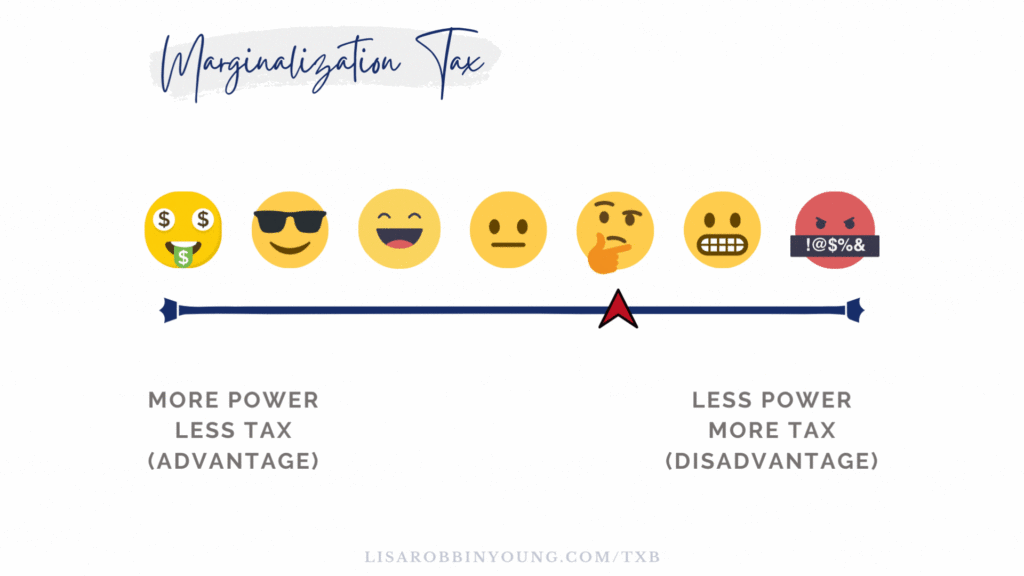
For example (and this isn't exhaustive, but you'll get the idea): I'm a cis, straight, neurodivergent, mixed-race, black woman that presents as white and able-bodied. I'm almost 50 and my body shape is not the socially accepted norm. I have a mix of privilege and disadvantage that impacts the resources I need. The more resources I need, the greater the marginalization tax I pay to participate in this world.

So let's look at what Enoughness looks like both with and without the Marginalization Tax applied so you can see how this works.

First, what are your total living expenses? Let's say $60k

Now add to that your growth. Maybe you've got a nice-to-have or a want that you'd like to see happen in the next year. That's your take-home pay requirement.

If you're a business owner, on top of your take home pay, what are the other "living expenses" of your business?

Then add your business growth to that. Maybe you want to launch a new offer and need to invest in infrastructure or support. Put it in your total.

Now add all that up and add a 10% cushion for unplanned surprises. They happen.

That's already a large number for a small business.

But, now we add the Marginalization Tax.

Based on where you fall on the spectrum, this could be anywhere from zero to as much as 50% of the total. Think that's steep? According to a 2021 report from the national women's law center, black women make a million dollars less over their career than white men. That's 37% less. That is the Marginalization Tax in action.
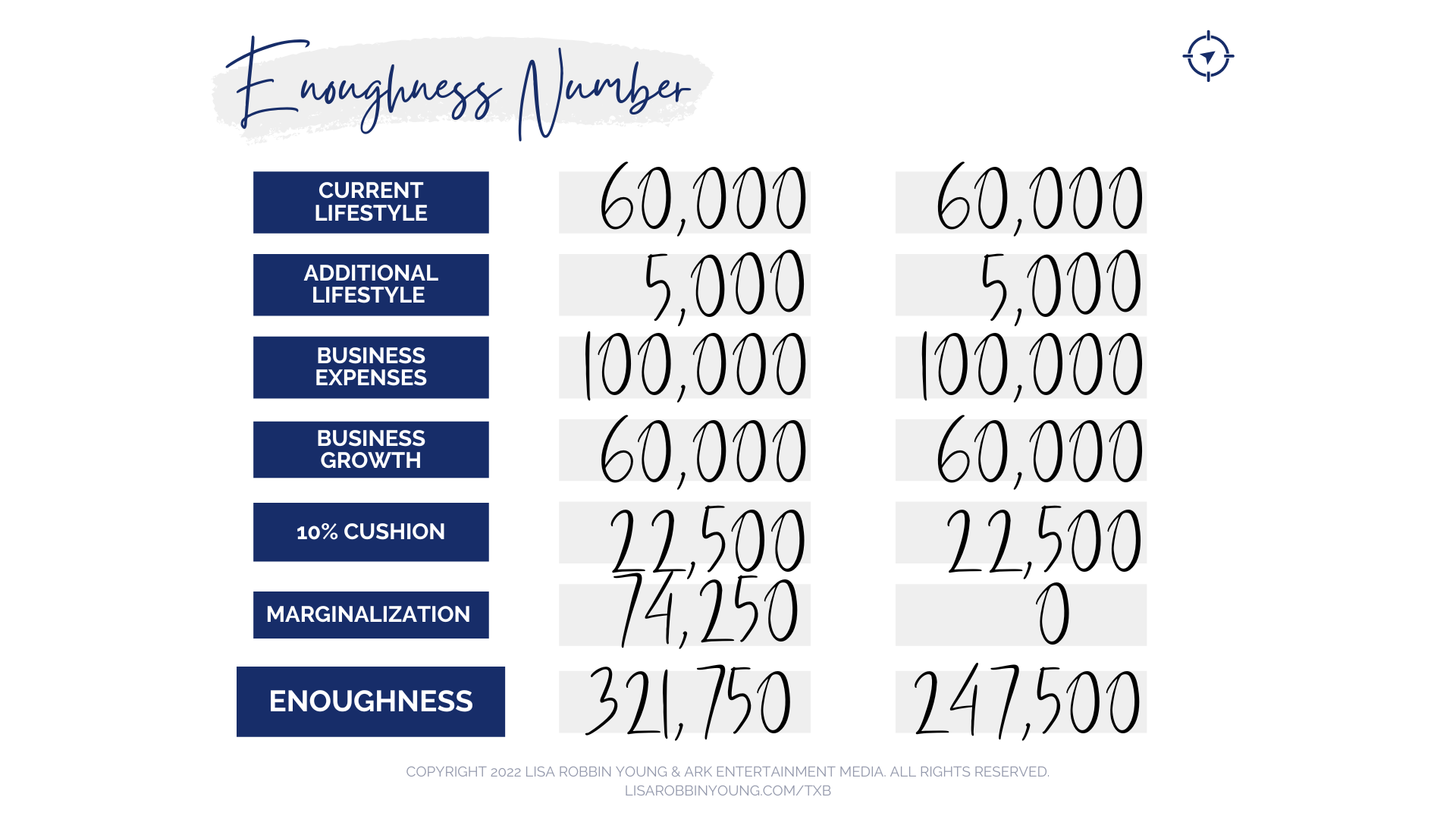
So we total this all up and there it is - one Enoughness Number that's drastically different than it would be if you didn't have to pay this tax.

Unlike the taxes you pay to your government each year, the bill for the Marginalization Tax comes due each day. This weekend my husband bought some cookies for $4. But I can't eat those cookies because some of the ingredients will hurt me. If I wanted to have a comparable amount of cookies that I can eat, I'd have to pay nearly 3 times as much - or I could spend just a few dollars more for all the ingredients and make them myself. Which would take an additional 45 minutes out of my day.

He can just open a package of cookies and go to town! The Marginalization Tax means I pay significantly more either in time or money - resources I may or may not have - just to enjoy a cookie.

Now you might say, "But Lisa, that's a cookie. A treat. You don't NEED a cookie. You can live without a cookie."

Yes, but why should I have to settle for less just because my body is built differently than yours?

But, let's say you're right and look at another case: One of my clients applied for medical disability long before we started working together. She had a profitable business that she'd built around her chronic illness which was so severe and variable that she never knew what her capacity to work would be like from one day to the next. Once she got approved for disability, she shut it all down. She said to me, "I can't jeopardize my disability payments. What if I go off disability and then my business has a down year? I'll have to re-apply and go through all of this all over again - and I might not survive!"

I don't blame her for wanting to protect herself and know that she can survive in a world that makes it hard for her to just exist. I blame the system where the deck is stacked against some of us and not others. That is the impact of the Marginalization Tax.

Everyone should be able to experience enoughness - a fully belly, a warm bed, and the safety of knowing they have what they need to thrive. There's certainly plenty on this planet to make it possible. But the playing field isn't level. What's worse, Capitalism keeps moving the goal posts.

But I believe that the best way to change a system is from the inside. That's why I'm a business owner. That's why I help other business owners - who aren't trying to hustle their face off to be a squijillionaire. They just want to find the balance that allows them to be paid well, within their capacity constraints, and have the time and energy to enjoy the fruits of their labors.

We don't need more rockets into space. We need more business owners striving for Enoughness for everyone.

When we have Enoughness it's… well, it's enough.

Like I said, it's a paradox.

Photo by Burst from Pexels

When you started your business, it was probably pretty simple to handle everything on your own. You wore all the hats and maybe even wore them most of the time, because it was just you.

As your business expands, things often get more complicated. Now, wearing all the hats means you have no time to have a life! You might find that you're unable to keep up with everything like you once did.

Been there, done that!

Whether you're looking at delegating to other team members or automating a few things to relieve the pressure valve, you're going to need help to advance your company. Here are a few telltale signs that your home business has grown to the point where it needs to be more than just you.

You're Working More Hours Than You Expected 

It could be a sign that your home business is growing too big for just you if you find yourself working longer hours than you had planned. This could indicate that you are struggling to meet demand or that you just don't have enough time in the day to do everything that needs to be done. For instance, it can be a hint that you need assistance if you are spending more time handling administrative duties or customer service requests than actively operating the business.

Your Income Has Significantly Increased

Another sign that your firm is expanding and will need more resources is when you have observed a sustained and significant increase in revenue. Having additional help isn't free. You need to be able to financially sustain the help you're trying to hire. Once the income is there, hiring help can let you focus on other areas of running a successful business while also ensuring that all chores are handled effectively.

You're Wearing Too Many Hats 

If you've already got some help, but still find that you are doing too much work that's outside your zone of genius, it may be a sign that you need more assistance. Although many business owners find this to be a challenging transition, it is crucial for the expansion and success of your home business. Hiring a specialist or a service provider like a VA agency like MyVA.Rocks or a marketing firm like Adtaxi could help with this. 

You Have More Clients Than You Can Handle On Your Own

The expectations of your company will rise along with the number of customers. It could be time to consider hiring someone else who can help fulfil demand if you discover that there aren't enough hours in the day to meet all of the demands of your customers. You might require someone to manage customer support or to contribute to further product development, for instance.

Keeping Up With New Tech Is Stressing You Out

Finally, it could be time to make an investment in someone who can help manage this part of your organization if you notice that you are lagging behind on new technology and trends. Hiring a specialist in this area could make the difference between staying ahead or falling behind as staying ahead of the competition is vital for the growth of any firm. Hiring a social media expert, for instance, might help your business stay competitive if you find it difficult to keep up with the most recent developments in online marketing.

It could be a good idea to start thinking about employing extra workers to help operate your home business if any of these symptoms sound familiar. For your company to continue to succeed and keep up with demand, you must ensure that you have enough resources available. The most crucial thing is to choose carefully - but CHOOSE before it's too late. Preventative measures taken now can spare your company a lot of trouble in the future. Find someone with the abilities to support the success of your company by doing your homework!

There are a lot of things that go into being a successful entrepreneur. Time management. Organizational skills. Being able to make confident decisions under pressure. Your self-improvement work never really ends. Someone once said that entrepreneurship is one of the toughest personal development programs in the world, and I don't think they were wrong.

While it seems a little obvious to work on your so-called "weaknesses", most of the time it's actually better to stay in your zone of excellence and continue to refine your life and work there. But sometimes, when we get stuck, we need to look at those challenge areas in order to break through an old pattern or habit and continue to progress. Here are a few places to look:

Photo: Pexels.com - The Lazy Artist Gallery

1) Personal Growth

Making a plan and setting aside consistent time to work on improving yourself both mentally and physically is a simple place to start. It can be anything from reading self-help books or blogs, working out, meditating, or attending workshops and seminars. What helps you grow as a person will likely also help you grow as an entrepreneur. Remember: when you're a solopreneur, problems in your business often create problems in your life and vice versa. When you are consistently working on becoming a better version of yourself, it will show in your life and work.

If you want to focus on personal growth, there are a few key areas you should concentrate on. When I work with my clients to help them build annual plans, we talk about fitness in terms of what's in the container (that is, your body) and what's being contained within that container (your energy, spirit, etc.). Things like this:

– Mental Health: Make sure to take care of your mental health! Entrepreneurship can be a very stressful journey, so it is essential to find ways to relax and de-stress. What does your mind need to feel nourished, fulfilled, and challenged appropriately?

– Physical Health: Just as important as mental health is physical health! When you are physically healthy and have lots of energy, it will show in your work. What are you doing to help keep your container healthy and well so it can hold all your awesomeness for years to come?

– Emotional Intelligence: One of the most essential skills for entrepreneurs is emotional intelligence. This means being able to understand and navigate your emotions, as well as those of others. This may look like planning time away, deepening your connections with others, or letting go of some relationships in order to set, and honor your boundaries.

2) Education

Another great way to better yourself as an entrepreneur is to focus on education. This doesn’t necessarily mean going back to school, although that is an option. There are plenty of other ways to continue learning and growing as a business person. You can read blogs and books on entrepreneurship, attend seminars workshops for business owners. You can do courses specifically to hone your craft, get a specialty certification (AtHomePrep is one example) or to improve your business skills. You can even turn your car into a mobile classroom by listening to business podcasts. The important thing is that you are regularly learning new things and growing your knowledge base. In business, if you're not learning, you're falling behind.

This isn't just an invitation to read or take classes. Education comes in a variety of ways:

  • You can educate yourself by connecting with other smart and talented people. Mastermind groups, networking or other social events, and virtual coffee dates help you expand your circle so that you're not always the smartest person in the room. Being in relationship with other entrepreneurs - especially folks who aren't in the same industry as you - helps broaden your horizons and shorten your learning curve.
  • Get some culture! Attending events, concerts, and even watching movies can connect new neural pathways in your brain and help you get new perspectives in your life and work. One of the most impactful books I ever read was a book I learned about because of a heavy metal music video. I'm not much of a heavy metal listener, but that video pointed me to that book, and my life was forever changed.

These are just a few ways you can better yourself as an entrepreneur. If you want to be successful in business, it is essential to focus on personal growth, education, and expanding your horizons through connecting with others. Need some support? Depending on where you're at in business, the Creative Freedom Incubator or my Star Power program may be exactly what you're looking for. Both are open for enrollment and have limited capacity. You can also dip your toe into an upcoming workshop to learn more!
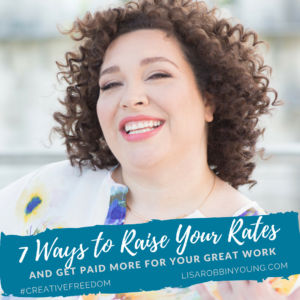
This is Season Four, Episode Six. This is the next logical step after our last episode. Once you get clear that it's time to raise your rates, how, exactly do you go about raising them? Have a listen to this week's episode, where I walk you through a few different approaches, from the basic, Nike approach (just DO it already!) to the "Tuna Can" approach and more. This is the fifth episode in a series about overcoming underearning.

Speaking of which, my program Overcoming Underearning for Creative Entrepreneurs is now open. If you need support in owning the value you bring to the marketplace, and adjusting your prices accordingly join us! Students are already reporting positive results!

Download Season 4 Episode 6 | iTunes | Anchor | Stitcher

If you’re listening to just the podcast, you’re only getting about a third of the deal. Catch the Creative Freedom web series or join me on Facebook on Fridays at 5:30pm Central time for a LIVE Q&A about the week's topic.

Show Notes

4:22 - Several options to raise rates with existing clients

10:23 - 2 of the 4 big questions every offer needs to answer (and why it matters to your pricing)

14:26 - How one coach cut her content in half and doubled her rates, effectively quadrupling her hourly rate.

21:26 - DIY, DWY, DFY - and how I use these tiers in my own business

Rising Tide Members

Not a member yet? It's free! Click here to join our Rising Tide to get email updates, transcripts, and bonus downloadables only available to members.

Credits & Sponsors

Mentioned in this episode:

Music: "Welcome to the Show" by Kevin MacLeod
Licensed under Creative Commons: By Attribution 3.0

Are you being a doormat in your business?

Do you constantly put everyone else's needs ahead of your own?

If so, you're not alone. This week, we're focusing on one way to mitigate the 5 core symptoms of underearning: learning how to say "no" with class and authenticity. This is the third in a series of videos this summer about overcoming the cycle of underearning.

As a mom and recovering pleaser, I have struggled with this issue personally for YEARS. This week's episode shares some examples and word choices you can swipe to help you practice saying "no" with class and confidence before the moment strikes. I also share an important warning about the tricky way your "no" can turn into an unwanted "yes" or a straight-up lie if you're not careful.

How do you handle saying "no" and setting healthy boundaries?

Share your thoughts and ideas in the comments. Your insights may spark a conversation that helps someone else!

Mentioned in this episode:

Rising Tide Members

If you haven't already accessed this week's bonus content, you'll want to do that here. Not a member yet? It's free! When you register for email updates, you also get access to episode transcripts, worksheets, and other downloadables!

Credits and Sponsors

Fashion jewelry from Kerianne at FancyBargain.com. Tell her you saw her bling on Creative Freedom!

Video clip/song: "Yes" by LMFAO

Music: "Welcome to the Show" by Kevin MacLeod
Licensed under Creative Commons: By Attribution 3.0
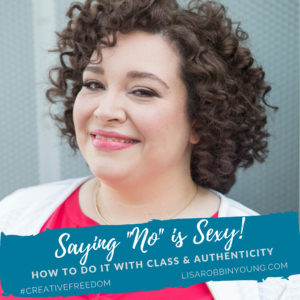
This is Season Four, Episode Four. Where we talk about how to say "no" with class and authenticity. Got someone who wants to pick your brain, ask you for a discount, or - GASP! - work for exposure? Need a classy way to say "um, no thanks!" without burning bridges or sounding like a jerk? You need this episode!

Being a doormat in your business sucks, quite frankly. It's also potentially a sign of co-dependence, which is one of our 5 Symptoms of Underearning. If you're saying yes to everyone and everything except yourself, it's time to re-wire your brain. Saying "no" is sexy, y'all, and today, I'm sharing tips to help you say it with class & authenticity. This is the third episode in a Summer-long series that deals with different aspects and triggers for underearning.

Need help with that whole "re-wiring" thang? Look no further than Overcoming Underearning for Creative Entrepreneurs. In just 5-weeks, you could build the clarity, confidence, and courage you need to finally beat the cycle of underearning once and for all. Plus, you get individualized email support throughout the program, so you're never alone in this journey.

Download Season 4 Episode 4  | iTunes | Anchor | Stitcher

If you’re listening to just the podcast, you’re only getting about a third of the deal. Catch the Creative Freedom web series or join me on Facebook on Fridays at 5:30pm Central time for a LIVE Q&A about the week's topic.

Show Notes

3:08 - The alternative to the vicious cycle of deadbeat clients and doing work you hate.

04:32 - The "Beef Stew" problem that shows up when you don't stand your ground and say "no".

9:00 - The importance of honoring boundaries

12:06 - What to say when someone is trying to talk you down on your rates

16:00 - The importance of saying "no" and trusting others to do their own work.

19:16 - The greatest lesson my Mom ever taught me.

24:03 - What happens when the desire to "not lose" ruins your plan to succeed (and how to fix it)

Rising Tide Members

Still trying to decide what to say yes to, and what to say no to? There's an exercise in the Rising Tide this week for you to try.
Not a member? It's free! Click here to join our Rising Tide to get email updates, transcripts, and bonus downloadables only available to members.

Credits & Sponsors

Mentioned in this episode:

  • Overcoming Underearning - our 5-week program to help you unpack your old money stories, create new ones, and build a solid financial foundation.

Music: "Welcome to the Show" by Kevin MacLeod
Licensed under Creative Commons: By Attribution 3.0

No sooner had I finished my lunch when the phone rang. It was my oldest.

"Hey, are you okay?"

"Not really, Mom. Aunt Dian died."

Less than an hour later, I was on the road to Michigan. 9 hours later, I'm crashing at my ex-husband's house for the night. That meant I wasn't able to have any studio recording time this week to film new episodes of Creative Freedom for you.

And that turned out to be an important business lesson I didn't want you to miss.

Life Happens: How do you handle it?

People are born. People die. Stuff happens in "the in between years." You leave a thumbprint on the lives of many people in those years.

As a creative entrepreneur, our work is often an extension of who we are. It's not like you can put it on the shelf at 5pm and call it a day. It follows you everywhere, like a toddler who just wants more Mommy time. It wakes you from sleep. It keeps you up at night.

So it can be hard to really step back and NOT work on your business in some form or another.

In theory, I suppose you could say that we never REALLY step away, since inspiration is everywhere. But taking an intentional break is important to restore your spirit. ESPECIALLY if someone close to you has died.

This week's Special Edition episode is me, after a good bout of ugly crying, explaining why I'm taking a short hiatus.

Taking a break is good for business

Taking a hiatus is a great way to get a fresh perspective. I was already planning changes and updates to the Incubator, A-Club, and my coaching program, but hadn't had the bandwidth to really consider how I wanted to handle it. This time away frees up my brain to work on all the "back burner" stuff that's been marinating. And the best part is that my brain handles that without my intervention. I can be focused on my family, my own self-care, and just being present to the grief and mourning that I need to process.

Even when you're not grieving, a hiatus can be helpful to clear your head and give you a fresh perspective on your life. Unlike a day off, a vacation or a retreat, this is an intentional abstention from work-related activities for an extended period of time - usually longer than 2 weeks. Television shows have an "off season" when they are on hiatus. It gives the writers a chance to prepare new content and the actors a chance to get away and focus on other projects. That's what this is, only much shorter.

You won't see me on social media much. There won't be any new blog posts, and the newsletter probably won't go out - any training you've signed u for will still go out as scheduled, and you can still take the free quiz and get your results right away. And I'm still here, I'm just taking a big step back for a couple of weeks while my heart heals.

But I'll be back, so if you've got a question you'd like to see me answer, contact me and let's add it to the list. In the meantime, hug your loved ones. In the end, they're everything.

How is it that one creative entrepreneur can have "instant success" while another puts in years of effort with little financial success to show for it?

If that's a question you've ever asked yourself, you're gonna LOVE this week's episode! I've talked at length before about the myth of the big break, and the myth of "overnight success". I'll probably talk more about it in the future, too. There are different definitions of success, however, so let me be clear. Today I'm talking about financial success.

You can put in way more than 10,000 hours toward your craft and still not be financially successful. Even if those hours are "deliberate practice," there are a series of steps every creative entrepreneur must go through in order to turn their craft into a well-paying career. There are lots of options at each of those steps, so what you choose will likely look different than anybody else, but the steps themselves are static. Meaning, you can't achieve financial success until you accomplish these three things. Let Peter Gabriel, Dale Chihuly, Danny DeVito, and Thomas Kinkade illustrate:

The 3 Stages of Business Growth For Creative Entrepreneurs

This is one of the most interesting take-aways from the work I'm doing for my upcoming book. Every creative entrepreneur that finds financial success goes through these three stages of business growth. Every single one of them. Some move quickly from one stage to the next, while others struggle for a while at one stage or another. But every one of the creatives I've interviewed or researched (again, I say, EVERY ONE OF THEM) went through these three stages to achieve the financial success they desired.

Stage One: Find your real offer

What's that thing that you do best? Not "better than everyone else," though that can help set you apart faster. More like "better than anyone else in your circle of influence." You're not looking for the thing that only you can do. If you have that, cool, but so many creatives get hung up on being completely unique. It's actually better and easier to find the thing you do really well - even if someone else does it, too. Because then you can put your twist on it and still give people a point of reference. The point of reference makes it easier for people to relate to you. Being completely unique requires a lot of extra time and energy to educate your potential audience. Being similar, but different, makes it easier for people to "get" you.

Plus, when you're similar, but different, it helps colleagues and collaborators work with you, refer to you, and spread the word about your awesomeness. You're no longer an army of one, trying to do it all yourself. Instead, you've got a growing network of people that know you, like, you, and trust you, that want to collaborate, rather than compete with you. Collaboration makes almost everything easier, because you can share the load... something most creatives have a hard time doing, but when they do it, the rewards are often exponential.

Stage Two: Find your real audience

While it's fun to create for yourself, it's hard to make a living if you're not also creating for an audience. That doesn't mean selling your soul, being a "sell out", or taking on clients just because you need cash. Instead, it means interacting with your fans and followers, hearing their feedback, and responding to your audience in a way that works for you. It means cultivating relationships with people who appreciate the work you're already doing, want to see more of it in the world, and are willing to invest in your Great Work.

My first newsletter went out to 7 people, and I know at least one of those people is still on my list, some 10 years later. We've emailed, chatted on Facebook, and she's purchased from me a time or two. When she has something to say, I listen. I don't always agree, and I am still able to respect her thoughts and ideas. Sometimes I use them, sometimes I don't. I maintain creative control of my work, and I am not so arrogant as to think that my way is the only way.

Listening and responding to your audience isn't selling out, it's an act of courage that helps your business grow. (Tweet this!)

Stage Three: The right balance of systems and support

If I've learned anything working with clients in my Incubator program, it's that different creative entrepreneurs need different kinds of support. Some need very specific, detailed, step-by-step instructions, while others can do big things with a rough overview. One of my clients launched an online school (with two courses!) in less than a day, while another took weeks to build and implement a single marketing tactic. While the kind and amount of support you need may be different from the creative entrepreneur next door, you'll still need SOME kind of systems and support. Most of us need an email system. Most of us need some kind of time management and planning tools. You might need marketing support, or customer service support from salesforce admin, or social media support. The key here is to uncover what you really need and get it handled without over-systematizing.

Believe it or not, too many systems can be a bad thing, and yes, you can try to systematize too soon. I see it all the time. Systems and supports are meant to smooth things out. Yes, they can be bumpy at first, while you're ramping up, but if your systems and supports are slowing you down unnecessarily, then you've got too many - which can cause your business to struggle in an entirely different way.

Consider this your 3-year plan

It takes about a year of concerted effort to handle each of these. A year to hone your offer, a year to build your audience, and a year to get the right balance of systems and support. Can you shorten this time frame? Sure. Linears tend to over-systematize, Chaotics tend to be more focused on their offer, and Fusions tend to obsess over their audience (take the quiz to determine your type). If you can get out of your own head, or if you've got a team or a coach to turn to with expertise in these areas, you can shorten that window to as little as a year, maybe less. That also means a lot of hustle. Not everyone is cut out for that kind of hustle, and I don't generally recommend it, because of the number it can do on your health and well-being. But most creatives don't want to hear that it's going to be another three years before they're making good money doing what they love, so if you've got the bandwidth and the intestinal fortitude, go ahead and shrink that timeline. Just be sure you can manage it without burnout, or you'll end up in a start-stop cycle of feast and famine that could drag on for years (this girl speaks from experience, yo!).

What say you? Where are you at in this 3-year plan? Have you been bumping into walls for a while? What did you do to break through? Share your thoughts and ideas in the comments and be part of our Rising Tide!

Ready to get some support to grow your business? Enrollment for Accountability Club is now open, and we'd love to have you inside our hallowed halls!

Now that the new year and my birthday are both behind me, it's time to get back into the swing of things. This weekend, I'm auditioning for The Voice (third time's a charm, right?), and we're still rolling full steam ahead on new episodes for Creative Freedom Season Three. If you've got a question you'd like to see me tackle on the show, reach out and let me know.

One of the questions I get asked all the time (at least once a week) is "how do you manage to do so much?"

While it's true I get things done, "a lot" is relative. It's been mostly just me behind the curtain, "hustling"  for years (and I've paid the price for that), so I've had to learn how to create a maximum impact with minimal effort. Despite accomplishing much, there are still dozens of things each week that don't happen for me. It can be debilitating to think about what you don't accomplish, but you'll get more mileage out of every day (and do less in the process) if you keep these tips in mind:

4 tips to accomplish your goals faster

This is just a "highlight reel" of what I cover in much more detail in Dreamblazing (which now includes The PEACE System!). It'll get you off to a strong start and help you keep the ball rolling through the year as you move a head on your deepest dreams and desires. Ultimately it comes down to focus and discipline, but that looks different for each of the creative types. When you implement these steps, you'll find more clarity and ease in each day.

Saying no is sexy.

I've managed to right-size my to-do list over the years (with tons of practice), and bluntly, saying "no" has been the critical piece to the puzzle.

"Nope. Not gonna do the dishes today."

"Well, I didn't want to take a shower anyway."

"No, I'm not going to sleep until it's done."

If you're on the "hustle and grind" track, you probably know the sound of that kind of "no" very clearly. But there's another side:

"While I'd love to have lunch (so you can pick my brain), I already have a full calendar (a play date with my kid)."

"Sorry. Investing in your five-figure training sounds awesome, but it's not in the budget right now, and no, I'm not going into debt for you."

"No way, Jose! I'm not taking on another job for 'exposure' until my cash flow improves."

"I can't today. This is my day off."

It's another case of ruthless honesty. When you get clear on what really matters to you - in life and work - you have a filter that helps you say yes to more of the right things and no to other opportunities that pop up on your radar that sound sexy, but will distract you from your real goals. But beware, each creative entrepreneur type needs to say no to different things.

Linears need more white space, time off, and personal focus. Very often, they neglect themselves in a drive to reach a result. Not cool. Chaotics, on the other hand, need more stability and (believe it or not) predictability in their schedule - in a way that works for them. Shiny object syndrome can derail their plans quickly (if they even made a plan in the first place), and it's easy for their "go with the flow" behavior to keep them putting out fires instead of looking to the long term. Fusions can get bored even if they're making solid progress. Repetition and routine are important, but can get tedious, so it's important to have space for celebration, time off, and exploring new ideas (while staying on budget).

Prioritize e'rythang... and keep prioritizing.

Creating a list of priorities at the start of the year helps you know what you're driving toward. I teach my clients to set one annual goal in each of the 5 Key Areas of Success, plus a second fitness goal for mental health. Then, they rank each goal in order of importance.

Before you start scheduling plans for the year, you'll already know which goal is the most important. That way, when goals start competing for your time and attention (and they always do at some point), you'll already know which one gets priority. You can take emotions out of the equation and stay focused on the real priority in your life and work. It's easier to say no when stuff pops up that may be fun but isn't in alignment with your top priorities.

Once you've got your priorities worked out for the year, you can break them down into quarterly milestones. What action steps and sub-goals need to be achieved in order to keep you on track to achieve your yearly goal? Some may be ongoing or will require more time to complete than others.

what success really looks like

Be clear on your expectations. If your goal is to make a million dollars, you can't assume you'll make $250,000 each quarter. Chances are good you'll make the bulk of that  money in the last half or quarter of the year, because of all the other things that have to be in place first.

Same with weight loss. If you've struggled to lose weight for years, it's absurd to expect you'll miraculously start losing 10 pounds every month so that you can be down 100 pounds by the end of the year. The first quarter of the year will likely focus on building habits - and there'll be a lot of falling off the wagon you'll have to deal with. But as the new habits start to stick, you'll start to see faster progress and the avalanche of results - which again, will likely happen in the latter half of the year.

In my opinion, this is a big reason why so many people ditch their resolutions. Aside from not writing down their goals at all, that is. They plan their goal all neat and orderly, assuming they'll stay motivated and make steady progress toward their goal.

That's not how goal attainment works for most of us. Despite the best attempts of most Linears, success is rarely a steady, incremental thing. There's a lot of plot twists, leaps forward, steps back, re-tracing of steps, and then we get forward momentum once we figure shit out.

You'll want to review your goals and priorities quarterly because even the best laid plans can go off track when "life happens." Moving to Nashville was not my top priority at the beginning of 2016. By Summer, however, my priorities shifted when we filed the divorce papers. Nashville then became a top priority for me, so my other goals had to shift.

New episodes of Creative Freedom didn't get done because I had to pack up all my studio gear. The podcast was delayed, but the items that were most important still got checked off my list. Sometimes you have to rearrange your priorities to accommodate your top priority. It happens more often than you might think.

If it's not scheduled, it's stressful.

This was something I learned as a direct sales leader that I've used in my own organizations and with all my clients ever since. If you make time for it on the calendar, it has a greater chance of getting done than if you try to squeeze it in between meetings or when you have some "free time" - ha! What's that?

In short, every little thing that's got to be done to achieve your goal needs to be on the calendar. If you're delegating it, then you need to add a follow-up date in your calendar. Chaotics will reel against all this minutiae, but I'm here to tell you that until it becomes first nature, you'll want to create the habit of scheduling everything.

Whatever you use to track your to-do's is fine, just make sure the long-range stuff gets on the calendar. If you're writing a book and you leave it open-ended, that project will keep getting pushed down the to-do list in favor of other more pressing needs (putting out fires). If you want that book done, carve out specific time blocks in your calendar to work on it - and give yourself a small deadline (like completing the first chapter by the end of February). This will create the optimal amount of pressure to help you double your results in less time. Too much pressure, and you'll crack (especially if you're a Chaotic), but just enough of a deadline often primes the pump to get moving. You might even find that you want to finish it sooner because it's taking up so much time on your calendar. Without that visual, getting that chapter done might drag on for months.

Not sure how much time you need to complete the project? Work backwards. This takes longer, but it's worth the clarity it provides. For unwieldy projects, I  use mind mapping to get clear on all the elements of the project, and then get as detailed as I can on each step toward the goal. Only then can I see which step needs to come first, second, third, etc. Once I know the first step, I put it on the calendar. If it's a task, I put it on the to-do list as well, but it's important to block out time for accomplishing your to-do's or they simply won't get done. It's one of the reasons I still put "shower," "lunch," and "laundry" on my calendar. If I don't, I'll fill that time with something else and those things won't get done.

D.U.M.B. goals are like video games.

I've been writing about this for a few years now, but the research shows that SMART goals are broken. But D.U.M.B. goals are a different story. When you are taking action on things that are doable, understandable, meaningful and believable, it's much easier to stay the course. I've seen it bear out time and again in my own life as well as with my clients.

It's easier to focus on what really matters when what really matters to you is your focus. It sounds like a paradox, but it's not. When you focus on what matters to you, you naturally stay more focused. It's what I call the "video game effect". My boys all love video games and when they start playing, the world around them falls away. World War Three could be going on outside, and they'd never know because they are engrossed in their game. They're focused like a laser on what matters to them. And God forbid you try to interrupt them - if you can interrupt them at all.

For most of us it's not a question of focus, it's a question of what we're focused on. When you can invest more of your time, energy, and resources into what really matters for you, it's naturally easier to stay focused. Plan your year around what really matters to you and you'll have a natural advantage when it comes to achieving those goals.

Need help prioritizing and planning your goals for the year?

Join us in Dreamblazing. It's more than a planner. It helps you define your goals, get them in priority order, and lay out a path to achievement. If you want to be more confident, have more clarity, and be focused this year on what really matters, give yourself the gift of Dreamblazing.

"What does a fish know about the water in which he swims all his life?"

Einstein was talking about how the very things that are crucial to our existence are very often the things to which we're totally oblivious. They're everywhere around us, we're so entrenched in them, that they've become part of our life's scenery. We've assigned them to the pile of things we "don't know we don't know", without even realizing it.

But we'd miss them if they weren't there.

If that sounds a little convoluted, bear with me while I untangle this mess.

See, each of us has blind spots. Things in our lives and work that we take for granted, or assume that anyone can do just as well as us.

These erroneous assumptions (because that's really what they are) can come in a variety of forms, and we don't even realize the ways they shape how we show up in the world.

  • Some people can spend two minutes with a broken computer, tell you exactly what's wrong with it, and wonder why you didn't figure it out first.
  • Some people can be the peacemaker in any situation, and can't figure out why others just can't get along.
  • Some people walk down the street assuming they are safe, while other people in their same community, fear even leaving their homes depending on the time of day.
  • Some people have been programmed to believe they are not worthy of the very thing they want the most.
  • Some people take for granted the fact that they can get a lot accomplished in a day... until they get sick, or the kids come home for summer break.
  • Some people assume that if they can do it, so can you.

I admit that I have blind spots like these in my life and work - though I'm getting better at them. These assumptions are your "water". You swim around in them every day, and if they were suddenly taken from you, the world would be strange and painful.

In your Great Work, you have things that are so much a part of who you are, that you assume everyone else is a natural at it, too.

Not so fast, my "fishy" friend!

There are blind spots unique to your work, they way you were raised, and also your creative entrepreneur type. This week's episode of Creative Freedom reveals the top blind spot of each of the three primary creative types. Which type are you? Take the quiz, then check out the episode and tell me if it resonates with you.

What assumptions are you making about yourself and your Great Work?

Some of our assumptions help us be better people and do better work. Assuming that you're great at planning and strategy helps Linear creatives get impressive results. But assuming that planning and strategy are all you need keeps Linears from enjoying the results they get. Likewise, Chaotics can walk away from planning and strategy without losing sleep - something that's important to see the bigger picture of life, but assuming that plans and strategies aren't necessary keeps Chaotics from seeing some of the results they most desire.

Assuming that every creative is just like you is another death knell for your business. Linears and Chaotics don't often understand each other because they're swimming in different "water". Fusions have a better time of understanding and "translating" because they have tendencies on both ends of the spectrum, but that can often make them appear wishy-washy, or like a Jack-of-all-trades that is good at a lot of things, but not GREAT at anything (which isn't true).

Until you understand your creative blind spots, you'll just keep treading water. (Tweet This)

Take a moment to reflect on how the things you take for granted (and the assumptions you make in your life) might be coloring the work you do - or how you show up in the world. What are some of the benefits? What are some of the downsides? Share your thoughts in the comments and let's be a rising tide for everyone!

=====

UPDATE: Great news about the Creative Freedom Incubator! Applications are now being reviewed and accepted through August 31 for an October start date. If you're ready to get help working in and on your creative business, download the application today.

We're slowly recovering from the rollover last week. My son's doing better this week, but we're still not out of the woods. Thanks for all the kind thoughts and well-wishes. It really did make the whole week seem better.

Through it all, thankfully, I still managed to get the important things in my life and work done. How? I learned a very simple way to prioritize my day so that what's really important gets handled. No. Matter. What.

About a year ago, I shared a brief overview of The PEACE System in one of the first season episodes. The one hurdle that people keep bringing to me is the never-ending to-do list. Despite prioritizing everything, there's a LOT of to-do's that still aren't getting done.

This week, we're digging into why.

If your to-do list is too long, here's how to fix it for good.

Warning: you may be stepping on a few toes when you do, but never fear! The Spice Girls are here to help you!

Three kinds of To-Do's

Inside The PEACE System, I talk about three different kinds of to-do's. By paying attention to the different kinds of to-do's on your list, you can get a better handle on what is keeping you from getting more of the right things done.

Must-Do's are activities that must be done AND must be done by YOU, in order to reap the benefit. Generally, these are what I consider IPA - Important Personal Activities, or Income-Producing Activities. The definitions of those terms (like so many of the terms I use) are loose, and open to your interpretation. Brushing your teeth is a must-do. It's not likely you're going to get someone else to do it for you, and if you don't do it, well, there are consequences. Within the Must-Do category, there are a couple of types of Must-Do's - Routine/preventative (like brushing your teeth, seeing your kid's class play, or doing client work, for example), and Emergency (car roll-over, in-laws decided to drop in, that kind of thing).

The irony of many Emergency Must-Do's is that they are often (but not always) the result of NOT doing the Routine Must-Do's. If you don't get your tires checked on schedule, you could end up with a blowout on the freeway which causes the car to roll over - and the subsequent trip to the Emergency room. Do not skip the Routine stuff just because it's unsexy, or doesn't seem urgent. Preventative maintenance is crucial in your life and business!

Want To-Do's are all those activities related to the fun things we really want to do - like taking a trip (or planning it), visiting friends, working on a hobby, reading, watching a movie, etc. These aren't things that move the needle on our business, and they're not necessarily Must Do's, but we really want to do them. Chaotic and Fusion creatives tend to have a long list of Want To-Do's, which can lead to resentment, anger, frustration, and other disempowering emotions when you can't find the time to do those things. This typically results in an "all or nothing" rampage where work on everything else stops until you can clear some of the Want To-Do's off your list. Like the day I refused to do any work and just binge-watched my favorite show on Netflix all day. Not productive, but I sure did enjoy myself - until I started feeling guilty about not getting any work done.

Should-Do's are the bane of humanity. And I don't say that lightly. Everything from the well-meaning insinuations of your friends and family ("you should really finish packing for your trip, sweetie!"), to the more overt accusations we throw at ourselves ("I should really get to the gym this week!"), Should-Do's are the things that we throw into our day without making them a real priority. In the end, you may find yourself accomplishing a lot of Should-Do's, but not moving forward on your most important priorities at all. You sure are busy, but you're spinning your wheels on unimportant tasks - or worse, waffling from "should" to "should" - like bouncing back and forth between email and facebook messages for ten or fifteen minutes, just to be "sure" you're not missing anything important - and not getting anything accomplished at all.

Not that I speak from experience, or anything (sigh).

It's easy to get stuck in a "should-do" loop, and the only way to break the cycle is to make a decision. If it's a real priority, put it in your calendar and act on it appropriately. If you're not sure if it's a priority or not, try using the Eisenhower Matrix to help you get clarity. If it's not a priority, don't pretend like it is - even to appease your family or friends. In reality, you're doing a disservice to yourself and those well-meaning loved ones. Instead, set and enforce clear boundaries around your priorities and your time. And...

Be willing to accept the consequences of the priorities you set. (Tweet This)

Some people will balk at your new-found decisiveness. After all, you've been training them to give you all this well-meaning advice for a while now. It may take time to get them on board with this new direction. Your biggest fans, however, will understand that this is something you've got to do to take control of your calendar and start gaining momentum toward that Noble Empire and inspired life you're creating.

How do you take control of your calendar?

Share your thoughts and ideas in the comments, and let's be a rising tide fo everyone. If you're interested in learning more about The PEACE System, be sure to get on the wait list, as enrollment re-opens this fall.

With all the tragedies and depressing headlines of recent weeks, it would be easy to close up shop, dig a hole, and hide yourself away for the rest of your life.

There's a lot of hurt in the world, and marketing your creative business might seem a bit - shall we say frivolous? - during these uncertain times. It doesn't even have to be a national tragedy. Sometimes personal tragedy strikes, too, and that can make it even more difficult to keep things "business as usual". Although, it might not actually be "business a usual" anymore.

Yet, it is precisely because of these times that we need you to keep showing up and keep sharing your Great Work with your world.

But how can you be a person of integrity and run a profitable, sustainable business at the same time?

This week's episode is my best attempt to answer that question with sincerity (and a dash of humor in the style of other Creative Freedom episodes). If you or someone you know is struggling to make sense of how to ethically build your business during these challenging times, this episode may help.

I've put myself in a potentially dangerous situation here by sharing from my heart like this. If you've ever thought about leaving a comment, please do it today, because this episode, more than any other I've created to date, needs your support. And frankly, I could use the encouragement, since this is a very sensitive topic. It's possible I've made a mess of trying to be helpful (it happens), but the only way I'll know is if you tell me.

I try to have fun in these episodes, so that, too, could be taken the wrong way. Again, your comments and ideas help open the discussion for everyone.

Just because others are in pain doesn't mean you can't share your joy. (Tweet This)

How have you weathered tragedy as a business owner?

Share your struggles and solutions in the comments, and let's be a rising tide for everyone!

We're a few episodes into the new season of Creative Freedom, and I'm giddy at the overwhelmingly positive response at this season's show. Fingers crossed I don't jinx anything along the way.

Getting to this point wasn't easy. As I alluded to in Episode One this season, I took a LOT of time off. The last show of Season One aired near the end of August. That's almost a year between episodes, and I'm sure that at least one person thought I wasn't coming back.

Well, I'm back with a vengeance, and an upgrade to boot. But not every upgrade happens with ease. In fact, most of the time, there's a desire to upgrade BEFORE you're ready to actually take the plunge. That's what happened to me.

Here's this week's episode to give you the glossy version. Read on below for the juicy details.

I wanted to upgrade, but I wasn't ready.

Creative Freedom was actually born from a video challenge that Jason Stein and Rachael Albers launched in a facebook group. I knew I wanted to do more video, but I'd been stalling, and the Wisdompreneurs video challenge was a perfectly-timed kick in my pants to get things going. So I did.

But then life happened, as they say, and by August, there was too much on my plate to keep up with a weekly series. So I pulled back, took a hiatus, and spent time trying to figure out what I really wanted to do next.

As a business consultant to creative entrepreneurs, one of the things I teach is to build your business around who you are and what works for you. I thought it fitting to practice what I preach.

It didn't take long for me to decide that I wanted to do another season. I enjoy video, because it's a chance for me to "be on stage" and help people at the same time. But sitting on a yoga ball in my living room didn't leave me feeling like my best self. I wanted better audio for sure, and hopefully a set upgrade. Then, we decided to buy a house, which meant packing up everything and relocating it. So even my makeshift "set" wasn't going to be available for filming.

We moved and, in the process, I thought I was going to get an office - a studio where I could set up and film a show with better production values. I started painting, and sharing my progress on Instagram. It was exciting to watch the process unfold.

And then life happened again, and my teenager moved back in. He needed a room, obviously, which meant the office was a no-go. It's all good. I set up a mini-office in the fireplace room:

My upcycled mini desk

For the most part, it works well, and since this photo was taken, I've added another level of shelving (milk crates ROCK!). But it still doesn't give me a viable space in which to record video. In fact, when I do webinars, I often move over by the window, which works for up-close, talking head-style videos, but doesn't give me the ability to be my fun-loving, arm flailing self.

That, and there was simply no room for my fancy lighting set-up. Last January, I invested in softbox studio lighting so I could film better quality videos. They have a small footprint, but they still take up space, and the angle of the roof in the new house doesn't allow me to get the lighting up high enough to be effective.

Cue the violins.

So my friend and mastermind buddy, Pam offered to store my lights at her place. And then, in a stroke of supreme generosity (or madness, I'm still not sure which), she agreed to let me film this season's episodes at her place. It's an entire floor of studio space, with plenty of room for everything I could possibly need. I could bring the Damn Whippersnappers into that space and do a show, it's so huge.

I got way more than I bargained for... in a good way. I wanted to upgrade, sure, but I had no idea the Divine would bless me with something this awesome.

Still, I wasn't ready for it.

The first season of the show was recorded a bit more, um, on-the-fly, shall we say? It was not uncommon to script, film, edit, and upload the video in a single day. But now, I had to develop and coordinate a shooting schedule. That way, I could film multiple episodes in a single day. It would be impossible, not to mention rude, to just show up at Pam's house and say "Hey! I had a great idea for a video today, let me in so I can film it!"

episode mind map for Creative Freedom season twoInstead, I had to be more intentional. I developed a slate of episode ideas for the entire season. I think there are about 45 or so topic ideas on the mind map you see here, in various stages of completion.

Then, I had to script and rehearse each episode before filming. I also had to collect my makeup, wardrobe, video and audio equipment, and any props I'd need for filming, since Pam lives a few miles away. I couldn't just run back home if I forgot something. That meant developing a checklist to make sure I always had everything I needed when I got to Pam's for a day of filming.

Getting there was only half the solution.

Once I arrive at Pam's, I've got about five hours to get it all done. Why five hours? Because I have a kid that gets off the school bus and I've got to be home for him! During the summer, I have more flexibility, but I still want to keep my shooting time tight, to keep my costs low. Pam's "doing me a solid" right now, but one day, I  may need to rent studio time, and that has a cost.

Just because it's free now doesn't mean it won't cost later. Being efficient always pays off. (Tweet this)

I set up and test all the equipment.  It takes about an hour to set up the lights, get the balance right, and test the audio gear. I am a one-man camera crew for the most part, so it's up to me to make sure things work properly. Sometimes the lights are a little too hot, and I might not catch it until after I've filmed everything. Oh well. Next time. #ProgressNotPerfection

Once everything's up and running, I have to make sure my hair, makeup, and wardrobe work well and actually shoot the videos. I wish I could say that every video happens in a single take, but that would be lying. Shooting the end of this episode took me over an hour - so I only filmed three that day.

I can usually shoot 4 episodes per session. Then it takes about 30 minutes to pack everything up and get ready for the drive home. Why five hours? Because I have a kid that gets off the school bus and I've got to be home for him!

Now I've got a handful of videos that need to be edited, posted, scheduled, and ready for broadcast. Yep, I do that, too. But like I said I enjoy video, and since I'm a Fusion type, I actually do a fair job at it. Plus, I'm not so busy yet that I feel the need to hire it out.

You may be ready to upgrade, but can you maintain it?

I'm familiar with filming so most of this wasn't news to me. The only variables I didn't know about related to how long it would take to set up and test the lights and sound, but I've done a lot of tech rehearsals for theater, so I had an inkling. Yes, this is a LOT of effort, and I wasn't sure that, once I dove in, I'd be able to maintain it.

Frankly, with everything else going on, I wasn't ready to assume this much responsibility before winter was over. We were moving, and yes, the divorce is happening. Had I launched season two in the middle of all of that, I probably would have had a mental breakdown. I wanted to create a new normal, and in order to do that, you have to be ready to maintain it - or it isn't normal, is it?

The next time you're chomping at the bit for an upgrade, ask yourself if you're aware of the new responsibilities that come along with the upgrade. Then ask yourself if you're ready to do what it takes to maintain your "new normal".

The answer might surprise you.

What do you want to upgrade? What's waiting for you on the other side of your next upgrade? Are you READY for that new level of responsibility? Share your thoughts and ideas in the comments, and be part of our Rising Tide Community.

After a LONG hiatus (longer than I wanted, truth be told, but whatever.), Creative Freedom is BACK!

Sound the trumpets, yo. This is a BIG deal for me.

As you'll see in today's episode, we've made some changes. Why? Because I have been changing. My life looks radically different than it did a couple of years ago, when Creative Freedom was only a glimmer in my eye.

I knew what I wanted to do, and I knew it would take time to make it happen. The only thing I wasn't sure of is whether or not I could actually pull it off... and if I did pull it off, I didn't know if I wanted to keep doing it.

Then, in the middle of all my planning and creating - to misquote John Lennon - life happened.

There's more to life and work than "the hustle." (Tweet This)

It took most of the last 12 months just to re-group and care for what was going on around me. And when I was ready to come out of my cocoon, it became more apparent than ever that Creative Freedom is not just a fun title for the show, it's the life I want to champion for other creative entrepreneurs.

How did I get there? Today's episode will give you some clarity around the three things I had to do in order to pull myself together and get my Noble Empire back on track.

Additional Resources and Support

I reached out to the members of my Accountability Club to share their genius on this topic as well:

Share Your Ideas

How are you honoring the cycles of your creative life and Great Work? Share your thoughts and ideas in the comments and be part of our Rising Tide.

You may have heard the story about Walter Matthau. An aspiring actor approached him at some function and said that he was looking for that one big break. Matthau, in his caring, yet cynical style, says , "Kid, it's not the one big break, it's the fifty."

Overnight success rarely is, and most creatives that have been toiling for years can attest to that. But there comes a time for most when the heat is on - from well-meaning family and friends - to think hard about doing something else. I'm sure you've probably heard one of these famous quotes before:

"You really need a fall-back plan, sweetie."

Mom spoke  those well-meaning, heart-crushing words when I told her I wanted to be a professional musician. I think the words I actually used were "rock star", which may have prompted her advice. After all, being a rock star in the 90's wasn't as easy as it is today. You actually had to have talent and compete for a record deal with a major label in order to see real financial success.

Back then, during the "golden age" of music, who could have anticipated the collapse of the industry, the shift from physical to digital media, and the rise of the "Internet Star"? Heck, I recorded my first album just over 10 years ago, when social media was still a glimmer on the horizon.

Today, all you need is the Internet, a webcam, and a dream, and stardom is yours, right?

Not exactly.

See it's not about the big break, it's about the fifty. I might even go so far as to say it's not even about the fifty, but the hundreds, if not thousands of little breaks that happen almost every day.

Showing up every day to script and film your show, create your art, teach your audience, reach YOUR right people. Even if there are only five people in the room... even if no one shows up for your workshop.

Three signups and no one on the line.

When I decided to start teaching online classes, I didn't have a large list. Like everyone else, I started at zero. I remember when I got my first seven subscribers and I didn't know ANY of them! I felt like a rock star in that moment, for sure. Here were seven strangers who had signed up for my newsletter and wanted to learn what I was teaching.

I felt like I arrived. Over time, my list grew, and then came the day I posted my first event announcement and sign up form for a teleclass I was teaching. Three people signed up, and I was thrilled! I didn't have a big list - probably less than a hundred, but here I was leading my first workshop for three lucky people!

No one showed up on the line.

At this point, I had a few choices. I could cancel, reschedule the call for a better day and time, or just record the thing and share the recording.

I figured it was good practice, so why not just go ahead and record the thing? If anyone showed up late, they'd be able to ask questions to get caught up.

No one showed, but I recorded that class. And it was a good thing, too, because once I shared the audio, people listened, commented and shared. That led to more classes and a growing audience for my business.

Six years later, I got a call from someone who found that old recording online and hired me to speak at her event.

You just never know which one break will lead to the next. I guess you could say every break is a big break in waiting.

Creativity is about sharing your truth with the world. It's not about the medium, it's not even about the message. It's about being willing to be vulnerable enough to share yourself and let the world inside your brain for a minute or three... no matter how long it takes.

The Persistence of Pressfield

Steven Pressfield authored The Legend of Bagger Vance over the course of a few months. It was sold to a publisher three weeks later and optioned for a movie about a month after that.

He was 51.

He wrote his first novel when he was 24. That in-between time was all about the little breaks, as Pressfield writes:

"It wasn't all wilderness. Within those twenty-seven years, I earned a living for at least a dozen as a professional writer. I worked in advertising. I had a career as a screenwriter. And I spent six years writing unpublishable novels (which counts as work, too)."

Which brings me to that other iconic phrase:

"Don't quit your day job"

It's often something we hear when someone isn't up to the task of their dream. A guy who wants to be a singer, but can't carry a tune in a bucket. A gal who dreams of being a dancer, but has two left feet. A kid with rotten comedic timing, who desires more than anything to have a spot on Saturday Night Live.

"Don't quit your day job" has been equated with failure.

I say it's time to reclaim the phrase. There's nothing wrong with a “day job” - if you're clear on your priorities and pursuits. Having a financial cushion will help you live more confidently and BE more confidently. It's easier to be your creative self when you're not afraid of how you'll get by if your Great Work isn't paying the bills.

They day job can a double-edged sword, to be sure. When I was jobless, I had plenty of time to create, but I also put an inordinate amount of pressure on myself to make my Great Work pay because I had kids, bills, and lifecrap that needed financial support or it would all fall apart.

Oh the humanity! Cue the violins!

With so much riding on everything you produce, you can imagine how much perfectionism and comparisonits can set in – two traits common in us Fusion-type creatives. I looked to “formulas”, “blueprints” and any other “surefire” approach that would help me generate an income. Trying to scrape by without the financial means that a day job could provide held me back for many years. I didn't say, do, or act on what I knew to be true, but followed the herd instead. My results were mediocre, at best.

When I let go of that fear, and gave myself permission to earn my living in the way that worked for me (and took the pressure of my Great Work) things shifted. I let go of the “shame” and “stigma” that most creatives ascribe to having a day job. As a result, I was able to be more creative AND make more money doing what I loved.

Funny how that happens.

Elizabeth Glibert, in her book “Big Magic,” confessed that she held down a job until well after “Eat Pray Love” made oodles of cash (she had written several earlier books). She never wanted to pressure her art into being the source of her survival.

Don't "Feel The Fear And Do It Anyway"

Letting go of fear doesn't mean being “fearless”. Far from it. Letting go of fear means being willing to experience fear and not let it stop you.

I don't mean the "feel the fear and do it anyway" tripe that people like to profess. THAT is easy to say and hard to do. What I mean is being willing to own your fear and find ways to navigate it - support groups, or taking even smaller steps than you think you "should" be taking.

Like Confucius said "It doesn't matter how slowly you go, as long as you do not stop."

That's what I mean. It's not about jumping head first into the thing that scares the pants off you. It's not about speed to market. It's about doing what you can, as you are able, and just not quitting until you're done.

Instead of giving up entirely, and resigning our creative selves to life under the thumb of "The Man," let's take a page from the likes of Pressfield and Gilbert - who both held down other jobs while they relentlessly pursued their creative work.

Recognize your "day job" as your biggest sponsor, your Sugar Daddy, your benefactor - the one who keeps you clothed and fed so you can hone your craft.

And keep showing up for your Great Work, too. It might take you a dozen years, or three decades, or more. But does it really matter if you're doing what you love?

Someone asked me if there ever comes a time to quit. I'll save my full answer for another day, but here's the spoiler:

Don't quit your day job, and don't quit your dream. That next little break could be your big one.

Smallcover

First, an announcement: Des is BACK from L.A., and we had a great session this week, recording tracks for The Fine Line. We laid the final tracks for our sexified version of Aerosmith's "Dream On" as well as the understated Eagles tune "I Can't Tell You Why." I am looking forward to sharing that track soon with our patrons and sponsors. If you haven't already pre-ordered your copy of the album, you can do that here.

In all, The Fine Line will feature 15 songs, including 2 originals. While most of the songs have been jazzified to some extent, the notable exceptions are a 1950's "motown" version of VanHalen's "Why Can't This Be Love" and a melancholy version of Avicii's "Addicted To You". The entire album is an intimate piano/vocal affair, and Des and I are hard at play to deliver the pre-orders in September.

Here's a sneak peek at the new album cover. What do you think? 

You probably don't need me to explain that it's a double visual metaphor - songs from the past into the future, and "the fine line between the American Dream and the American Nightmare" as Don Henley once said.

Also, I gotta give props to Heidi at HSB photography for doing an amazing job on the photo shoot!

Okay, now on to the post!

Having trouble prioritizing your to-do list?

As a creative entrepreneur, I used to struggle with day-planners, schedules, and anything that came with too much structure. That's my Chaotic side lashing out at my need for a little bit of Linear sanity. Since none of the traditional tools worked for me, I developed my own back in 2009, thinking it would probably go on the heap of "tried and failed" attempts to get my life and business squared away.

Well, here we are, 6 years later, and it still works like a charm. I've tweaked it a little over the years, but the core steps have stayed the same. This week's episode of Creative Freedom reveals my simple 5-step PEACE System that keeps me on track every day - focusing on what really matters, and giving myself permission to let go of what doesn't move the ball down the field.

Oh, and you'll hear one of my all time favorite tunes from a now defunct 80's band with a drummer that used to write songs with Madonna.

The PEACE System works for Chaotic, Linear, and Fusion types

It's just enough structure that Chaotic creatives can play around and keep things loose, while giving Linear creatives the ability to get as granular as they need to stay sane. Fusion creatives like me can be flexible, depending on the kind of day we're having. I really surprised myself when I developed this concept. It's something I've been able to stick with for years now, and I attribute much of my success to using it - and I attribute much of my failure to the times when I get lazy and don't use it!

Not sure about your Creative Freedom type? Be sure to take the quiz and find out.

What works for you? What have you tried that didn't work? Share your comments

Recently, a new subscriber reached out and asked me about uncovering her "Great Work" in the world.

First of all, I LOVE it when people email me their questions! If you've got a question, hit me up in the comments or send me an email.

But to answer her question, I had to look deeper at what she wrote. Turns out, she's one of those "Jack of all trades" kinds of people. You know the type: someone who makes you sick because they're really good at a lot of things... but they can't figure out what their ONE THING is in order to make a career at it.

Oh, I know this problem so intimately well... because I'm one of those people.

For years I worked with coach after coach who told me to pick one thing, focus in on one thing, and get good at one thing and let THAT become my income driver.

Problem: Getting good at something isn't an issue. I'm a quick study and can pick up a LOT of things quickly. Then, my learning addiction kicks in and compels me to go deep in the topic so I'm GOOD at it, too.

Yeah, it's kind of annoying to me also. hee hee.

Over the years, I've had so many jobs and career paths that I was starting to think something was wrong with me... but there's nothing wrong with me. In fact, I'm part of a rising number of people that I call "Fusion" Creatives.

With a rise in demand for Liberal Arts and General Studies type degree holders in the workplace, we're seeing a resurgence of "renaissance" types who are versed in a variety of topics, and can hold their own in multiple environments.

Like being at the nexus of creative entrepreneurship, for example.

As a musician and a business coach, I've been pressured for years by coaches and peers to hone in on one thing... but that's like asking me which of my kids gets to live in a sacrificial offering. Not gonna happen. I'd cut out my own heart first.

The number of Fusion creatives is on the rise...

...but the world hasn't been ready to deal with us until recently. Books like Barbara Sher's "Refuse to Choose" have helped give credence to "Scanners" as she likes to call them. We're not flighty, we're actually incredibly valuable - even if we have a hard time seeing it ourselves.

This week's episode of Creative Freedom unveils a glimpse into this research, and gives you an opportunity to take the quiz and discover your Creative Freedom Type. Oh, and Whitney Houston makes a special musical appearance.

Take the Creative Freedom Type Quiz Here

Chaotics are the classically creative ones

Fusion types often think of themselves as not creative when compared to their Chaotic friends and colleagues. Chaotics are the type we most often think of as the "creative" people of the world. They can be artsy, or crafty, free-spirited, and willing to "go with the flow". Chaotics are also pretty good with people, communication, and have a strong connection to their definition of the Divine. Some people call them "right brained" but that's a misnomer that's been debunked in recent years.

So us Fusion types tend to feel a little "less than" when compared to our Chaotic colleagues.

Linears usually see financial success first

Fusion types also find that they're the "creative ones" when compared to their Linear colleagues. Linears are the type that think more strategically, enjoy working with patterns, numbers, and figures, and often find themselves at a loss when it comes to building strong relationships, networking, or handling customer service issues. Some people call them "left brained" but - as you can guess - that's a misnomer, too.

And yes, Fusion types tend to feel a little intimidated (or overwhelmed) when comparing themselves to their more financially successful Linear colleagues.

Fusion types have the greatest potential for success

But I said "potential" and potential not acted on is wasted. Fusion types can be good at just about ANYTHING. They just need to hone in and stay consistent, while having the courage to keep sharing their unique blend of Linear and Chaotic awesomeness. Chaotics marvel at Fusion's ability to stay on track, meet deadlines, and generally get stuff done (as a one-woman show, I might add). Linears appreciate the creative streak and courage Fusions have to be "on" with people.

In short, we're pretty freaking awesome, and we have a hard time seeing it because everyone around us is more Linear (or Chaotic) than we are. So instead of seeing our unique blend as fantastic, we worry if we'll measure up.

But when we DO finally stay consistent, we are the Creative Freedom type with the greatest capacity for financial and personal success.

Each Creative Freedom type has a great capacity for success, but...

Each type also has blind spots that slow down their trajectory. For Chaotics, it stars by having a choke hold on your creative vision. For Linears, it's being too focused on bottom-line results. For Fusions, it's perfectionism and comparisonitis that keeps us stuck.

When you learn your Creative Freedom type, you shine a light onto those hidden areas so that you can take action and see success more easily. I stumbled on all of this entirely by accident over years of working with clients and noticing the patterns they were demonstrating.

You don't have to pick just one thing

If I did my math applying the 10,000 hours concept correctly, it takes about 10 years of consistent effort to reach world class status. At 40, I should be world class at about 4 different things, if I applied myself properly over the years. That means, I've got another 30-40 years (or more) to master a few more things. Heck, even Tony Bennett has established himself as a painter as well as a singer!

eagles

Fusion creatives don't need to pick just one thing. YAY! Instead, we need to think of our talents like a rock band - like the Eagles: you've got a lead singer, and others singing backup. Everyone in that band sings at some point in the show - and they've all got years of practice at honing their craft. No one is ignored, and they all get to shine.

THAT is how a Fusion makes the most of their gifts and talents. Put one or two out front while the others provide "back up" and have the courage to experiment and rotate them out from time to time - just make sure you keep practicing and honing your craft before you make a big leap. You don't see the Eagles trying something new at their shows - that's what rehearsal's for.

Be part of our Rising Tide

Have you been the Jack of All Trades in your circle? How have you created a meaningful body of work with your skills and abilities? Did you take the quiz and learn your Creative Freedom type? If so, what is it? Share your thoughts and ideas in the comments and let's be a rising tide for everyone!

(NOTE: I'm just about finished with the Creative Freedom entrepreneur type quiz. If you're not already on my mailing list, subscribe [in that handy box above] and be the first to get access!)

This summer, I've been channeling my inner crafty woman. I'm a pretty good singer and speaker, but I never really thought of myself as creative - as in making things - until I married a guy who decorates our Christmas tree with origami cranes.

I fiddled around with drawing as a kid - but my cousin was a much better artist. In fact, I could pretty much guarantee that someone I knew was better at any crafty thing than I was.

WhatYoType

Turns out, that's part of my Creative Freedom type. I'm a Fusion, which means that I can always find someone more creative, more strategic, and more "better" than me if I look hard enough - but that's because my life is filled with a mix of awesome Chaotic and Linear Creatives, who will always be further along on the spectrum than I am. Fusions, on the other hand, sit right in the middle of the spectrum, which means we can do lots of things other people can't. It's why our analytical friends call us "the creative one" and our creative friends call us "the smart one."

This is just part of what I've been exploring in preparation for the launch of my new book "Creative Freedom." Once I learned I was a Fusion type, it gave me permission to embrace ALL the ways I'm crafty and creative. Finally, a place where I don't have to choose, I can just enjoy being me!

And I made an origami daffodil to prove it! It's my first attempt, and I used a plain sheet of paper instead of origami paper, so it's a little wonky, and I'm proud of it!

What an origami daffodil can teach you about success

There's another reason I'm sharing this daffodil with you, and it has to do with a story that goes back about 20 years. You may have heard of it. It's called "The Daffodil Principle" by the late Jaroldeen Edwards.

But before I get there, let me tell you why I'm sharing this story.

I got an email from a reader who has been struggling with building her Noble Empire because of some stuff she's been dealing with in life: health, money, family... you know.. life stuff. She's a little frustrated and overwhelmed about wanting to be further along on her dream, but also stuck in the reality of where she's at.

Which brings me to the Daffodil story.

The NEW Daffodil Principle revealed...

Jaroldeen's story is actually about a real garden in Running Springs, CA, designed and planted by Gene Bauer - a lifetime effort spanning more than 50 years. Every fall, at her vacation cabin, Gene would plan and plant each bulb by hand. When she started, she didn't even know which end was up.

Can you relate?

As creative entrepreneurs, sometimes we don't know what direction we're going - let alone if it's the right one or not. But Gene's an example of just showing up, year in and year out, and letting the creation unfold into a life's work. Most people don't know Gene was actually a teacher, and planting daffodils was just an interest, that became a hobby, that became a passion.

This week's video tells the rest of the story - the part that happened after Jaroldeen wrote her story - and I think it's probably even more powerful than the original, because of how the Bauers had to overcome adversity when fires besieged the property. Oh, and if you watch really closely, you'll get a quick glimpse of New Kids on The Block and a young Marky Mark Wahlberg before he got all grown up.

More Daffodil Details...

The more I researched the story, the more fascinated I became. That's part of why I learned to make an origami daffodil - since they're out of season right now (you can also make a stem if you'd like). Gene and Dale even compiled a history of the Running Springs property to give people some background on how the 5 acre plot of land came to be in their hands, and ultimately covered with so many varieties of daffodils.

  • 1 woman
  • over 1,000,000 bulbs, by hand, planted one at a time.
  • 2 hands, 2 feet, no artificial acceleration of her results.

THAT, to me, is what it means to build a Noble Empire.

What bulb are you planting and nourishing today?

What small step are you making? Share your thoughts and ideas in the comments and be part of the Rising Tide. Have a question you'd like to see featured? Hit me up! I love requests!