No sooner had I finished my lunch when the phone rang. It was my oldest.
"Hey, are you okay?"
"Not really, Mom. Aunt Dian died."
Less than an hour later, I was on the road to Michigan. 9 hours later, I'm crashing at my ex-husband's house for the night. That meant I wasn't able to have any studio recording time this week to film new episodes of Creative Freedom for you.
And that turned out to be an important business lesson I didn't want you to miss.
People are born. People die. Stuff happens in "the in between years." You leave a thumbprint on the lives of many people in those years.
As a creative entrepreneur, our work is often an extension of who we are. It's not like you can put it on the shelf at 5pm and call it a day. It follows you everywhere, like a toddler who just wants more Mommy time. It wakes you from sleep. It keeps you up at night.
So it can be hard to really step back and NOT work on your business in some form or another.
In theory, I suppose you could say that we never REALLY step away, since inspiration is everywhere. But taking an intentional break is important to restore your spirit. ESPECIALLY if someone close to you has died.
This week's Special Edition episode is me, after a good bout of ugly crying, explaining why I'm taking a short hiatus.
Taking a hiatus is a great way to get a fresh perspective. I was already planning changes and updates to the Incubator, A-Club, and my coaching program, but hadn't had the bandwidth to really consider how I wanted to handle it. This time away frees up my brain to work on all the "back burner" stuff that's been marinating. And the best part is that my brain handles that without my intervention. I can be focused on my family, my own self-care, and just being present to the grief and mourning that I need to process.
Even when you're not grieving, a hiatus can be helpful to clear your head and give you a fresh perspective on your life. Unlike a day off, a vacation or a retreat, this is an intentional abstention from work-related activities for an extended period of time - usually longer than 2 weeks. Television shows have an "off season" when they are on hiatus. It gives the writers a chance to prepare new content and the actors a chance to get away and focus on other projects. That's what this is, only much shorter.
You won't see me on social media much. There won't be any new blog posts, and the newsletter probably won't go out - any training you've signed u for will still go out as scheduled, and you can still take the free quiz and get your results right away. And I'm still here, I'm just taking a big step back for a couple of weeks while my heart heals.
But I'll be back, so if you've got a question you'd like to see me answer, contact me and let's add it to the list. In the meantime, hug your loved ones. In the end, they're everything.
I think it was my grandmother who first told me that you never get a second chance to make a first impression. I was going to her church for Easter Sunday, and, of course, I had to look my best. I was representing my family, I was showing up for God, and (probably most important to Grandma) her reputation was at stake.
It only made sense to put my best foot forward. I had to be well dressed, well groomed, AND well behaved. No pressure.
Then, maybe a year or two later, I heard it again, in a shampoo commercial.
So it's no wonder that those words strike fear into the hearts of many creative entrepreneurs when they attempt to bring their Great Work into the world (especially for the first time). One wrong move, one slip, and it's all down the tubes. Everything's over. Cash it in. We're done. Between that sentiment and the old saw about opportunity only knocking once, it feels like the stakes are incredibly high.
But are they really?
Do you really only get "one shot, one opportunity to seize everything you ever wanted, in one moment"?
Well, yes and no. Mostly no. Sir Richard Branson says that "opportunities are like buses; there's always another one coming." But there are things you can do to prepare yourself for the moments when opportunity comes a knock-knock-knockin' on your door. This week's episode explains.
Here's the "quick and dirty" summary from this week's episode:
Mike Michalowicz, a friend and author of the book Surge, explains that surfers can't ride every wave. They have to be able to get in front of it and be ready to stand up and ride. If the wave is too far away (or even too close up), they can't get in a good position to get up and ride. And if they chase every wave, they'd spend all day paddling and never get the chance to hang ten.
Waves are plentiful, so it's less about hitting every wave (or even finding the perfect wave), and more about being selective in the opportunities you take so that you can spend less time paddling and more time riding. Will you wipe out sometimes? Sure. But that's part of what keeps everyone from surfing: you have to be willing to wipe out a few times in order to catch the big wave.
What do you need to say "no" to, so that you can say "yes" to what really matters? Share your thoughts and ideas in the comments and be part of our Rising Tide.
If you need support, encouragement, and help bringing your vision to the world and preparing for your next opportunity, Accountability Club is now open for enrollment. Only a few seats remain, and I'd love to see you inside this community of doers. Our next training call is Feb 25!
Today is an important day for me. Not only is it the launch of Season 3 of Creative Freedom (cue the confetti!), it's also National Freedom Day. It's the day we commemorate the freeing of the slaves in our country. Were it not for this day, my father would never have been born and my family wouldn't exist. Most Americans are familiar with Black History Month, but this day was the very first day that paved the way for it.
Yes, it's sad that we need to set aside a special month to honor the achievements of blacks in the history of our country. Yes, more needs to be done to address the systemic problems that persist in our nation, but that's not what this episode is about. This episode is about the young boy who grew into the creative entrepreneur that would ultimately make this day possible. You may not know his name, but after today, you will.
Share your thoughts and ideas in the comments and let's rise together! If you're looking for a community of support and encouragement to help you bring your vision into being, join us in the Accountability Club, where I teach you how to build your dreams in a as little as an hour each day.
We're slowly recovering from the rollover last week. My son's doing better this week, but we're still not out of the woods. Thanks for all the kind thoughts and well-wishes. It really did make the whole week seem better.
Through it all, thankfully, I still managed to get the important things in my life and work done. How? I learned a very simple way to prioritize my day so that what's really important gets handled. No. Matter. What.
About a year ago, I shared a brief overview of The PEACE System in one of the first season episodes. The one hurdle that people keep bringing to me is the never-ending to-do list. Despite prioritizing everything, there's a LOT of to-do's that still aren't getting done.
This week, we're digging into why.
Warning: you may be stepping on a few toes when you do, but never fear! The Spice Girls are here to help you!
Inside The PEACE System, I talk about three different kinds of to-do's. By paying attention to the different kinds of to-do's on your list, you can get a better handle on what is keeping you from getting more of the right things done.
Must-Do's are activities that must be done AND must be done by YOU, in order to reap the benefit. Generally, these are what I consider IPA - Important Personal Activities, or Income-Producing Activities. The definitions of those terms (like so many of the terms I use) are loose, and open to your interpretation. Brushing your teeth is a must-do. It's not likely you're going to get someone else to do it for you, and if you don't do it, well, there are consequences. Within the Must-Do category, there are a couple of types of Must-Do's - Routine/preventative (like brushing your teeth, seeing your kid's class play, or doing client work, for example), and Emergency (car roll-over, in-laws decided to drop in, that kind of thing).
The irony of many Emergency Must-Do's is that they are often (but not always) the result of NOT doing the Routine Must-Do's. If you don't get your tires checked on schedule, you could end up with a blowout on the freeway which causes the car to roll over - and the subsequent trip to the Emergency room. Do not skip the Routine stuff just because it's unsexy, or doesn't seem urgent. Preventative maintenance is crucial in your life and business!
Want To-Do's are all those activities related to the fun things we really want to do - like taking a trip (or planning it), visiting friends, working on a hobby, reading, watching a movie, etc. These aren't things that move the needle on our business, and they're not necessarily Must Do's, but we really want to do them. Chaotic and Fusion creatives tend to have a long list of Want To-Do's, which can lead to resentment, anger, frustration, and other disempowering emotions when you can't find the time to do those things. This typically results in an "all or nothing" rampage where work on everything else stops until you can clear some of the Want To-Do's off your list. Like the day I refused to do any work and just binge-watched my favorite show on Netflix all day. Not productive, but I sure did enjoy myself - until I started feeling guilty about not getting any work done.
Should-Do's are the bane of humanity. And I don't say that lightly. Everything from the well-meaning insinuations of your friends and family ("you should really finish packing for your trip, sweetie!"), to the more overt accusations we throw at ourselves ("I should really get to the gym this week!"), Should-Do's are the things that we throw into our day without making them a real priority. In the end, you may find yourself accomplishing a lot of Should-Do's, but not moving forward on your most important priorities at all. You sure are busy, but you're spinning your wheels on unimportant tasks - or worse, waffling from "should" to "should" - like bouncing back and forth between email and facebook messages for ten or fifteen minutes, just to be "sure" you're not missing anything important - and not getting anything accomplished at all.
Not that I speak from experience, or anything (sigh).
It's easy to get stuck in a "should-do" loop, and the only way to break the cycle is to make a decision. If it's a real priority, put it in your calendar and act on it appropriately. If you're not sure if it's a priority or not, try using the Eisenhower Matrix to help you get clarity. If it's not a priority, don't pretend like it is - even to appease your family or friends. In reality, you're doing a disservice to yourself and those well-meaning loved ones. Instead, set and enforce clear boundaries around your priorities and your time. And...
Be willing to accept the consequences of the priorities you set. (Tweet This)
Some people will balk at your new-found decisiveness. After all, you've been training them to give you all this well-meaning advice for a while now. It may take time to get them on board with this new direction. Your biggest fans, however, will understand that this is something you've got to do to take control of your calendar and start gaining momentum toward that Noble Empire and inspired life you're creating.
Share your thoughts and ideas in the comments, and let's be a rising tide fo everyone. If you're interested in learning more about The PEACE System, be sure to get on the wait list, as enrollment re-opens this fall.
With all the tragedies and depressing headlines of recent weeks, it would be easy to close up shop, dig a hole, and hide yourself away for the rest of your life.
There's a lot of hurt in the world, and marketing your creative business might seem a bit - shall we say frivolous? - during these uncertain times. It doesn't even have to be a national tragedy. Sometimes personal tragedy strikes, too, and that can make it even more difficult to keep things "business as usual". Although, it might not actually be "business a usual" anymore.
Yet, it is precisely because of these times that we need you to keep showing up and keep sharing your Great Work with your world.
But how can you be a person of integrity and run a profitable, sustainable business at the same time?
This week's episode is my best attempt to answer that question with sincerity (and a dash of humor in the style of other Creative Freedom episodes). If you or someone you know is struggling to make sense of how to ethically build your business during these challenging times, this episode may help.
I've put myself in a potentially dangerous situation here by sharing from my heart like this. If you've ever thought about leaving a comment, please do it today, because this episode, more than any other I've created to date, needs your support. And frankly, I could use the encouragement, since this is a very sensitive topic. It's possible I've made a mess of trying to be helpful (it happens), but the only way I'll know is if you tell me.
I try to have fun in these episodes, so that, too, could be taken the wrong way. Again, your comments and ideas help open the discussion for everyone.
Just because others are in pain doesn't mean you can't share your joy. (Tweet This)
Share your struggles and solutions in the comments, and let's be a rising tide for everyone!
One of my favorite shows on PBS is "Finding Your Roots" hosted by Henry Louis Gates, Jr. It's always fun to learn about the ancestors and personal histories of some of the most well-known people of our time. I really enjoy getting to know how these people came to be who they are through the stories of their ancestors.
I believe that who we are is largely colored by the choices we make, and that includes the choices of our ancestors, since without some of the choices they made, we might not be alive today. Those immigrants, tireless workers, and visionary family members made a way for us in the world. It's important that we recognize and honor that part of them that lives on in us.
So when Nely Galan asked me to be part of her book launch team, how could I refuse? Nely is a Cuban-born immigrant who made a name for herself as the first Latina president of a U.S. television network. Her book, Self Made: Becoming empowered, self-reliant, and rich in every way is now a New York Times best-seller, and in it, she shares not only the story of her success, but also the stories of dozens of other women who are creating their own way through the power of entrepreneurship.
This week's episode is a new segment I'm trying out this season - book reviews. I read a LOT, so it seemed fitting to share some of what I'm reading in a meaningful way (and save you a headache or two if the book is a bomb). I'm sharing the highlights and lowlights of Nely's new book, along with some childhood photos, of every stage, including the time when do babies talk properly (and yes, a baby picture, too).
In short, Self Made is an excuse-buster of a book. Nely gives you every angle on how to carve out a space for yourself as an entrepreneur, using case studies from other entrepreneurs who are doing it themselves. She even includes a fun story about Jeremy Renner (#TeamCap). If you'd like to win a copy of Self Made, just answer one of these questions in the comments:
I'll compile all the comments from Facebook, Twitter, YouTube, and my blog, and randomly select one winner, who will be notified via email.
"You can't win if you don't play."
Mom used this sentence to justify a lot of behavior when I was a kid: learning to ride a bike, auditioning for plays, joining the cross country team (I took 11th place in the city meet). And yes, mom played the lottery. She had a winning streak where, with a little help from technology and lottery dream books, she won several days each week for a few weeks. Naturally, those words rang through my head every time I was faced with a risk-reward decision.
Until this week.
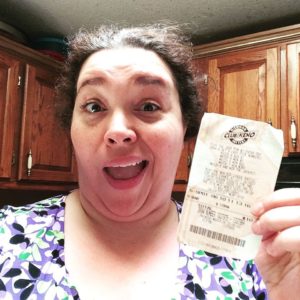
If you follow me on Facebook or Twitter, you may have already heard about how I found this lottery ticket on the ground while I was on a field trip with my kid. I thought it was trash (LITTERBUGS! ARGH!), so I picked it up to throw away when we got to the car.
But when I saw it was a lottery ticket, I figured I'd check the numbers when I got home, just in case.
I won the BIG money, honey! TWO WHOLE DOLLARS! WOO HOO!!
Every morning, I sit down to do The PEACE System (a process I created to help clear my head and prioritize my day). Because field trips can be stressful - particularly with a special needs kid - I made a point of setting the intention to look for miracles.
Frankly, a well-behaved child would have qualified as a miracle in my book. I certainly wasn't expecting free money to fall at my feet. But hey, I'll take it!
I asked for (and was looking for) a miracle, and I got it. And the kid behaved, too!
You've probably heard stories about people who say "I won the lottery and it changed my life." Never did I think I'd be one of those people, since I don't play the lottery.
But winning those two bucks most certainly changed my life. If you want to test out your luck as well, you can go to sites like 바카라 사이트, for example.
"You can't play if you don't win" is a double-edged sword. In a way, I did "play" because I picked up the ticket and cashed it in. But in a way I didn't play, because I didn't actually buy the ticket. It wasn't even given to me (in the traditional sense). And the person that dropped the ticket probably thought it was a "loser" because they played $10 and "only" won $2. They lost money on the deal.
But from my perspective, I was $2 richer!
The last 18 months have been arduous and hard for me on a lot of fronts. At some point, I probably faced down some depression, though I was never clinically diagnosed. I've done a LOT of questioning my worth, my value, and why I'm really on this planet in the first place.
Two dollars won't even buy me a soda at my local restaurant, let alone pay my rent, but it was a sign. A clear sign that miracles are there if we are looking for them. I know that sounds kind of mystical and metaphysical, but it's true. I found that money because I was looking for it.
Well, I was looking for a miracle, and I chose to see this "win" as a miracle.
You have to have your eyes open and show up.
You have to be willing to go for what matters to you - even if it seems unreasonable. Even if it seems impossible. If it's in your heart to have it, you have to be courageous enough to show up for it. And keep showing up consistently.
In that respect, Mom was right: you can't win if you don't play.
But she was also wrong. I won without playing "the game" (by society's rules, at least). That little lottery ticket opened a Pandora's box of questions about the "teaching" that's been passed down through my family for generations. The "lessons" and "stories" that, in a previous era, had to be true for survival no longer serve the person I'm becoming in this era of creative entrepreneurship.
In the past, if you didn't "play by the rules", you wouldn't be taken seriously, and you probably wouldn't even get a foot in the door, let alone win. There were gatekeepers, expectations, and unwritten "rules" that were foisted on you by your industry, society and "the world". These rules were designed to keep certain people out, and to protect the survival of others. You had to play their way, or you simply couldn't play.
Now, you have a lot more latitude to define success on your own terms and not just survive, but thrive. You can create your own career, doing what you love, and make good money doing it - without selling your soul. That's the entire premise of how I help my clients!
Those old stories that once served to protect, inspire, and motivate me, had been holding me back from the life and career I was meant to have. I couldn't see that until I won the lottery.
What thoughts, beliefs, and stories do you hold as true, that might actually be limiting your success without you even realizing it? Untangling those beliefs and thought patterns can be tough, but the rewards far outweigh the risks.
But here's the other thing that rattled my brain. I won $2. Winning anything was contingent upon someone else. Somebody else played the game, bought the ticket, left it on the ground. At least three other people walked right past the ticket before I picked it up. In short, I had no control over the outcome. All I could do was be in the right place at the time of the miracle.
Miracles are awesome, and they can feel magical. But they are, in many ways, unpredictable - even if you're looking for them. You don't know when they'll arrive, or in what form, and sometimes it's hard to know if it even is a miracle until well after the fact. Sometimes the worst thing that ever happened to you is actually a blessing in disguise... a miracle you won't see until years later.
In life, we can wait for others to open doors for us, or we can make a plan and get sh*t done. (Tweet This)
Waiting around for miracles is the snail's path to success. Can it happen? Sure! I just won the lottery, for crying out loud! But, I only won $2, because that's all the ticket was worth. Someone else got to dictate the terms of my success. I could only win what they played and paid for.
I don't want someone else to dictate how successful I can be. I don't want someone else to have that much influence over my success journey. I mean, I won't turn away blessings when they show up - even the $2 variety - and I'm not going out of my way to play the lottery, either.
I know I can't control everything - and some might say that control, like safety, is an illusion. But if I set an intention and follow it with consistent action, I'm going to move the ball further down the field more often than the guy standing around, waiting for a winning lottery ticket to fall at his feet.
Will there be setbacks? Most likely. As we all know, the so-called "overnight success" stories usually involve a lot more preparation and hardship than we realize. As Thomas Edison famously said, "opportunity is missed by most people because it is dressed in overalls and looks like work."
I'm no stranger to hard work, although I'd like to be. 🙂
There were other gems of discovery that I'm still unpacking, and I'm sure you could tease out a few lessons of your own from this story, but ultimately, while I welcome all the miracles and blessings coming my way, I'm not going to sit on the sidelines and wait for them. I'm going to keep showing up, sharing my Great Work, and defining success on my terms. Not my mom's terms, or the terms of my ancestors, or even the terms of my fans and clients.
My game is the only game that matters for me. It's a game I'm happy to play, and one I can't lose, because I make the rules.
You may have heard the story about Walter Matthau. An aspiring actor approached him at some function and said that he was looking for that one big break. Matthau, in his caring, yet cynical style, says , "Kid, it's not the one big break, it's the fifty."
Overnight success rarely is, and most creatives that have been toiling for years can attest to that. But there comes a time for most when the heat is on - from well-meaning family and friends - to think hard about doing something else. I'm sure you've probably heard one of these famous quotes before:
Mom spoke those well-meaning, heart-crushing words when I told her I wanted to be a professional musician. I think the words I actually used were "rock star", which may have prompted her advice. After all, being a rock star in the 90's wasn't as easy as it is today. You actually had to have talent and compete for a record deal with a major label in order to see real financial success.
Back then, during the "golden age" of music, who could have anticipated the collapse of the industry, the shift from physical to digital media, and the rise of the "Internet Star"? Heck, I recorded my first album just over 10 years ago, when social media was still a glimmer on the horizon.
Today, all you need is the Internet, a webcam, and a dream, and stardom is yours, right?
Not exactly.
See it's not about the big break, it's about the fifty. I might even go so far as to say it's not even about the fifty, but the hundreds, if not thousands of little breaks that happen almost every day.
Showing up every day to script and film your show, create your art, teach your audience, reach YOUR right people. Even if there are only five people in the room... even if no one shows up for your workshop.
When I decided to start teaching online classes, I didn't have a large list. Like everyone else, I started at zero. I remember when I got my first seven subscribers and I didn't know ANY of them! I felt like a rock star in that moment, for sure. Here were seven strangers who had signed up for my newsletter and wanted to learn what I was teaching.
I felt like I arrived. Over time, my list grew, and then came the day I posted my first event announcement and sign up form for a teleclass I was teaching. Three people signed up, and I was thrilled! I didn't have a big list - probably less than a hundred, but here I was leading my first workshop for three lucky people!
No one showed up on the line.
At this point, I had a few choices. I could cancel, reschedule the call for a better day and time, or just record the thing and share the recording.
I figured it was good practice, so why not just go ahead and record the thing? If anyone showed up late, they'd be able to ask questions to get caught up.
No one showed, but I recorded that class. And it was a good thing, too, because once I shared the audio, people listened, commented and shared. That led to more classes and a growing audience for my business.
Six years later, I got a call from someone who found that old recording online and hired me to speak at her event.
You just never know which one break will lead to the next. I guess you could say every break is a big break in waiting.
Creativity is about sharing your truth with the world. It's not about the medium, it's not even about the message. It's about being willing to be vulnerable enough to share yourself and let the world inside your brain for a minute or three... no matter how long it takes.
Steven Pressfield authored The Legend of Bagger Vance over the course of a few months. It was sold to a publisher three weeks later and optioned for a movie about a month after that.
He was 51.
He wrote his first novel when he was 24. That in-between time was all about the little breaks, as Pressfield writes:
"It wasn't all wilderness. Within those twenty-seven years, I earned a living for at least a dozen as a professional writer. I worked in advertising. I had a career as a screenwriter. And I spent six years writing unpublishable novels (which counts as work, too)."
Which brings me to that other iconic phrase:
It's often something we hear when someone isn't up to the task of their dream. A guy who wants to be a singer, but can't carry a tune in a bucket. A gal who dreams of being a dancer, but has two left feet. A kid with rotten comedic timing, who desires more than anything to have a spot on Saturday Night Live.
"Don't quit your day job" has been equated with failure.
I say it's time to reclaim the phrase. There's nothing wrong with a “day job” - if you're clear on your priorities and pursuits. Having a financial cushion will help you live more confidently and BE more confidently. It's easier to be your creative self when you're not afraid of how you'll get by if your Great Work isn't paying the bills.
They day job can a double-edged sword, to be sure. When I was jobless, I had plenty of time to create, but I also put an inordinate amount of pressure on myself to make my Great Work pay because I had kids, bills, and lifecrap that needed financial support or it would all fall apart.
With so much riding on everything you produce, you can imagine how much perfectionism and comparisonits can set in – two traits common in us Fusion-type creatives. I looked to “formulas”, “blueprints” and any other “surefire” approach that would help me generate an income. Trying to scrape by without the financial means that a day job could provide held me back for many years. I didn't say, do, or act on what I knew to be true, but followed the herd instead. My results were mediocre, at best.
When I let go of that fear, and gave myself permission to earn my living in the way that worked for me (and took the pressure of my Great Work) things shifted. I let go of the “shame” and “stigma” that most creatives ascribe to having a day job. As a result, I was able to be more creative AND make more money doing what I loved.
Funny how that happens.
Elizabeth Glibert, in her book “Big Magic,” confessed that she held down a job until well after “Eat Pray Love” made oodles of cash (she had written several earlier books). She never wanted to pressure her art into being the source of her survival.
Letting go of fear doesn't mean being “fearless”. Far from it. Letting go of fear means being willing to experience fear and not let it stop you.
I don't mean the "feel the fear and do it anyway" tripe that people like to profess. THAT is easy to say and hard to do. What I mean is being willing to own your fear and find ways to navigate it - support groups, or taking even smaller steps than you think you "should" be taking.
Like Confucius said "It doesn't matter how slowly you go, as long as you do not stop."
That's what I mean. It's not about jumping head first into the thing that scares the pants off you. It's not about speed to market. It's about doing what you can, as you are able, and just not quitting until you're done.
Instead of giving up entirely, and resigning our creative selves to life under the thumb of "The Man," let's take a page from the likes of Pressfield and Gilbert - who both held down other jobs while they relentlessly pursued their creative work.
Recognize your "day job" as your biggest sponsor, your Sugar Daddy, your benefactor - the one who keeps you clothed and fed so you can hone your craft.
And keep showing up for your Great Work, too. It might take you a dozen years, or three decades, or more. But does it really matter if you're doing what you love?
Someone asked me if there ever comes a time to quit. I'll save my full answer for another day, but here's the spoiler:
Don't quit your day job, and don't quit your dream. That next little break could be your big one.
Some dreams take a lifetime to come true... especially if you do it all by yourself.
Jim Bishop's dream started when he was 15. For some inexplicable reaason, he found himself drawn to the mountains just above his home in Pueblo, Colorado. One day he found himself staring at a for sale sign on a plot about 2 acres in size.
He had to have it.
He scrimped and saved all summer doing odd jobs and working in his father's ornamental iron shop. He was too young to buy the property himself, so he asked his parents to take his money and buy the land. He spent many summers with his dad on that property. As an adult, he eventually decided to build a stone cottage, using the resources all around him. He cut and milled his own lumber, placed and cemented stones from the property, and as he continued to build, people started asking if he was building a castle.
That gave him the idea to actually build a castle.
No architect's plans... just a vision for one room that grew into two, then more. Then a second level... and turrets... and spires. What started as a stone cottage in his 20's has turned into this glorious castle, which has taken his entire lifetime to build.
What this video fails to tell you is that the ONE man who built this castle, did so by hand over the course of decades. Some people offered to help, but like so many well-meaning people, the help never materialized.
#frustrating
Undaunted, Jim kept plugging away as he was able - on his own - one stone at a time. Jim has touched each stone an average of 6 times as he sized, placed and cemented them during construction. You wouldn't know looking at it that Jim is afraid of heights, would you? The fact that he placed each stone one at a time meant a gradual ascension, which gave him time to get used to the height as he built each layer of stone upon stone.
All these years later, and through the generous donations of recycled and reclaimed materials, there's now a bevy of castle features - including a ballroom, a portcullis and bridge at the entrance, and an ornamental dragon Jim fashioned out of recycled stainless steel and a canister from a hot air balloon.
Bishop Castle is open to the public year round, free of charge (Jim and his wife still live there).
Don't let anyone tell you that you can't build your dreams. You can do it. Even if you have to do it all by yourself, one stone at a time. It may take longer, but if Jim Bishop's work is any indication, you might surprise yourself at just how high you can go - and it will be all the more fantastic when it's complete.
Oh, and yes, the dragon breathes fire, too.
Hello dear one!
I have never been a big comic book fan. When I was a kid, I wanted to read "real" books. "serious" books. So comics were not part of the equation. Plus, I have an addictive personality, so that would be one more thing on which to spend money I didn't have.
So this whole resurgence of comic book films has been fun for me - to explore the heroic stories of these legendary heroes (many of which I wasn't remotely familiar with before the films). I'm one of those people comic book purists probably hate: I didn't read the books before I watched the movies.
Oh well.
Before this resurgence, the closest I could identify to a superhero was Wonder Woman - you know, the Lynda Carter version (again, never read the books, y'all!). She was something for my pre-teen, 80's self to look up to. But as an adult, I felt more drawn to action heroes like MacGyver, Jason Bourne, and the like.
Then came Captain America.
I admit, if it hadn't starred Chris Evans, I probably wouldn't have thought twice, but he seems like one of those really nice guys in Hollywood, so I went to check it out.
It just gave me another reason to love Evans. It also gave me a new hero.
One that reminded me of you.
In the movie, Steve starts out as this gangly little weakling of a kid (oh, and did I mention, he's an artist, too?). Through the miracle of "modern" science, he becomes Captain America.
But the core of Steve - that which made Captain America - was there from the beginning.
I was working on Pinterest lately, crafting a branding board for a client project, and came across a pin of this painting:

Here's little Steve, with all his heart, hustle, and commitment to the cause - regardless of his size or stature. He knows the person he's capable of becoming, even if the rest of the world doesn't see it yet.
Then, there's Captain America. He TOWERS over little Steve, yet, he's the same guy. The same heart. The same hustle. The same commitment to his cause, his beliefs, and what really matters in his world.
They are the same, even if the world doesn't always see it that way.
But that is how I see you.
I see you when you show up in your "small" self, just wanting to bust out. Ready to jump on your metaphorical "grenade" to save the lives of the people that matter most to you. I see you striving to be as big and strong as you know how to be. I see your "Captain America-ness" trying to burst out of you.
I see your potential - in all the various ways it can manifest: strong leader, successful business owner, deeply spiritual human, loving spouse and parent. I see your struggle for balance, your desire to win - but win something with meaning. To have a meaningful life, a beautiful living doing what you love in ways that inspire the world.
THAT is how I see you.
You don't need some crazy serum concocted by a mad scientist to get to where you want to be. That's just the window dressing that makes it easier for the world to appreciate who you already are. Steve was Captain America all along. The world just didn't know it yet.
I've seen it. I see it every day. I've lived it. I've had to look my own potential in the eye every day. Sometimes I see Steve. Other days, I'm clearly my own Captain America.
But it's all there, all the time. I know it, because I've lived it.
And I see it so clearly in you.
Thank you for letting me glimpse your awesomeness. Thank you for letting me shine a light so that the world can see your Captain. You have SO much to offer the world - even if the world doesn't get it yet.
I do. And I'm grateful to be part of your journey of awesomeness.
Love always,
-Me
[ALBUM UPDATE: We've got about half the album recorded and I've approached a couple of engineers about mixing and mastering the project - one of whom has worked with artists like Clapton, BB King, and Rod Stewart. This is getting REAL, yo! If you haven't had a chance to pre-order your copy, there are only a few days left to do it before the first song goes out to sponsors!]
I've noticed a disturbing trend in business books recently: more and more crap books that are nothing more than thinly veiled sales pitches for the author's big-ticket program or service.
Now, I'm all for marketing inside your book. I think a strong call to action is important to get readers to join your list, become aware of the work you do, and eventually work more deeply with you.
But I don't want your ads "sprinkled" throughout the book. A book is not a live webinar. I can READ, for pity's sake, and I can go to the "references" section in the back of the book and find all the offers you have mentioned - if you've written your book properly in the first place.
And that's the problem. So many of these authors (and sadly, a LOT of them are internet/info marketers) capitalize on the size of their audience and their ability to sell a product to push out a book that isn't really all that good - leaving a lot of readers put out by how much advertising there is compared to the content. You can read hundreds of Amazon reviews about books that seem to be nothing more than a bad advertisement for their schlock, that is why the photography used for content and the reviews are so important.
Somebody started telling business people that a book is a great business card. They're WRONG.
A business card is designed to give you some information about a person: their profession, some contact information, and some of the more sophisticated marketers of the world even manage to slip an offer in there to get you to take action.
Here's the thing: I don't pay for your business card. I pay for information. Knowledge. I pay for your to give me the answer to my problem. And the answer isn't to pay you even MORE money to get the full answer. Sorry. That's crap.
If that's all your book does. STOP IT! Your book is NOT a business card!
A book is meant to disseminate information - helpful, useful information. Can you imagine getting a teacher's edition of a math book and having to opt-in or pay extra to get the answer keys? That's essentially what's happening here. They give you the problem, and a taste of the solution, but then hook you into coming back to them to get the real answer you were looking for in the first place.
This isn't an indictment of internet/infomarketers. There are some great books in the world. But a whole industry has risen up around creating your non-fiction book in 30 days and gaming the system so that you, too, can claim to be a best-selling author.
Which only waters down the effort and value of bona fide authors that put in the hours to craft a meaningful, useful book that actually serves the audience that buys it.
So after I found myself paying for and reading through another painful example of a best-selling author who didn't deserve the title, I couldn't help myself.
I got a little snarky. And I don't apologize one bit. I hope SOMEONE will prove me wrong, because what I'm seeing is a sad ripoff of people who genuinely want help - who actually pay money to get it - and are then sold a bill of goods.
I even called on TLC (the musical group) to make this point abundantly clear.
Let me hear from you. Have you paid for rotten books lately? What are some of the best business books you've ever read? Let's build a super-helpful reading list of must-read books and be a Rising Tide for everyone!
PLEASE SHARE THIS POST! If you know someone about to publish a book - or someone about to buy a book, do them a solid and share this video with them so we can curb the "crap book" population. 🙂
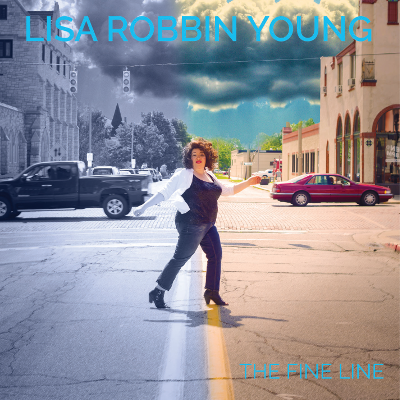
First, an announcement: Des is BACK from L.A., and we had a great session this week, recording tracks for The Fine Line. We laid the final tracks for our sexified version of Aerosmith's "Dream On" as well as the understated Eagles tune "I Can't Tell You Why." I am looking forward to sharing that track soon with our patrons and sponsors. If you haven't already pre-ordered your copy of the album, you can do that here.
In all, The Fine Line will feature 15 songs, including 2 originals. While most of the songs have been jazzified to some extent, the notable exceptions are a 1950's "motown" version of VanHalen's "Why Can't This Be Love" and a melancholy version of Avicii's "Addicted To You". The entire album is an intimate piano/vocal affair, and Des and I are hard at play to deliver the pre-orders in September.
Here's a sneak peek at the new album cover. What do you think?
You probably don't need me to explain that it's a double visual metaphor - songs from the past into the future, and "the fine line between the American Dream and the American Nightmare" as Don Henley once said.
Also, I gotta give props to Heidi at HSB photography for doing an amazing job on the photo shoot!
Okay, now on to the post!
As a creative entrepreneur, I used to struggle with day-planners, schedules, and anything that came with too much structure. That's my Chaotic side lashing out at my need for a little bit of Linear sanity. Since none of the traditional tools worked for me, I developed my own back in 2009, thinking it would probably go on the heap of "tried and failed" attempts to get my life and business squared away.
Well, here we are, 6 years later, and it still works like a charm. I've tweaked it a little over the years, but the core steps have stayed the same. This week's episode of Creative Freedom reveals my simple 5-step PEACE System that keeps me on track every day - focusing on what really matters, and giving myself permission to let go of what doesn't move the ball down the field.
Oh, and you'll hear one of my all time favorite tunes from a now defunct 80's band with a drummer that used to write songs with Madonna.
It's just enough structure that Chaotic creatives can play around and keep things loose, while giving Linear creatives the ability to get as granular as they need to stay sane. Fusion creatives like me can be flexible, depending on the kind of day we're having. I really surprised myself when I developed this concept. It's something I've been able to stick with for years now, and I attribute much of my success to using it - and I attribute much of my failure to the times when I get lazy and don't use it!
Not sure about your Creative Freedom type? Be sure to take the quiz and find out.
What works for you? What have you tried that didn't work? Share your comments
(NOTE: I'm just about finished with the Creative Freedom entrepreneur type quiz. If you're not already on my mailing list, subscribe [in that handy box above] and be the first to get access!)
This summer, I've been channeling my inner crafty woman. I'm a pretty good singer and speaker, but I never really thought of myself as creative - as in making things - until I married a guy who decorates our Christmas tree with origami cranes.
I fiddled around with drawing as a kid - but my cousin was a much better artist. In fact, I could pretty much guarantee that someone I knew was better at any crafty thing than I was.
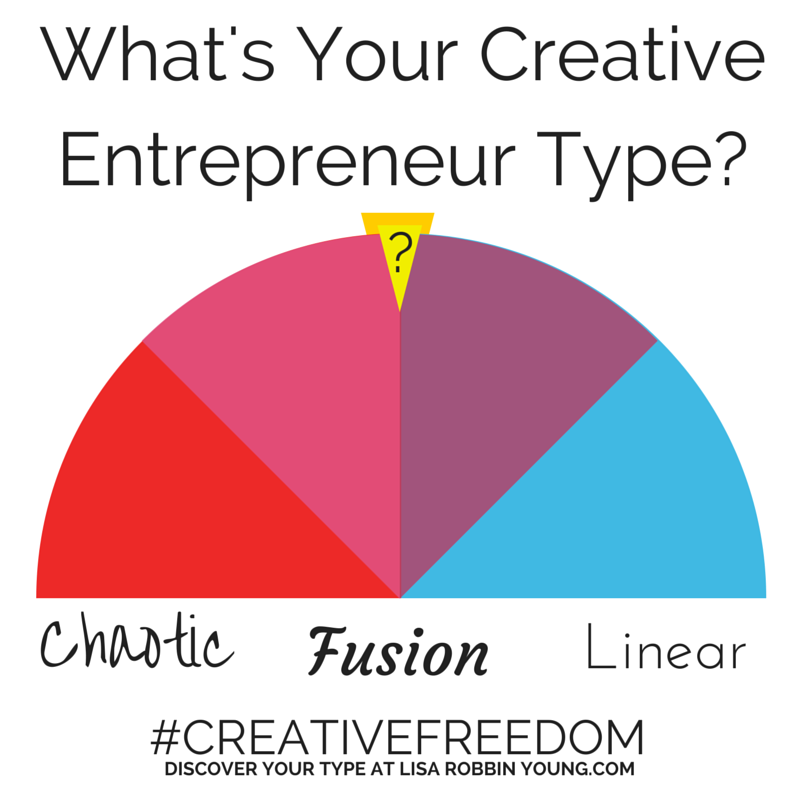
Turns out, that's part of my Creative Freedom type. I'm a Fusion, which means that I can always find someone more creative, more strategic, and more "better" than me if I look hard enough - but that's because my life is filled with a mix of awesome Chaotic and Linear Creatives, who will always be further along on the spectrum than I am. Fusions, on the other hand, sit right in the middle of the spectrum, which means we can do lots of things other people can't. It's why our analytical friends call us "the creative one" and our creative friends call us "the smart one."
This is just part of what I've been exploring in preparation for the launch of my new book "Creative Freedom." Once I learned I was a Fusion type, it gave me permission to embrace ALL the ways I'm crafty and creative. Finally, a place where I don't have to choose, I can just enjoy being me!
And I made an origami daffodil to prove it! It's my first attempt, and I used a plain sheet of paper instead of origami paper, so it's a little wonky, and I'm proud of it!
There's another reason I'm sharing this daffodil with you, and it has to do with a story that goes back about 20 years. You may have heard of it. It's called "The Daffodil Principle" by the late Jaroldeen Edwards.
But before I get there, let me tell you why I'm sharing this story.
I got an email from a reader who has been struggling with building her Noble Empire because of some stuff she's been dealing with in life: health, money, family... you know.. life stuff. She's a little frustrated and overwhelmed about wanting to be further along on her dream, but also stuck in the reality of where she's at.
Which brings me to the Daffodil story.
Jaroldeen's story is actually about a real garden in Running Springs, CA, designed and planted by Gene Bauer - a lifetime effort spanning more than 50 years. Every fall, at her vacation cabin, Gene would plan and plant each bulb by hand. When she started, she didn't even know which end was up.
Can you relate?
As creative entrepreneurs, sometimes we don't know what direction we're going - let alone if it's the right one or not. But Gene's an example of just showing up, year in and year out, and letting the creation unfold into a life's work. Most people don't know Gene was actually a teacher, and planting daffodils was just an interest, that became a hobby, that became a passion.
This week's video tells the rest of the story - the part that happened after Jaroldeen wrote her story - and I think it's probably even more powerful than the original, because of how the Bauers had to overcome adversity when fires besieged the property. Oh, and if you watch really closely, you'll get a quick glimpse of New Kids on The Block and a young Marky Mark Wahlberg before he got all grown up.
The more I researched the story, the more fascinated I became. That's part of why I learned to make an origami daffodil - since they're out of season right now (you can also make a stem if you'd like). Gene and Dale even compiled a history of the Running Springs property to give people some background on how the 5 acre plot of land came to be in their hands, and ultimately covered with so many varieties of daffodils.
THAT, to me, is what it means to build a Noble Empire.
What small step are you making? Share your thoughts and ideas in the comments and be part of the Rising Tide. Have a question you'd like to see featured? Hit me up! I love requests!
In my house, there's a never-ending battle that's almost as epic as the fight for the remote control.
The thermostat.
My husband likes it hot. He closes the vent in our room and bundles under at least two blankets even during Summer!
My son likes it cold. If it's warmer than 65, he'll turn the thermostat down to 50 because he thinks that'll make it colder faster.
Me? I like it in "the dead zone" - a comfortable 70-72 degrees. Not too hot, not too cold.
Needless to say, we've had a few arguments about this. In fact, hubby and I are finally switching sides of the bed this week because he's been sleeping closer to the vent (which is why he keeps closing it).
But...even more datstardly than our family fight for the house thermostat is the epic battle that's been going on between my ears for years with my metaphorical "success thermostat".
You may have heard it called an upper limit problem - that's a term Gay Hendricks used in his book "The Big Leap." Like a thermostat, our brains have a "success set-point" that keeps us comfortable. When we get too far below that set-point, we get uncomfortable, and start working to turn up the heat on our success. But I had a cap on what I believed I deserved. My "success ceiling" was a set-point that actually kept me earning poverty-level wages. No joke!
It was as if every time my money situation started improving, or things started going very well for me, invariably something would happen and things would start to fall apart. My success set-point kept trying to cool things off just as I was heating up!
In her book "Overcoming Underearning" Barbara Stanny says that "money is a metaphor" and that "under-earning is a symptom" - specifically a symptom of a lack of self-worth or self-love. It manifests differently for each person, but ultimately, it centers on a success ceiling/upper limit problem around what you think you deserve.
This week's episode of Creative Freedom revels how to know if you're a chronic under-earner, how I discovered my under-earning success ceiling, and how I've worked to eliminate my upper limit problem in my own life. Oh, and you'll hear bits of my U2/Journey mashup from the 300 songs project.
One look at the Symptoms of Underearning from Underearners Anonymous and you'll have a better idea of whether or not your current financial state is because of a conscious choice to live on less, a short-term slump, or a chronic condition that's due to something deeper.
1. See the truth and OWN it. Just like a real thermostat setting, we have to make adjustments if we want to see things change. For most of us, we can't just "flip a switch" and solve the problem. Further, the "temperature" of our situation will most likely change gradually. You can't go from 32 degrees to 70 degrees in a matter of seconds - it takes time to turn up the heat! Decide on your new direction. What's going to change for you? Then commit to it, and be willing to make small (even microscopic) changes as you move toward your new set-point. The smaller the better actually. It might feel more tedious and time consuming, but micro-commitments are more likely to stick and lead to lasting change because they don't activate the fear centers in your brain. It's the fear center that triggers the thermostat to go back to what's "comfortable" - clearly a relative term when it comes to success.
2. Be wary of people who aren't used to your new settings. They will be uncomfortable (so will you). I have a colleague that says "new level, new devil". Remember what I've taught you before - you train people how to treat you based on what you've come to accept from tehm and what they've come to expect from you. Changing your success thermostat means you're changing the expectations. Some people won't like that - get used to it. It happens. The key is to recognize when people are trying to change your settings and stay the course even if things start to get a little (okay, a LOT) uncomfortable.
3. Believe you are worth it and stay vigilant! This is where all the micro commitments make a difference. Trying to re-program your brain to overcome years of unconscious programming ain't easy. When you've believed for decades that you're not capable of achieving a certain level of success, your brain may have difficulty accepting new ideas that seem to fly in the face of that old understanding. You need to keep looking for evidence for the file clerk in your head that says you are capable. Celebrate your wins even if they seem "small" or "insignificant" - the file clerk doesn't judge.
Eventually, the new set-point will feel comfortable. It takes time and patience, but it's totally doable.
Under-earning is one of the most prevalent problems of the creative community. From working for "exposure" to donating our time and offerings to way too many worthy causes, creative entrepreneurs need to reclaim their money making power! If you've overcome an upper-limit problem, we'd love to hear about it! Share your stories in the comments and be part of the Rising Tide community!

First an exciting announcement: A few weeks ago, I happily celebrated 500,000 views on my YouTube channel. THIS week, I'm celebrating 300 subscribers (click here to subscribe instantly)!
Confetti! Fireworks! Hooray! Huzzah!
This has been a goal of mine for several years, and I'm beyond thrilled that it's finally happened. It was a lot more challenging than I expected, and I've learned a lot along the way. As my channel grows I've developed a love and strong respect for the YouTube community. If you're on YouTube, please say hi and spread the love. Your awesomeness makes this show possible.
THANK YOU.
I was on a coaching call with a client this week and we spent a good amount of time talking about how hard it can be to shine brightly when everyone around you is complaining about your light.
"You're too bright."
"Can you turn it down a little?"
"You're always so enthusiastic about [topic]. I'm tired of it."
While occasional constructive criticism is important (when you work with me, I'm not afraid to give it to you straight), it's also important to remember that you've got Divinely-given gifts that are uniquely yours to bring into the world.
Shout it out! Tell everyone about your brand. Heck, have your brand name printed out onto face masks, hoodies, pens or mugs if necessary. Don’t hide them away; be proud of who you are and what you have achieved.
Often times, we're put down, or we feel guilty about being so awesome. And even if you're shy and reserved, it can be tough to deal with the criticism and "baggage" others want to foist on you when you're sharing your gift with the world. It often results in being overgenerous as a means to counter the criticism, to be liked, or to "apologize" for your existence.
Been there, done that.
You don't need to apologize for being awesome. We all shine in our own way, and yes, some of us are called to shine "brighter" or to a "bigger" audience (remember: size is relative. If it's your dream, it's big. Period.). That doesn't make us any more (or less) needed in the world.
Sometimes we're put in a position where we shine brighter than the folks around us because they need to get used to having more light in their lives. This isn't a statement of arrogance. Most of the awesomely talented people I know didn't ask to be awesome. They just are. But the amount of guilt they feel and crap they take for being so shiny is overwhelming. I'm reminded of the crawdads in a bucket that keep pulling each other back down so that no one escapes.
You don't have to make your light any less bright. That's what sunglasses and window shades are for. People can choose to be around you and they can choose to leave. This is a lesson I'm learning myself. For YEARS I have felt the need to dim my own light because the people around me couldn't deal with how shiny I am. I never asked to shine. I was born with these gifts, and while I've honed them over the years, it was never in an attempt to be better than anyone other than myself.
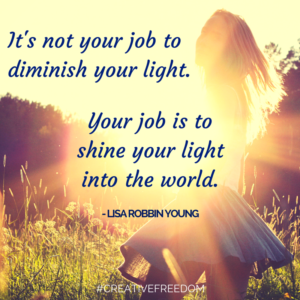
It's not your job to diminish your light. Your job is to shine your light into the world. (Click to tweet this)
There are plenty of people in the world who are afraid of the light. Heck, even Plato wrote about it in his Allegory of the Cave. But here's the thing:
Just because other people are afraid of the light, or judge the light, or shun the light, doesn't mean that you need to take it personally.
When I walk into my bedroom and flip on the light, sometimes my husband grumps about it. My light bulb doesn't get all defensive and start apologizing for being bright. That's what light bulbs do, for pity's sake! And while I might apologize for causing my husband pain, I rarely apologize for turning on the light because I needed the light to see. Don't apologize for your needs. Apologizing for your needs equates to saying "I'm not worthy of having my needs met. I'm sorry for my existence."
Word choices can be tricky, eh? But I've said this many times in the past: you train people how to treat you based on what you've come to accept from them and what they've come to expect from you. If you're constantly apologizing for your existence, then, Houston, YOU have a problem.
Katy Perry sang an inspiring song that confirms that the only way to shine is to ignite yourself:
"You just gotta ignite the light and let it shine
Just own the night like the 4th of July"
I think it's safe to say that if you don't ignite yourself - and let yourself shine - it's improbable that anyone else will do it for you.
On the surface, Independence Day is about celebrating my country's establishment as a sovereign nation. It's become the high holy day of picnics, beach fun, and fireworks.
But at the core, it's a symbol to embrace what matters most to you, hold it out for the world to see, and stand your ground. Do you think the British were particularly pleased? Hardly. They fought us for several years before and after we claimed our independence.
You'll probably face a few battles of your own (both internal and external ones). That's to be expected. As several great minds (including William Lamb and Stan Lee) once said, "with great power comes great responsibility." Being awesome ain't always easy, but you've got it in you to handle it!
Need a little extra incentive?
Our Independence Week edition of Creative Freedom brings us a special "guest appearance" - this time by Katy Perry. It's a friendly reminder to own your awesomeness.
What are you awesome at? Go on! Toot your own horn (I dare you)! How have you been holding back your awesomeness? Do you know someone else that's letting their light shine "brighter than the moon"? Share your stories, thoughts, and ideas in the comments.
If you or someone you know could use this information, please share us with them and be part of our Rising Tide! Every share helps. THANK YOU!
OH, BTW... Des is coming back from California this week, so look for new videos in the 300 songs project soon! YAY!
In my early days on Facebook, I was quick to follow anyone with a pulse. If they connected with me as a friend, I returned the favor. I watched my list of "friends" skyrocket to well over 1000 people in very short order.
Problem is, while my friend count was increasing, it didn't result in new friendships... just more nameless faces on my feed. I never had that problem on twitter, though. It moved so fast, I didn't WANT to follow a bunch of people that I couldn't keep up with.
The result? In my first full year of twitter activity, I generated an additional $30,000 in revenues that I could directly attribute to my time on twitter. I'd met tons of people, made great connections, and made inroads on my income goals as well.
And my follower count on Twitter was substantially lower than the thousands I had on Facebook.
That was a valuable lesson for me. Twitter was engaging and it helped me connect with real people in real time. I knew I couldn't keep up with thousands of Facebook friends that weren't really having conversations with me. I needed to cull my list of "Friends" down to the people I really connected with.
I was chasing a magic number. I thought that if I had thousands of facebook followers, it would result in thousands of dollars in income. That wasn't true for me. By chasing a number that didn't really matter to the bottom line of my business, I wasn't focused on results, I was focused on "looking good" - on vanity.
I knew I had to cull my list, but I didn't want my friend count to drop significantly in a single day. After all, I was still hooked on the vanity of having thousands of "friends".
But any number you're tracking that doesn't directly tie back to your bottom line results - numbers that just make you look good, or feel good, are vanity metrics.
Sure, vanity metrics can prop you up when you're feeling low, but over time, you start to resent them.
"Hey! I've got 10,000 friends! Why is no one seeing my posts? Why am I not making any money?"
Then you start to blame the platform, instead of addressing how chasing vanity metrics has compounded your problem.
"Stupid Facebook changed their algorithm, and now no one sees my stuff!"
Often, the problem isn't the platform, it's the way you're using it. If you've got 1000 "friends" that you never talk to, that you never interact with, why should Facebook's algorithm make your posts a priority for them?
...Not that I speak from experience or anything...(insert awkward silence and lots of blushing here)
So over time, I started doing something most people might consider unthinkable. Each day, when Facebook sends me the birthday announcements, I go into the profile of the birthday boy (or girl), and if I don't truly have a connection with them, and it's been more than a year since we've "friended" each other, I unfriend them.
"Happy Birthday! I just unfriended you!"
Now, I don't post it on their wall or make a big stink about it. I just deleted 2-3 people every day until I only had people in my friends list that I actually knew, had conversations with, or were people I wanted to spend time getting to know better.
In all the years I've been doing it, no one has ever grumped at me about unfriending them... which proves my point.
If you have no relationship with your connections, they won't miss you when you're gone. (Tweet this)
While looking at a high Klout score can inflate your ego, what really matters (at least for me) is the trend of that number. Is it going up, down, or staying the same? What does the trend mean for your business? If a rising Klout score means you're connecting with more people, and those people are your perfect-fit customers, then great! On the other hand, if it means you've just been more active on social media this month, then perhaps you need to re-think your business strategy.
Or maybe Klout means nothing to you (like it does for my colleague). What matters is that you're keeping track of the numbers that matter to you and your business in a way that works for you.
Here are a few numbers I track on a weekly basis (with the help of my AMAZING VA), to keep me on track in my business. In some cases, the number is important, while in other cases, it's the trend that matters most:
If I had to track all these (and more) myself, my creative brain would have a meltdown. Either that, or I'd spend more time getting lost in the sites as I collect the stats - which is why I have a VA (virtual assistant) handle most of this data collection for me. My financials (sales, income, expenses, etc.) are still handled on my end. Queen Latifah once said to make sure you are always the one who signs the checks, and I think that's sound advice.
The bottom line is that, in business, you need to be concerned with your bottom line. Depending on your Creative Entrepeneur type, it isn't always comfortable to do it. To be clear, making time to look at the metrics and money doesn't mean you're putting money ahead of people, either. As I've mentioned in previous posts, You've got to have profits, or you don't have a business... it's a charity or a hobby! There's nothing wrong with charities or hobbies, but you need to be clear which it is that you are running and behave accordingly.
What numbers have you been tracking that don't tie back to your results? What ways can you stop chasing vanity and start creating connections, engagement, and more meaning in the relationships with clients, subscribers and fans that you already have? Share your comments and become part of our Rising Tide.
Also, we're considering starting a free facebook group to take these concepts even deeper each week. Interested? Let me know! When there's enough interest, we'll make an announcement in my weekly newsletter. Not on the list? Use the handy dandy box at the top of the page and rectify that problem now. 🙂
It's report card time around here. My youngest is struggling in gym class. Sadly, I've seen it before with his older brother.
"Won't even attempt new activities," the report card reads.
So hubby and I sat down with our 8 year old to find out what's going on.
"I can't do it." He said. "I'm not good at it."
It can be hard to try something new. And even harder to be GOOD at it - especially when you've never done it before. That doesn't mean you can't do it.
Try telling that to an 8 year old... oh wait, we did!
...what you really mean is that you've never done it well before.
Like when you say you can't sing. Yes. you can. Anyone with a functional voice box can sing. Even my husband, who can't carry a tune in a lead-lined bucket can sing SOME songs. You just have to find the right ones. Maybe you aren't Pavarotti, but even Madonna doesn't sound like Madonna (thanks, autotune).
So often we use the words "I can't" as code for "I'm not good enough" or "I don't know how." As we talked with our kid, it became apparent this was a case of being afraid to look foolish or be wrong in public. It was also a case of not being willing to ask for help to learn how to do something (or do it better).
Curse the English language!
We have gotten used to so much linguistic short hand, that we're actually programming our brains to believe something isn't possible, when, in actuality, it is. As entrepreneurs, we need to reclaim our truth and speak it without shorthand.
"I don't feel comfortable doing this, because I'm not as good as I would like to be."
"I don't know how to do it (or do it well). Can you help me?"
I've shortened my learning curve immensely in life and business by asking for help, yet, I'm the same person that still struggles with asking for help with things I think I "should" know already.
"The Shoulds" are a comfortable state of paralysis that most of us visit from time to time. It goes like this:
"I should really work out more." But you don't.
"I should really look for a new job." But you don't.
"My mother in law says I should spend more time reading to my kids." But you don't.
"My clients think I should offer evening appointments." But you don't.
And my all-time favorite: "I should already know this by now." But you don't.
In short, "The Shoulds" are a laundry list of to-do's that you have yet to accomplish - either because you don't really want to do them, or because you haven't yet figured out HOW to do them. It's a limbo-land that keeps you from taking action, and only diminishes our value as humans an entrepreneurs.
It's normal. we all go there from time to time. The trick is to keep our visits short. Otherwise, we're creating unrealistic expectations of ourselves. When we have an expectation of our capabilities that doesn't match our reality, two things happen:
Rather than root out the cause (living in "The Shoulds"), we keep beating ourselves up - over and over - until something happens. And that "something" isn't always helpful. If we're lucky, we've got a support system to help us see we're in "The Shoulds" and can point it out to us. But even that's not going to help you if you keep beating yourself up saying "Dangit! I knew I was in The Shoulds! I keep doing that! Gah!"
What are those "beliefs" that are conditioning you to stay paralyzed? How are they holding you back? What would happen if you looked at it as if the opposite was true?
What if you shouldn't already know this by now?
What if you shouldn't offer evening appointments? What if you need to find clients who prefer your current schedule?
That's the other type of "can't" we're talking about: when something really isn't possible within the understanding of human experience at this moment.
1,000 years ago, man couldn't fly or use the Internet. They hadn't been invented yet! So to tell someone to hop online and check your email would probably get you blank stares. "I can't" is an appropriate response in that case.
But the more accurate response for most anything today is "I don't know how yet."
Keep all your priorities in alignment while growing your business?
"I don't know how yet."
Make six, seven, or eight, figures (as PROFIT, not just income).
"I don't know how yet."
You get the idea.
Yes, being willing to acknowledge that you don't already know everything means there's a slight possibility that you'll be a target for ridicule. But that's rare. More often,what happens by saying "I don't know how yet" is that you open doors to new learning, new experiences, new connections, colleagues, friends - and yes, clients - by being willing to learn how.
That was the lesson my 8 year old had to learn. That yes, sometimes the mean kids will make fun of how he throws the dodge ball, but by asking for help, he'll get better at throwing the dodge ball and be able to bean the mean kids out during the game.
Perhaps that's not the best way to illustrate that lesson, but I think you understand my point. Sometimes, we need to "bean" the nay-sayers in our lives, and the only way to do that effectively is to get really good at what they're telling us we can't do.
Even if we are our own nay-sayer. Sometimes I need a good beaning, myself (just ask my husband!).
Where are you saying "can't" when you're really living in "The Shoulds? What can you do today to get clarity around a particular "should" and either decide to take action or decide to let it go? Share your thoughts in the comments below.
If you're ready to get help with moving out of "The Shoulds" consider a Next Steps session to help you get some clarity.
Back in November, as I do every year, I made my book "The Secret Watch" available for a limited time at a special price. The first year, I just wanted to see how many people I could share it with, so I said I'd do a back flip if 1000 people would download it on kindle. We gave away over 1000 copies of the book, which prompted my first lesson in doing a back flip (more of a back "flop" really, but I digress). This past November, I wanted to see if we could hit best-seller status on Amazon.
I worked with Winnie Anderson, a best-selling author and the Sherlock Holmes of business development, who has also been my accountability partner now for more than 2 years. Since most everyone I knew already had a copy of the book, I wasn't holding my breath. Winnie suggested we do a 99 cent sale anyway, just to see what would happen.
I nearly lost my mind when "The Secret Watch" hit MULTIPLE best-seller lists in both the US and the UK. Two continents! Color me humbled and proud.
Yes. Even a coach needs coaching, mentoring, and support from time to time!
So when my friend and client, Pam Belding, mentioned that she might want to re-launch her book, well, it was a no-brainer to recommend Winnie.

Pam's book, You're The Boat, was inspired by her own emotional roller coaster. At one point a few years ago, her husband's job sent the family to Brazil for a year, which meant packing up the entire family, homeschooling their son, and navigating a foreign country... not to mention the regular day-to-day activities of a wife and mom.
In an overwhelming state of frustration, Pam asked "no one in particular" for guidance, and the image of the boat was born.
Her book trailer describes it better than I can:
If you're ready to end the overwhelm, and chart a course for yourself that you actually look forward to living, I highly recommend you register for Pam's teleclass this Friday. You'll hear Winnie interview Pam about the different "systems" of the boat analogy, and how you can implement them in your own life. Plus, she's sharing some of the behind-the scenes details about how she created her book, lessons learned, and other great stuff. You'll also get the scoop on how you can get your own Kindle copy for less than a dollar.
Can we make her book a best-seller on two continents, also?
Pam's boat analogy has only improved my life. And I don't just say that because Pam was a client. She's also become a good friend and part of the "crew" of my boat. It's a quick, informative read that will have you seeing your world in a new way, and help you relate to the world with more meaning and joy. I have no doubt that after Friday, Pam will be able to add "best selling author" to her title.
Creating a best-selling book is as much about the marketing as it is about the book itself. Yes, you need to be a skilled writer, but you also need to "dig your well before you're thirsty" and become a skilled connector, too. It's about sharing your story with your fans as well as reaching out to friends and colleagues who will help spread the word about the Great Work you're putting out into the world. That's what Pam and Winnie asked of me, and I was more than happy to say yes. This book is a perfect fit for my audience - people who are trying to forge their own path to the Noble Empire and inspired life of their dreams.
Life isn't like Ray Kinsella in "Field of Dreams" - you know... "If you build it, he will come."
As creative entrepreneurs, we can't just put something out into the world and trust that the right people will find it. As nice as that would be, it just doesn't work that way. Heck, even Ray had a LOT of work to do to let people know about his field and save his farm from bankruptcy.
With confidence in our work and courage in our hearts we can stand in the truth of who we are.
(Click to tweet)
With clarity, confidence, and courage, we can ask for the help we need, and share our Great Work with the world in alignment with who we are and what we're about in the world. I've experienced first-hand the insights of both Winnie and Pam. If they have their fingerprint on a project, I want to be involved. Sharing this event with you was the best way I knew to do just that. I hope you'll join us!
FTC NOTICE: FYI, the Federal Trade Commission requires that I inform you the only compensation I get for sharing this story with you are the few pennies Amazon pays me when you click a link in this post and make a purchase there. If you'd rather deny me my "mad money", just visit Pam's site and make your purchase there. It's a touching and inspiring book!
She was sprawled out on the sidewalk, screaming bloody murder. The bike - a garage sale special (meaning there was no padding on the all-metal seat) - was still somehow attached to her.
She and I lived close to each other, and were about the same age, but I had no real interest in bikes when I was six. I wanted her to play dolls with me, but no. She was a tomboy through and through. And she really wanted to learn how to ride a bike.
Her parents bought her this scrap metal bike with what little money they had, took it home, cleaned it up with a bit of red spray paint, and after letting it dry, gave it to her.
She wasted no time. She hopped on (no training wheels), and took off down the neighborhood. I lived at the end of the street, so most of the kids used our house as the turnaround. I waited for her there.
She was no stranger to bikes. Most of the neighborhood kids had them and let her ride when parents weren't looking. Some with training wheels, some without. When this little girl climbed on her very own bike, she was a natural.
Until...
Still straddling the metal heap of a bicycle, but flat on her back, the girl was screaming bloody murder. Apparently, she hit a sidewalk bump where the concrete was broken up and the metal seat jammed her... in the... well, you know.
She lost control, the bike fell over, and she was sort of tangled up in it.
So much screaming. So much crying. I kept looking for blood, but didn't see any. Maybe she broke her leg or something. I thought for sure her folks were going to end up taking her to the hospital. Even her brother - who normally ignored his baby sister - set out to figure out if she was okay... or at least get the kid to stop crying and screaming.
Once they calmed her down, they realized that beyond the need for a padded seat, the only thing that was really bruised was her pride. So her father, in all his infinite wisdom, encouraged her to "stop crying like a baby and get back on the damn bike."
The little girl obediently climbed back on - after setting the bike back up and giving it a firm kick to show it who was boss. This time, instead of riding up and down the street, she practiced in my gravel driveway. She practiced turning, braking, and navigating the bike on "a bumpy road" as she called it. She even managed to teach herself to ride "standing up" so that the seat didn't get the best of her again.
She fell a few more times (gravel wipeouts - OUCH!), but under the watchful eye of her parents, she managed to get back up without shedding a single tear.
By dinnertime, she was racing one of the neighbor kids, giggling and playing as if she was a cycling pro.
Eat your heart out, Lance Armstrong!
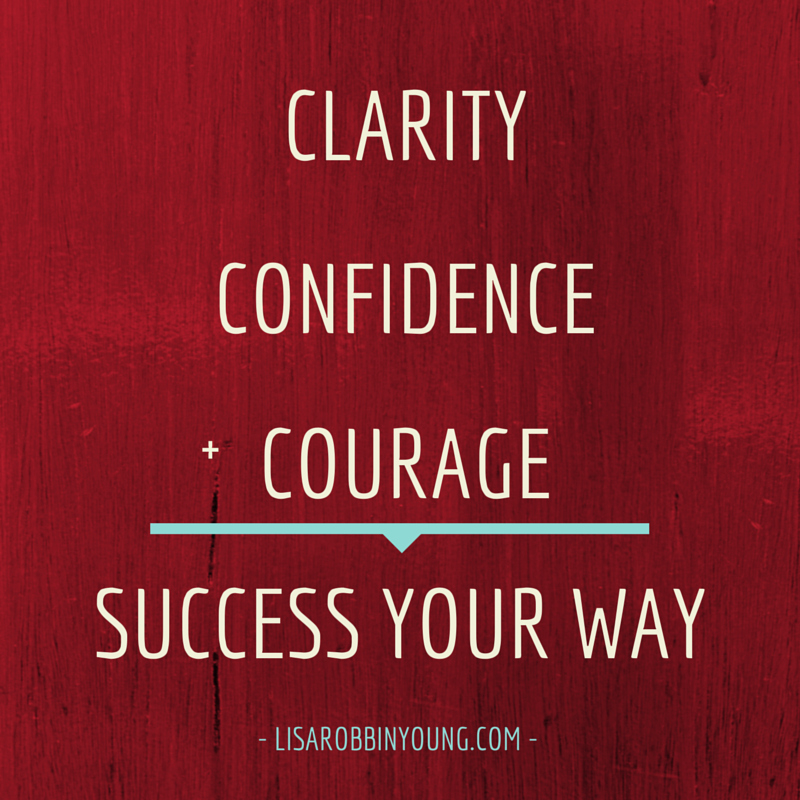
A colleague of mine once shared a similar equation with me. She was using it to talk about the power of irresistible presence, and how, when these three elements are combined, you are more able to show up in a magnetic and authentic way.
The more I looked at her equation, the more truth I saw.
Success in anything can ONLY come when we have these three elements in proper measure. Without all three, you'll fall short in some way. Don't believe me? Let's look and see:
One of the most important things I've ever done for myself was develop The PEACE System. It helps me have crystal clarity on my priorities for any given day. Coupled with my Dreamblazing program, I've created my perfect solution to knowing exactly what matters most in any given moment. I have total CLARITY on what to do, and why.
After she fell, that little girl had clarity that her bike had a few issues, and that she needed more practice riding with it before she took it out onto the broken sidewalks of our ghetto neighborhood.
But clarity alone only helps you see the bicycle. It doesn't give you insight into how to actually ride it. Clarity says "I need to learn how to ride the bike." Confidence says "This is how one rides a bike."
Big difference.
You know what that means right? No? Here's the Urban Dictionary definition. CONFIDENCE comes from this space of knowing. When you've got clarity, you can make some decisions about what to do, and what not to do. You can even help other people make decisions based on what you know. As a coach, I am lucky enough to work with clients that need to make changes in their lives and business, but if all I did was spout off my knowledge, or tell them what to do, I'd be nothing more than a "sexual intellectual" that no one wants to work with. What's more, if I left my clients in that space, they'd never make any forward progress.
Confidence is the by-product of practice. Practice can only happen in a safe space. Like learning to ride a bike, there's always a fear of falling down, but training wheels and a steady hand on the back of the seat can make all the difference between riding down the street and never getting on the bike in the first place.
Confidence is built when the action you take is positively reinforced. When that little girl got back up on the bike, her parents stood by (safe space) and encouraged her progress. When her progress was reinforced, it gave her the confidence to know that she could ride this bike.
That little girl knew she could ride a bike - she'd done it before. She just needed to figure out how to handle the particular quirks of this bike. She quickly realized the seat would be an issue, so she needed to learn how to ride standing up. That would pretty much solve her "cushion" problem.
But knowing is only half the battle (GI Joe!)... or in this case a third of the battle. Because all the clarity & confidence in the world won't help you if you don't have the courage to do something with what you know.
For most people, if you've got courage, you've got confidence. COURAGE is the active piece to the "knowing" of Confidence. But sadly, people act with "courageous stupidity" all the time. You hear stories about someone accidentally setting their house on fire because they tried to kill a spider with a torch. Crazed drivers struck by road rage who speed up as someone tries to pass them - only to find out that person was a cop.
We all have something we're fighting for, something we believe in, something that in our bones we know to be true (that we'll defend to the bitter end). But without clarity (of what an appropriate response would be, for example), our courageous acts come off just plain arrogant or stupid.
This little girl could have thrown the bike to the ground in disgust and refused to ride it. After all, she "knew" she could ride a bike, and this one wasn't behaving properly. But because she also had clarity that this was the only bike her parents could afford, if she really wanted her very own bike to ride, she'd have to act differently.
Clarity says "I need to learn how to ride the bike." Confidence says "This is how one rides a bike." Courage says "This is me, riding this damn bike."
I'm leading a free workshop on Saturday March 14, 2015 to help you have more clarity, confidence, and courage in your life and business. If you're ready to learn how to create your own safe space to develop confidence and courage in your life and work, I hope you'll join me for this special, one-time-0nly workshop. You can learn more and register here. I'll also be sharing more about my Creative Freedom Apprenticeship and telling you how you could earn a scholarship to attend at no cost to you.
Every hero has values to which he clings. Superman had "truth, justice, and the American way" while MacGyver believed his mind was more effective than guns for solving problems. Some values are more honorable than others, but you can't be a hero without values worth dying for.
 Not a concept that's widely embraced in the business world. Not too many corporations that I'm aware of would lay down their lives for the work they do (or the workers that do it). The very nature of a corporation is to generate a profit for shareholders - and sometimes doing what's right may mean NOT generating profit for shareholders.
So is it possible to be heroic in business? Absolutely. Because doing the right thing is always in style, even if the shareholders disagree.
Men and women of action always have a choice. We can choose to value principles over profit, people above things, and not be a martyr in the process. We can do what's right, knowing that the long-term reward is far greater.
And no, I'm not talking about "eternal rewards" or heaven here. I'm talking about the tough decision to close a business segment that's losing money, and shifting those people and resources into areas where better work can be done. I'm talking about the tough decision to NOT fire good people if they can be used elsewhere, even if it means a short term cashflow pinch (not crisis, mind you. That's different.).
I'm talking about having values worth dying for.
When "the world" tells you how things "should" be, even thought your gut tells you otherwise, and your values guide you in a different direction, do you cave? Or do you choose to be the action hero?
Will you take a short term beating for a long term gain?
So many people will do anything to avoid even the slightest amount of pain. Yet, pain is a part of growth. Discomfort & uncertainty abound in entrepreneurial circles. You can't avoid it if you want to grow. And yet, time and again I see people take what appears to be an "easy" way out, only to find themselves stuck in "the fire swamp" because they didn't trust their gut.
Remember, heroes are not above getting bloodied up a bit - so long as the fight is in alignment with their values.
As you examine your own business, think about these questions:
If you can't answer these questions, you've got your work cut out for you. It would be nice if you could stop and get absolute clarity on this before you do anything else. However, I recognize that's not always practical.
Remember, this isn't about issuing a "vision statement" or some other piece of equally benign paper. Show, don't tell. "Be the change you want to see" and all that.
Take a few minutes to share with me (via email or as a comment on this post) any/all of the following:
A. What do YOU value in life and business?
B. What did you learn when you asked others what they think you value?
C. Based on what you know about me, what do you think I value?
I'm sharing my results in a later post. I'm looking forward to seeing what happens!