With all the tragedies and depressing headlines of recent weeks, it would be easy to close up shop, dig a hole, and hide yourself away for the rest of your life.
There's a lot of hurt in the world, and marketing your creative business might seem a bit - shall we say frivolous? - during these uncertain times. It doesn't even have to be a national tragedy. Sometimes personal tragedy strikes, too, and that can make it even more difficult to keep things "business as usual". Although, it might not actually be "business a usual" anymore.
Yet, it is precisely because of these times that we need you to keep showing up and keep sharing your Great Work with your world.
But how can you be a person of integrity and run a profitable, sustainable business at the same time?
This week's episode is my best attempt to answer that question with sincerity (and a dash of humor in the style of other Creative Freedom episodes). If you or someone you know is struggling to make sense of how to ethically build your business during these challenging times, this episode may help.
I've put myself in a potentially dangerous situation here by sharing from my heart like this. If you've ever thought about leaving a comment, please do it today, because this episode, more than any other I've created to date, needs your support. And frankly, I could use the encouragement, since this is a very sensitive topic. It's possible I've made a mess of trying to be helpful (it happens), but the only way I'll know is if you tell me.
I try to have fun in these episodes, so that, too, could be taken the wrong way. Again, your comments and ideas help open the discussion for everyone.
Just because others are in pain doesn't mean you can't share your joy. (Tweet This)
Share your struggles and solutions in the comments, and let's be a rising tide for everyone!
You may have heard the story about Walter Matthau. An aspiring actor approached him at some function and said that he was looking for that one big break. Matthau, in his caring, yet cynical style, says , "Kid, it's not the one big break, it's the fifty."
Overnight success rarely is, and most creatives that have been toiling for years can attest to that. But there comes a time for most when the heat is on - from well-meaning family and friends - to think hard about doing something else. I'm sure you've probably heard one of these famous quotes before:
Mom spoke those well-meaning, heart-crushing words when I told her I wanted to be a professional musician. I think the words I actually used were "rock star", which may have prompted her advice. After all, being a rock star in the 90's wasn't as easy as it is today. You actually had to have talent and compete for a record deal with a major label in order to see real financial success.
Back then, during the "golden age" of music, who could have anticipated the collapse of the industry, the shift from physical to digital media, and the rise of the "Internet Star"? Heck, I recorded my first album just over 10 years ago, when social media was still a glimmer on the horizon.
Today, all you need is the Internet, a webcam, and a dream, and stardom is yours, right?
Not exactly.
See it's not about the big break, it's about the fifty. I might even go so far as to say it's not even about the fifty, but the hundreds, if not thousands of little breaks that happen almost every day.
Showing up every day to script and film your show, create your art, teach your audience, reach YOUR right people. Even if there are only five people in the room... even if no one shows up for your workshop.
When I decided to start teaching online classes, I didn't have a large list. Like everyone else, I started at zero. I remember when I got my first seven subscribers and I didn't know ANY of them! I felt like a rock star in that moment, for sure. Here were seven strangers who had signed up for my newsletter and wanted to learn what I was teaching.
I felt like I arrived. Over time, my list grew, and then came the day I posted my first event announcement and sign up form for a teleclass I was teaching. Three people signed up, and I was thrilled! I didn't have a big list - probably less than a hundred, but here I was leading my first workshop for three lucky people!
No one showed up on the line.
At this point, I had a few choices. I could cancel, reschedule the call for a better day and time, or just record the thing and share the recording.
I figured it was good practice, so why not just go ahead and record the thing? If anyone showed up late, they'd be able to ask questions to get caught up.
No one showed, but I recorded that class. And it was a good thing, too, because once I shared the audio, people listened, commented and shared. That led to more classes and a growing audience for my business.
Six years later, I got a call from someone who found that old recording online and hired me to speak at her event.
You just never know which one break will lead to the next. I guess you could say every break is a big break in waiting.
Creativity is about sharing your truth with the world. It's not about the medium, it's not even about the message. It's about being willing to be vulnerable enough to share yourself and let the world inside your brain for a minute or three... no matter how long it takes.
Steven Pressfield authored The Legend of Bagger Vance over the course of a few months. It was sold to a publisher three weeks later and optioned for a movie about a month after that.
He was 51.
He wrote his first novel when he was 24. That in-between time was all about the little breaks, as Pressfield writes:
"It wasn't all wilderness. Within those twenty-seven years, I earned a living for at least a dozen as a professional writer. I worked in advertising. I had a career as a screenwriter. And I spent six years writing unpublishable novels (which counts as work, too)."
Which brings me to that other iconic phrase:
It's often something we hear when someone isn't up to the task of their dream. A guy who wants to be a singer, but can't carry a tune in a bucket. A gal who dreams of being a dancer, but has two left feet. A kid with rotten comedic timing, who desires more than anything to have a spot on Saturday Night Live.
"Don't quit your day job" has been equated with failure.
I say it's time to reclaim the phrase. There's nothing wrong with a “day job” - if you're clear on your priorities and pursuits. Having a financial cushion will help you live more confidently and BE more confidently. It's easier to be your creative self when you're not afraid of how you'll get by if your Great Work isn't paying the bills.
They day job can a double-edged sword, to be sure. When I was jobless, I had plenty of time to create, but I also put an inordinate amount of pressure on myself to make my Great Work pay because I had kids, bills, and lifecrap that needed financial support or it would all fall apart.
With so much riding on everything you produce, you can imagine how much perfectionism and comparisonits can set in – two traits common in us Fusion-type creatives. I looked to “formulas”, “blueprints” and any other “surefire” approach that would help me generate an income. Trying to scrape by without the financial means that a day job could provide held me back for many years. I didn't say, do, or act on what I knew to be true, but followed the herd instead. My results were mediocre, at best.
When I let go of that fear, and gave myself permission to earn my living in the way that worked for me (and took the pressure of my Great Work) things shifted. I let go of the “shame” and “stigma” that most creatives ascribe to having a day job. As a result, I was able to be more creative AND make more money doing what I loved.
Funny how that happens.
Elizabeth Glibert, in her book “Big Magic,” confessed that she held down a job until well after “Eat Pray Love” made oodles of cash (she had written several earlier books). She never wanted to pressure her art into being the source of her survival.
Letting go of fear doesn't mean being “fearless”. Far from it. Letting go of fear means being willing to experience fear and not let it stop you.
I don't mean the "feel the fear and do it anyway" tripe that people like to profess. THAT is easy to say and hard to do. What I mean is being willing to own your fear and find ways to navigate it - support groups, or taking even smaller steps than you think you "should" be taking.
Like Confucius said "It doesn't matter how slowly you go, as long as you do not stop."
That's what I mean. It's not about jumping head first into the thing that scares the pants off you. It's not about speed to market. It's about doing what you can, as you are able, and just not quitting until you're done.
Instead of giving up entirely, and resigning our creative selves to life under the thumb of "The Man," let's take a page from the likes of Pressfield and Gilbert - who both held down other jobs while they relentlessly pursued their creative work.
Recognize your "day job" as your biggest sponsor, your Sugar Daddy, your benefactor - the one who keeps you clothed and fed so you can hone your craft.
And keep showing up for your Great Work, too. It might take you a dozen years, or three decades, or more. But does it really matter if you're doing what you love?
Someone asked me if there ever comes a time to quit. I'll save my full answer for another day, but here's the spoiler:
Don't quit your day job, and don't quit your dream. That next little break could be your big one.
[ALBUM UPDATE: We've got about half the album recorded and I've approached a couple of engineers about mixing and mastering the project - one of whom has worked with artists like Clapton, BB King, and Rod Stewart. This is getting REAL, yo! If you haven't had a chance to pre-order your copy, there are only a few days left to do it before the first song goes out to sponsors!]
I've noticed a disturbing trend in business books recently: more and more crap books that are nothing more than thinly veiled sales pitches for the author's big-ticket program or service.
Now, I'm all for marketing inside your book. I think a strong call to action is important to get readers to join your list, become aware of the work you do, and eventually work more deeply with you.
But I don't want your ads "sprinkled" throughout the book. A book is not a live webinar. I can READ, for pity's sake, and I can go to the "references" section in the back of the book and find all the offers you have mentioned - if you've written your book properly in the first place.
And that's the problem. So many of these authors (and sadly, a LOT of them are internet/info marketers) capitalize on the size of their audience and their ability to sell a product to push out a book that isn't really all that good - leaving a lot of readers put out by how much advertising there is compared to the content. You can read hundreds of Amazon reviews about books that seem to be nothing more than a bad advertisement for their schlock, that is why the photography used for content and the reviews are so important.
Somebody started telling business people that a book is a great business card. They're WRONG.
A business card is designed to give you some information about a person: their profession, some contact information, and some of the more sophisticated marketers of the world even manage to slip an offer in there to get you to take action.
Here's the thing: I don't pay for your business card. I pay for information. Knowledge. I pay for your to give me the answer to my problem. And the answer isn't to pay you even MORE money to get the full answer. Sorry. That's crap.
If that's all your book does. STOP IT! Your book is NOT a business card!
A book is meant to disseminate information - helpful, useful information. Can you imagine getting a teacher's edition of a math book and having to opt-in or pay extra to get the answer keys? That's essentially what's happening here. They give you the problem, and a taste of the solution, but then hook you into coming back to them to get the real answer you were looking for in the first place.
This isn't an indictment of internet/infomarketers. There are some great books in the world. But a whole industry has risen up around creating your non-fiction book in 30 days and gaming the system so that you, too, can claim to be a best-selling author.
Which only waters down the effort and value of bona fide authors that put in the hours to craft a meaningful, useful book that actually serves the audience that buys it.
So after I found myself paying for and reading through another painful example of a best-selling author who didn't deserve the title, I couldn't help myself.
I got a little snarky. And I don't apologize one bit. I hope SOMEONE will prove me wrong, because what I'm seeing is a sad ripoff of people who genuinely want help - who actually pay money to get it - and are then sold a bill of goods.
I even called on TLC (the musical group) to make this point abundantly clear.
Let me hear from you. Have you paid for rotten books lately? What are some of the best business books you've ever read? Let's build a super-helpful reading list of must-read books and be a Rising Tide for everyone!
PLEASE SHARE THIS POST! If you know someone about to publish a book - or someone about to buy a book, do them a solid and share this video with them so we can curb the "crap book" population. 🙂
(NOTE: I'm just about finished with the Creative Freedom entrepreneur type quiz. If you're not already on my mailing list, subscribe [in that handy box above] and be the first to get access!)
This summer, I've been channeling my inner crafty woman. I'm a pretty good singer and speaker, but I never really thought of myself as creative - as in making things - until I married a guy who decorates our Christmas tree with origami cranes.
I fiddled around with drawing as a kid - but my cousin was a much better artist. In fact, I could pretty much guarantee that someone I knew was better at any crafty thing than I was.
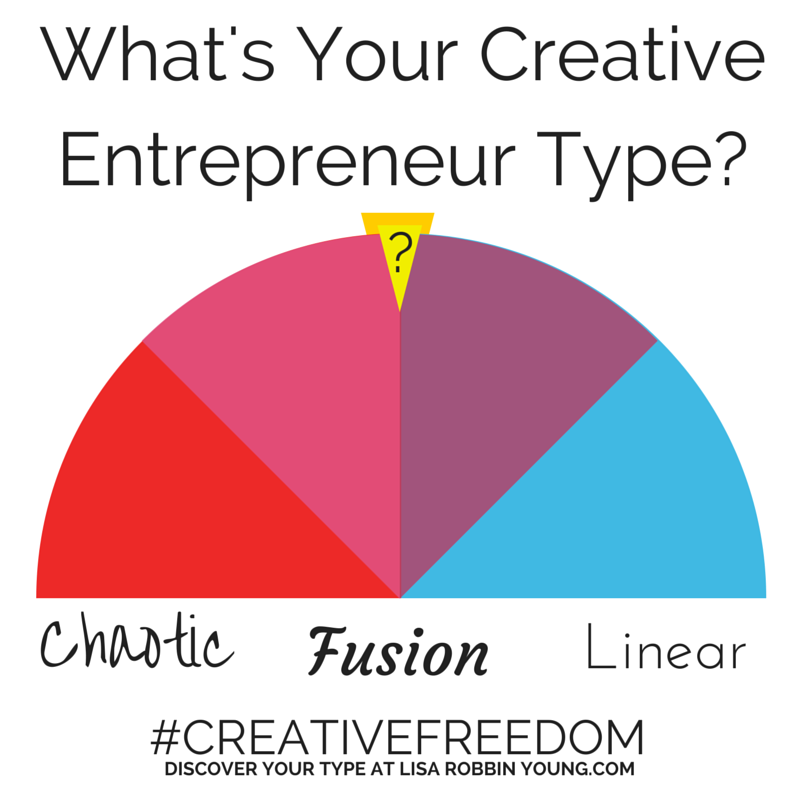
Turns out, that's part of my Creative Freedom type. I'm a Fusion, which means that I can always find someone more creative, more strategic, and more "better" than me if I look hard enough - but that's because my life is filled with a mix of awesome Chaotic and Linear Creatives, who will always be further along on the spectrum than I am. Fusions, on the other hand, sit right in the middle of the spectrum, which means we can do lots of things other people can't. It's why our analytical friends call us "the creative one" and our creative friends call us "the smart one."
This is just part of what I've been exploring in preparation for the launch of my new book "Creative Freedom." Once I learned I was a Fusion type, it gave me permission to embrace ALL the ways I'm crafty and creative. Finally, a place where I don't have to choose, I can just enjoy being me!
And I made an origami daffodil to prove it! It's my first attempt, and I used a plain sheet of paper instead of origami paper, so it's a little wonky, and I'm proud of it!
There's another reason I'm sharing this daffodil with you, and it has to do with a story that goes back about 20 years. You may have heard of it. It's called "The Daffodil Principle" by the late Jaroldeen Edwards.
But before I get there, let me tell you why I'm sharing this story.
I got an email from a reader who has been struggling with building her Noble Empire because of some stuff she's been dealing with in life: health, money, family... you know.. life stuff. She's a little frustrated and overwhelmed about wanting to be further along on her dream, but also stuck in the reality of where she's at.
Which brings me to the Daffodil story.
Jaroldeen's story is actually about a real garden in Running Springs, CA, designed and planted by Gene Bauer - a lifetime effort spanning more than 50 years. Every fall, at her vacation cabin, Gene would plan and plant each bulb by hand. When she started, she didn't even know which end was up.
Can you relate?
As creative entrepreneurs, sometimes we don't know what direction we're going - let alone if it's the right one or not. But Gene's an example of just showing up, year in and year out, and letting the creation unfold into a life's work. Most people don't know Gene was actually a teacher, and planting daffodils was just an interest, that became a hobby, that became a passion.
This week's video tells the rest of the story - the part that happened after Jaroldeen wrote her story - and I think it's probably even more powerful than the original, because of how the Bauers had to overcome adversity when fires besieged the property. Oh, and if you watch really closely, you'll get a quick glimpse of New Kids on The Block and a young Marky Mark Wahlberg before he got all grown up.
The more I researched the story, the more fascinated I became. That's part of why I learned to make an origami daffodil - since they're out of season right now (you can also make a stem if you'd like). Gene and Dale even compiled a history of the Running Springs property to give people some background on how the 5 acre plot of land came to be in their hands, and ultimately covered with so many varieties of daffodils.
THAT, to me, is what it means to build a Noble Empire.
What small step are you making? Share your thoughts and ideas in the comments and be part of the Rising Tide. Have a question you'd like to see featured? Hit me up! I love requests!
I think it was Jesus that said a prophet has no honor in his own home town, with his own family, or even in his own house.
It's one of the big reasons I first built my business online - away from the prying eyes and judgmental insinuations of my own family and friends.
Don't get me wrong, on the whole I've managed to remove myself from the toxic relationships of my younger days, but there are still a few lingering reminders that only serve to affirm the wisdom of Jesus.
I've been a musician and performing artist for decades. I'm glad to be able to offer my services for a lot of different kinds of events. A family member once asked me to perform for a public event she was facilitating. She needed a strong singer to lead the music for the event. Naturally, I accepted. She's family, and it was for a worthy cause.
And of course, I didn't ask to be compensated, because it was a charity event, I had close ties to the organization, and I wanted the opportunity to perform, share my gifts, and serve on a larger scale.
That was all well and good until I realized I had "served" my way out of my own value.
 The day of the event arrived, and as I was rehearsing with the other musicians, she came over and paid the pianist an undisclosed sum for his services. I didn't even get a thank-you card.
It was then that the words of Jesus rang in my head. More and more, I'm hearing stories from clients about doing "spec" work, or free work just for the exposure, only to discover there really isn't a real exposure opportunity. Or they're taking crappy-paying work because, hey, at least it pays something.
I'm here to tell you that you're crippling your business - and possibly your health and well-being. If you're saying yes to anything that comes along, you're not giving yourself room to do the work you really enjoy. Then, when the "good stuff" comes up, you're already booked! Let my example be your shortcut to sanity and more profitability. Here are three ways you can get more of the right people to value your work.
On one level, I was livid that my family member didn't see the value of the work I contributed to the event. I had to learn dozens of songs, rehearse them, and then perform them without errors - just like the other musicians. I also emceed the event, introduced the music, and was the "personality" for the event. Those are also elements of a performance that must be practiced. For as easy as it looks, I don't just show up and "wing it" for an audience. Even my improvisational work at murder mystery dinners comes from years of practice.
She didn't see enough value in my work to even give me any token of appreciation.
That's partly her fault, and partly mine. Had I done my job in the first place, and educated her about the value of my work, chances are good she would have at least given me a thank-you card or some small sign of appreciation.
If you leave it to chance, and just trust that people will recognize the value of who you are and what you do, you'll often be disappointed. It's one reason why I've heard so many people say "the marketing is more important than the mastery." That's not true, of course, because you don't want to be marketing crap, but at the same time, if you're not marketing at all, you're leaving money on the table and missing out on opportunities that could otherwise be coming your way.
And by "marketing" I mean educating your market about the value of who you are and what you do. Until they understand why you are good at your craft, until they understand why your prices are what they are, it's easy for them to price-shop - or worse, ask you to work for free.
I talk with a lot of entrepreneurs who understand the value of their offering - the work they do, the product or service the provide - but they don't value themselves enough to be paid. Hollywood writer Harlan Ellison and creative firm owner Mike Monteiro both speak out about the importance of not taking YOURSELF for granted in the business of doing business (warning: both videos have adult language). Plumbers and doctors can assert a value in the market for their services because of the results they provide. "I'll fix your pipes, and it'll cost you X." There's a clear outcome. But when we start looking at what we think are more nebulous or intangible "results" we discount the value that we bring to the table.
In truth, YOU are the reason that the offer has value in the first place. I say it a LOT - as a personality-based business, you are the most important product that your company has to offer. When I work with direct sellers, it's important they grasp this concept. They are one in perhaps a million other people selling the exact same product for the exact same price out of the exact same catalog. What makes their business the one to choose? People choose to work with a particular direct seller because of who they are, not what they offer.
If you don't value the contribution that you make, why should anyone else?
My grandfather was a carpenter. He once charged a guy $50 to hang a picture in his office. He walked in, tapped on the wall, then drove a nail with two deft strokes. He hung the frame and handed the guy the bill. Outraged, the guy wanted to know why he charged $50 to drive a nail. My grandfather took back the invoice, scribbled something on it and returned it to him. It now read:
Driving one nail: $10
Knowing where to drive that nail: $40
Total due: $50
I make singing look easy because of the thousands of hours in my life I've already spent learning music, performing, and honing my craft. I've got hundreds of youtube videos of me speaking or performing in some way. That's all "free" work I've been doing for years. Lots of practice!
Where have you invested in your life in ways that improve your craft? Value that investment. (Tweet this)
Sometimes, you can educate people until you (and they) are blue in the face, but if you're singing show tunes in a honky tonk, you're going to get booed off the stage no matter how good you are.
When you're first starting out in business, it's a seductive trap to take whatever business comes along - anyone who can fog up a mirror or anyone who pays, regardless of whether or not they're a good fit for you. Ultimately, it means you don't have a business, but rather that you're a whore willing to dish it out to anyone willing to pay you. Sorry to be so blunt, but it's true. Although, my friend and colleague, Sydney Barrows, would probably argue with me. She's the former madam that ran Cache' - a high-end "escort service" back in the 80's. She had a very clear idea of her target audience, and didn't waver. If a client was a jerk, they were fired. Her clients were A-list-ers and her "girls" were expected to provide a quality experience - with a price tag to match.
If it works for the escort business, it most certainly can work for you.
You're wasting your time if you're trying to justify your existence to everyone - friends and family included. I had to back away from people who didn't get me, people who didn't understand what I was all about. I had to find "my people". I've been in various mastermind-type groups over the years, and a year and a half ago I came to roost with a group of local women - all authors - who are some of my strongest supporters and encouragers. They understand me. They help me get some clarity. They even hold me accountable when I ask. I've got other supporters, too. People who see the real me (and love me anyway), like my coaches and colleagues (like Sydney). You'll notice I didn't include my spouse. I love my hubby, and I learned many moons ago that he doesn't get what I do. He's starting to understand a little, but we've been married for almost 10 years now. I had to stop holding my breath, and only share with him the stuff that he understands. The rest, I save for "my peeps."
Whether you're a direct seller, a shop clerk, or a performing artist, you've got to know who you're here to serve. Again, it makes no sense to sing show tunes in a honky tonk - even if they had an opening and it's great exposure. Sometimes you get lucky and the audience knows clearly what it wants - like a local barbecue joint that only plays blues music. Blues and barbecue go together easily. But most of the time, it's up to you to hone in on who you're here to serve.
As a business coach, I focus on growing businesses - specifically those where the business owner is the face of the company. That means I work with a lot of direct sellers, solo-preneurs, authors, speakers, and performing artists. It's a wide variety of people, yet they all share the commonality of being the face of their business. Why? Because I am a personality-based business owner. I am "the singing business coach" - a musician and performing artist who helps other people like me grow a profitable, sustainable business. I understand the particular issues these folks have in balancing personal and professional commitments. We don't have traditional "work hours" because our face is always "on". There are unique concerns that these businesses face that major corporations don't. I understand that intimately because it's the life I've lived for decades now.
That is my professional audience. What's yours? Who do you most resonate with? Who are the people you get the best results with or most enjoy working with? What do they have in common? Those are the threads that help you define your professional audience. Once you've defined it, speak directly to them. Stop trying to win everyone else over. A lot of people won't get you. That's okay. Focus on serving the ones who do.
Once you value the role you play in the work you do, and can educate your right people about that value, it's easier to command the prices (and respect) that you deserve.
How have you experienced this feeling of not being valued for the work you do? How did you handle it? Please share your comments below!
I'm not one for social commentary or deep philosophical discussions, so consider this the "light version" of any meaningful conversation about the nexus of technology and society. This isn't a commentary about technology, though. It's more about what's unwittingly happened to people as we've become more "connected" to the world.
The Industrial Age gave us cookie-cutter, assembly line techniques for being efficient and crafting a uniformly effective offering.
That's awesome in a survival-based world, where cranking out quality stuff in quantity is important.
But that's not the world we live in anymore. On the whole, we are wealthier and healthier than we've ever been as human beings. Yes. there are exceptions to the rule, but most of those folks aren't reading this anyway, so it doesn't apply to them.
This applies to you. You, the person that's been cramming yourself into the same cookie-cutter mold for decades (or railing against it), because that's all there was.
I've been pretty lucky to "grow up" in the digital age. I'm technically not a Millenial, but I'm on the cusp. I built one of the first e-commerce websites back when animated gifts were all the rage (the first time), and video wasn't even a glimmer in the Internet's eye.
In that time, there've been lots of "game changers" - which is almost silly to say. The advent of the Internet is like watching an infant grow into a toddler and then a teen - everything is new, thus everything is a "game changer". But the one commonality I've witnessed over the last 20 years is the growing ease with which people can access, use, and contribute to this technology - and how this new-found ease impacts their work.
10 years ago, the idea of watching your favorite TV show or a feature-length film on your stylish CaseFace phone was insane. Now, mobile and "third screen" viewing has eclipsed television, and will likely continue to do for the foreseeable future. The ability to take your media with you has relegated newsprint to the birdcage, and magazines I loved reading as a kid have gotten thinner and more ad-laden.
Less content, more commercials. A sure-fire end to most anything.
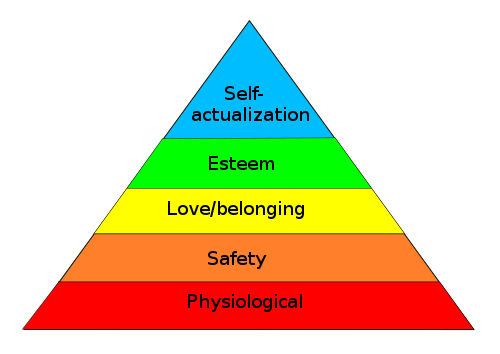
One look at Maslow's Hierarchy of Needs will show you that we've done a great job (on the whole) of getting those basic needs met. As I said before, we're wealthier and healthier than we've ever been in human history.
Here's another great example from Chip Conley, which condenses the pyramid into three layers (particularly the "employee" pyramid, which he's condensed to "money", "recognition", and "meaning").
Maslow's theory is that we work our way up the pyramid, once we've assured ourselves that our more basic needs are met. Once we've handled the basics like, food, shelter, clothing, saftey, and a paycheck, we can concern ourselves with "higher" issues like love, a sense of belonging, or recognition. Ultimately, once those things are handled, we can search for "self-actualization" or the meaning of life, if you will.
Here's the problem in a nutshell. We've been pushed up the pyramid, whether we like it or not. Computers have "connected" us, and made things incredibly easy, yet so many of us weren't ready for the shift.
Now, building a career can happen remotely. For my last job, I applied, interviewed, and was hired digitally. I worked from my Michigan home, and the company was thousands of miles away on the west coast. All my contact and interaction was digital: email, skype, webcam. No handshakes, no eye contact, just pixels.
Love and belonging (at least on some level) are just a facebook post away. When I'm feeling blue, I can post a simple "Hugs please" on Facebook, and my friends come out of the woodwork to encourage me. I never got that kind of instant gratification & encouragement before the Internet! So work, networking, and even relationships have gotten more efficient, thanks to technology.
We've got all this time on our hands, and yet we're stuck.
We're stuck because, now that the basics and middle-ground issues are being "handled," we have to look to ourselves and find meaning - something that takes time and can't be short-cut.
"Why am I here? What makes me valuable if a computer can do my old job in half the time? What real value do I bring to the world?"
We didn't have time to deal with these questions before. We had work to do, dammit, and that had to come first, so we could eat - so we could SURVIVE! But now, with all this time on our hands, we're having to face these questions - and some of us have a boatload of anxiety, depression, fear, or ambivalence toward it.
To make matters worse, we've been taught that thinking of ourselves is selfish and inconsiderate, and we are, therefore "BAD" for behaving that way.
No wonder our culture sometimes feels like it's on a downward spiral.
The truth is, you've been doing it since you were born. You "took" your first breath, and it's been downhill ever since. In reality, you can't NOT put yourself first. It's just that our culture has made it out to be some sort of a crime because there are those among us who would take it to the far extreme. Putting yourself ahead of everyone else - at all costs - is a kind of selfishness that often comes from a place of fear.
Self-care is not selfish - including in your work. (tweet this)
More and more employees are jumping ship to work for themselves. I'm meeting more entrepreneurs who left corporate America after only a few years of being disillusioned about their prospects with their employers. I'm also meeting entrepreneurs that are carving out a name for themselves by defining success on their own terms. They're creating businesses and offers that take into account how they like to work, who they like to work with, and what they want their life to be like so that they can experience success now - not in 35 years. They see that there's no pot at the end of the rainbow, that "someday" doesn't come with a big red ribbon, and they're deciding what they really want and going for it now.
To "older folks" entrenched in the ancient ways of the Industrial Age, it feels a bit like treason. It's definitely shaking up their snowglobes - the idea that they can give themselves permission to walk away from something they don't love and do something that brings them joy - and get paid to do it -still strikes fear into many of my older family members. They grew up in Depression-era America, where you got one job and stuck with it until you were old enough to retire, take the watch and the pension, and then go have a REAL life - if you lived that long. I know many employees of the assembly line factories who literally gave their lives to their work, dropping dead within a few days of retirement.
I've said before that now is the best time for you to create a business (and a life) that works for you. Of course, that means getting clear on who you really are and what's really important to you. It means doing the work at the top of the pyramid, and finding the meaning that matters...
... to YOU.
For some folks, this might seem foreign, or scary, but there are countless people in the world doing it. In fact, I'm launching a new series next year that spotlights these folks (more on that in a later post). They are becoming the norm. Gone are the days of three television networks and multi-national conglomerates that corner the market. Now is the time of what I call the "experience economy" - and creating a life for yourself that matters. It's reaching smaller, tighter markets and making a big impact. It's happening now.
On Monday, I'll be leading a free teleclass called "Success Your Way: How to have a profitable, sustainable business that works for you in 2015... and beyond." If you're at all interested in riding this wave of business with meaning, I invite you to join me. You'll learn more about this crazy "pyramid scheme" called business, as well as how to figure out which stage of growth your business is in and how to shape it to this new experience economy... which might sound more technical than it really is.
In short, we'll talk about how YOU can create a business that works for you, based on how you define success. And if you're not sure how to define success, we'll talk about that, too.
How are you dealing with the way technology has pushed you up the pyramid? What has been a blessing (or a curse) for you because of it? Share your comments below.
Here in the U.S., it's almost Thanksgiving, which means, black friday, cyber monday, and a whole lot of campy, cheesy, in-your-face marketing to ply you into buying more "stuff" to make your holiday complete.
Blech.
It's one of the reasons I do an annual give-back campaign each November around the anniversary of my launch of The Secret Watch. Last year, we gave away over 1000 books. This year, we're doing a week-long event, so I can't wait to see how it all shakes out on December 1. You can learn more about the give-back event here (there are a few cool prizes I'm giving away, too!).
It's one way I stay top-of mind with my audience without the crazy "sell. Sell! SELL!" of the holidays. But this kind of marketing madness can happen any time of year, as this week's post proves. I managed to contrive a "reason" for having a crazy sale for every month of the year... and one heart-centered approach that works all year long.
The best marketing, regardless of the season, is caring for your clients. (click to tweet)
Side note: For St. Patrick's Day, I was trying to point out my green shirt, not my boobs. *sigh*
I hope you get a kick out of this fun little video. After you've watched it, I'd love to hear your ideas for heart-centered marketing during the holidays (at any time of year). Share your ideas in the comments so we can all learn a thing or two about marketing done right.
It took Bart Howard well over 20 years.
Bart was a piano player in the Blue Angel cabaret, working on his own music, in the hopes of one day working with his idol, Cole Porter.
Most musicians know the name Cole Porter. Very few know the name Bart Howard. But this one song is his legacy.
Bart wrote dozens of tunes, but none were as popular as "Fly Me To The Moon".
Bart was asked by a publisher for something simple, and in 20 minutes he cranked out this cabaret waltz. The publisher asked him to change the lyrics, but Bart refused - a move that could have jeopardized his opportunity to have this song produced. But Bart held his ground on his song. Since then, "Fly Me To The Moon" has been covered, re-arranged, and even had the time signature changed when Quincy Jones arranged a version for Frank Sinatra.
Originally titled "In Other Words," Peggy Lee recorded and later performed the song on national television. As it grew in popularity, Peggy convinced Bart to change the name to it's well known opening line.
For Bart, it was this song. The success of "Fly Me To The Moon" was such that he continued to live off the residuals of that one song for the rest of his life. It's considered a "Towering Song" in the history of contemporary popular music. In 2004, 50 years from when he wrote that tune, Bart died.
This week's song is a request from @PattyKogutek on Twitter. Thanks, Patty! It was a joy to learn this story and be able to share it with everyone.
Just one step. Just one song. Just one moment. That's all it takes to make history. What will you do?
Subscribe to Lisa’s YouTube Channel | More from the 300 Songs Project
(Author's note: this post originally appeared in 2011 on one of my old blogs. I've freshened it up a bit for you today.)
One of the things that really annoys me are those folks that say they want change, but don't take action when answers are provided.
It dawned on me why they don't budge.
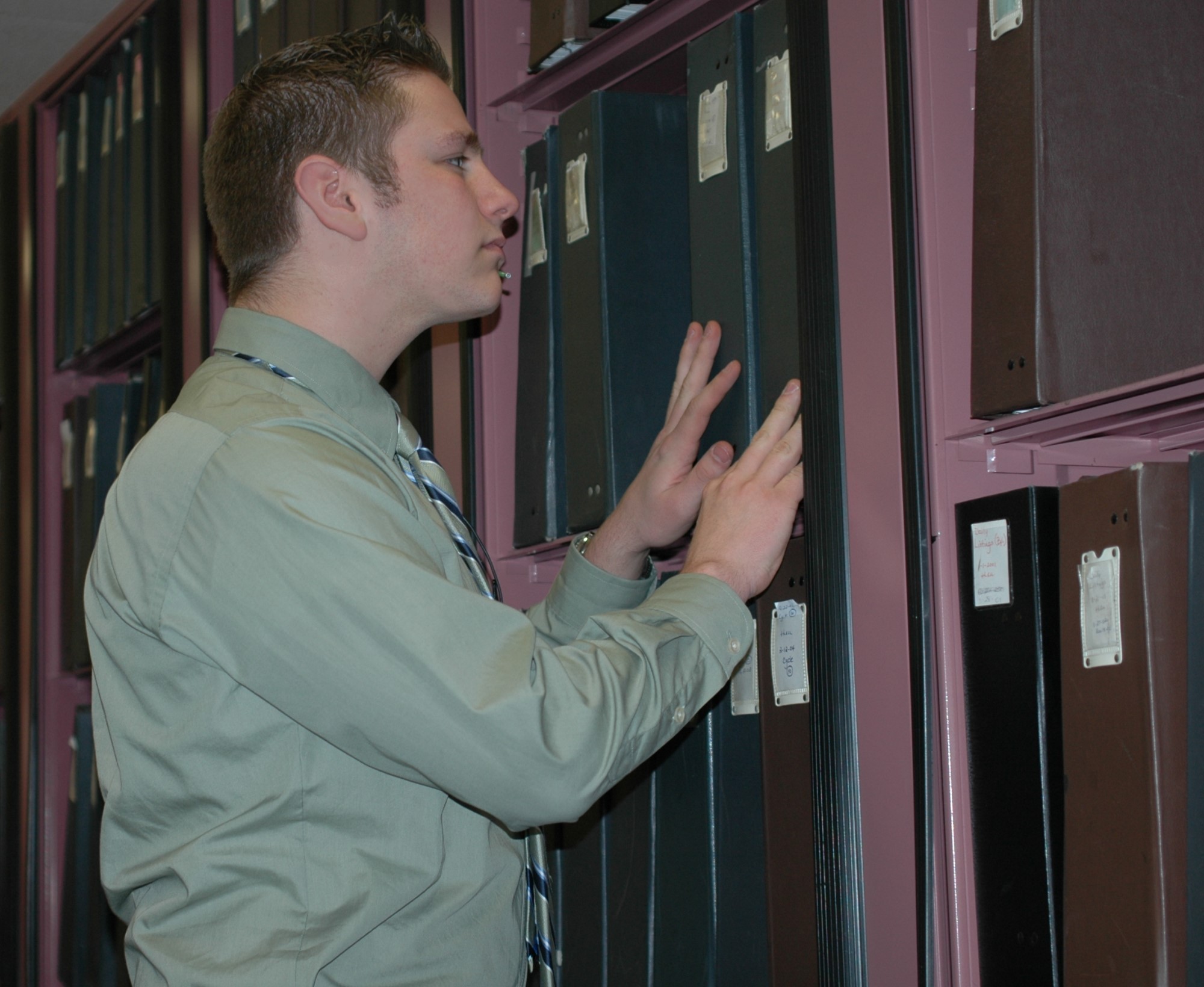
Picture a huge file room in your brain. There's a file clerk in there, taking in "evidence" for the various files in the "cabinets."
The file clerk never takes a break. He's contstantly filing away bits of information in the various files.
Let's say, in one cabinet, you have two files, one marked "I can't sing", the other marked "I'm a good singer."
Then let's say you're invited to sing in a local Karaoke contest.
Quickly, you run to the file clerk and say "pull out the files to help me decide what to do!"
The file clerk, never missing a beat, pulls out two files. One is significantly larger than the other. The one that says "I can't sing" weighs 100 pounds, while the other has only a few slips of paper inside.
(more…) Each time I go to my coach's weekend intensives, I always walk away with lots of ideas that pop like "popcorn" over the coming weeks. Sometimes they come in the most unusual ways.
For example, I was back in my hotel room, kind of winding down for the night. After a weekend like this, you can be emotionally raw, which means I can cry at the drop of a hat.
This video took me over the edge. Not only is it a powerful display of courage, but also conviction, commitment, and to staying the course when it comes to owning your dreams. Watch (you might need tissue), and I'll share some key lessons after. (more…)