As promised, here's a list of "ALL THE THINGS" that are available to you during this season of Gratitude.
Some are limited because they include one-on-one time with me, and there's only so much of me to go around.
But, you've got plenty of time to check your goals, check your budget, and make a decision about what's really going to serve you as we roll into 2026.
Limited to 6 people, max. When spots are filled, I will delete this option.
A 3-month deep dive for leaders/movement makers ready to step into 2026 with strategic clarity, emotional alignment, and grounded integrity.
Think of it as “your private runway for aligned success.”
Includes:
Investment: $1500 or 3 monthly installments of $500
Limited to 50 total sessions - once those sessions are gone, I'll delete this option.
Buy as many Next Steps Sessions as you'd like for 2026 at the 2025 rate - rates are increasing in 2026!
Normally, I only allow one Next Steps Session per person per year, so this is the only opportunity you have to stock up.
Includes:
Investment: $300 per session (buy 3, get one free)
A welcoming space for you to experience clarity, connection, and alignment - without pressure, overwhelm, or hustle culture. This is an experimental, 4-month program, starting in January (Dates/Times, TBD, based on enrollment).
Includes:
Investment: $200 or 4 monthly installments of $50
Take your time to consider what would serve you best.
So, you've got PLENTY of time to shop all the other offers out there and decide what's best for you.
Got questions? Hit me up. I want you to be able to decide form a place of clarity and ease.
Looking for books, music, or the other usual suspects? You can find those in my shop.
Is it too early to say Happy Holidays yet?
This time of year is weird.
On one hand, there's a feeling of community and togetherness in the air. People are gathering for family meals, making community connections, and have a spirit of gratitude and giving that seems more heightened than the rest of the year.
On the other, there's a sense of mad rushing, crushing crowds, and urgency that just. keeps. PUSHING.
It's one of the big reasons I'm not a fan of this thing called Black Friday.
Aside from the fact that there's a sordid origin story to the phrase itself (look it up), there's something about the forced nature of the whole concept.
This whole orchestrated series of events designed to do one thing:
keep you in a state of anticipation and unrest, unable to think clearly about your budget, your means, and your true desires.
"Should I buy this now, or wait until Monday?"
"Is this other store going to have a better deal?"
The frenzy. The FOMO. The anxiety. The nervous system disruption.
I've never liked the whole forced nature of it.
It feels like retailers push everyone into a murder hole and we're all just sitting ducks for the barrage of "act now", "limited-time only" offers that roll out the day after Thanksgiving.
And even THAT doesn't seem like it's enough anymore, as everyone and their AI clone are rolling out savings, deals, and "massive discounts" ahead of the day to get a jump on things.
It's all an ever-escalating push to GET you to BUY MORE.
Even if you don't need whatever's "on sale".
I mean, yes. Deals are great.
Anything you can do to put one over on Capitalism is a win to me.
But, JEEZE OH PEETS it's enough to make a person lose their holiday spirit altogether!
===
Let's take a breath, shall we?
I don't think I've made a Black Friday kind of offer in decades - and I'm not about to start.
What I am doing is creating something new, that has spaciousness and ease built into the decision making process.
I'm calling it my Gratitude Season offer.
Because, frankly, this is a SEASON, not a one-day thing. It's more than just, how's that song, Silver Bells, go?
"As the shoppers rush home with their treasures."
In fact, I won't even make it available until AFTER the cyber monday shenanigans cools off.
But I'll tell you about it soon, so that you have time to decide if you want to step into it before the end of the year, or if you'd rather invest your cash elsewhere.
No high-pressure pitch.
I want you to go into this season of shopping madness with clarity and the ability to make an informed decision, opt-out if you like, and not rush from offer to offer like it's trick-or-treating on Supermarket Sweep!
This summer, I've been building out a balcony "victory garden" of sorts. My friend, Dusti Arab, launched her new venture, Hearth & Hollow (a plant CSA in Vancouver), and she's been helping me navigate the growing seasons of the Pacific Northwest. While we were living in Portland this summer, I got some tomato plants and a marigold from her - because companion planting keeps the bugs at bay.
I had to leave one of the tomatoes behind when we came across the bridge from our temporary digs to our new apartment in Vancouver. I kept the cherry tomato and the marigold. Both of them have grown like crazy this season! I've donated SO many seeds to our local seed library.
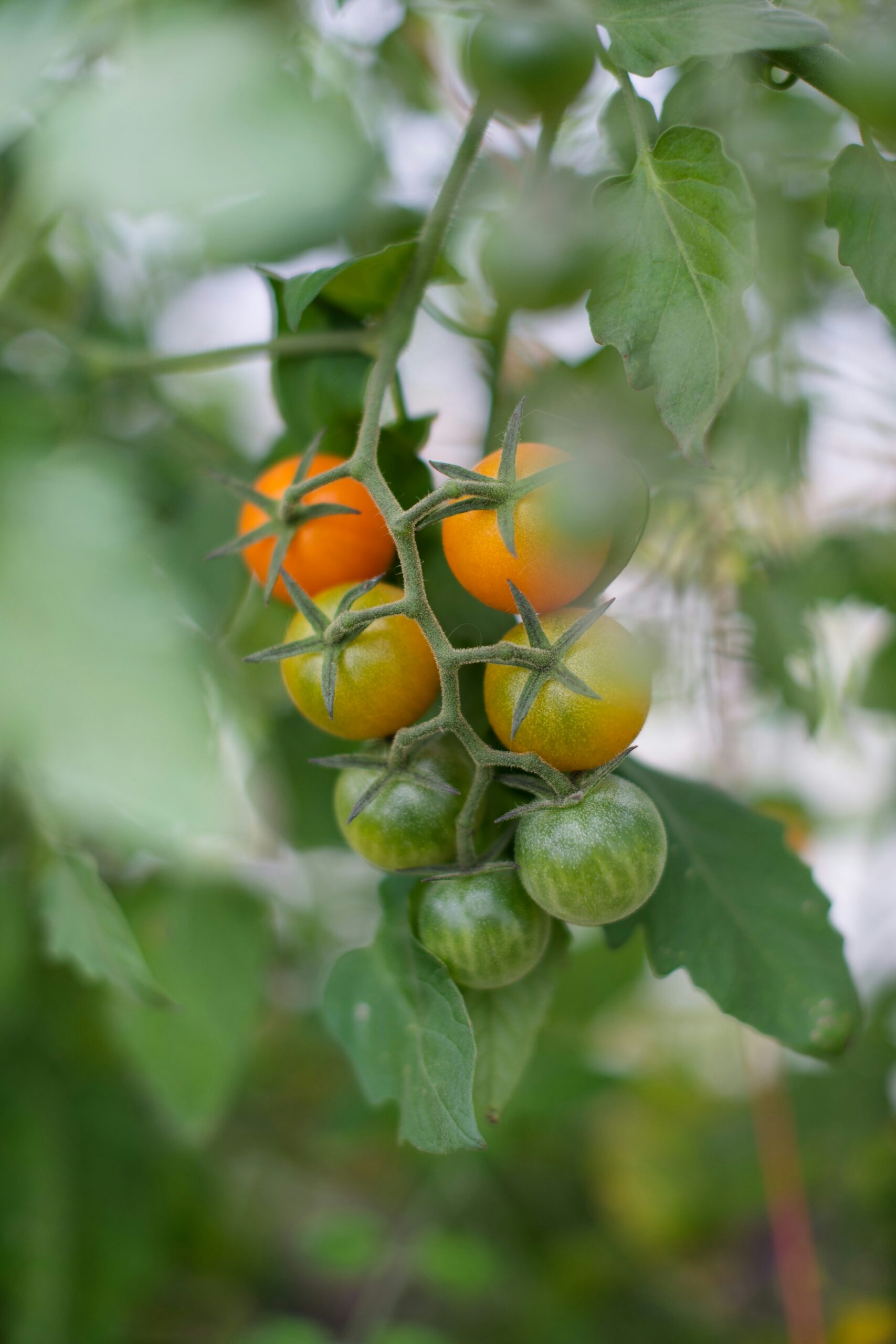
While my garden isn't yet able to feed two of us, it's a good start. The jalapenos and bell peppers have topped our pizza and found their way into salads and salsa with the tomatoes. My basil plant gave up enough leaves for pepita pesto (THAT was an adventure!), and I learned how to use a vibrator to make light work of hand pollinating my tomato plant.
My strawberries put out enough of a crop to make a few smoothies, and my other herbs gave me mint jelly, bug spray, and enough oregano to stop buying it entirely. I have fresh and dried oregano galore! I also have found a handy way to do composting on the balcony without any stink.
I am proud of me!
As the weather got cooler, I knew I'd need to bring plants inside. I've been making room in my office for them. I brought the peppers in two weeks ago. My bell pepper is covered with baby fruits right now, so I want to see how long I can keep it going. And that one little marigold is now in two pots, it got so big! So I brought it in to keep the bugs off my peppers. The Jalapeno has one fruit that's just starting to turn red. I don't see any more flowers on it, so I may plow it under when the pepper is done growing. I've got plenty of seeds to grow more (or I can just call Dusti in the spring).
But that cherry tomato is an interesting story.
Not long after I filmed that video about hand pollination, I found myself with a ton of baby tomatoes on the vine. With the growing season winding down, I could either pick them all or try to keep the plant alive long enough for them to get some color. Once they're plucked, they're not likely to sweeten up and turn red.
So I decided to bring it in.
When I went to move the plant, the whole thing lurched over to the side. Kind of flopping over the pot. I thought for sure it was broken, the main stem seemed fine, just twisting under the weight of all that fruit. The little stick I had put in the pot to help support the vine wasn't doing the job of holding it together anymore.
Boy, can I relate.
Growth is supposed to feel exciting — like momentum, freedom, and possibility. But sometimes, it starts to feel heavy.
More clients. More revenue. More moving parts. And somehow… less spaciousness, less ease. More frustration, and sometimes more doubt.
There was a time when I believed you just have to hustle through the hard parts. I mean, it's not like I don't have plenty to do, right? There's always time pressure or financial pressure, or some other kind of pressure trying to squeeze you.
Maybe that's just me?
Much like the tomato, things can look good at first: your efforts are starting to bear fruit - maybe even LOTS of it. But fruit needs time to ripen, and you're in that waiting stage. Meanwhile, more fruit begins to appear: new opportunities, new possibilities, new connections.
While it still feels manageable right now, it's getting harder to know where to put your limited focus. Pretty soon, you'll recognize that other resources are feeling stretched: time, energy, money, effort.
When you’re finding that growth is costing you emotional or physical energy faster than you can replenish it, that's a red flag that something's out of alignment.
And I get it. Sometimes it feels like you're barely doing anything and you're already depleted. Or maybe you've just come down off a launch or a big push to complete a project, but it didn't turn out the way you hoped. Which means... you've got to do something else to cover the gap. Which feels like way more than you can handle right now.
If you’re starting to feel like you’re carrying everything - decisions, execution, that “buck stops with me” mindset - that can signal growth pressure rather than expansion ease. Solopreneurs can get caught in this "bottleneck" trap on the regular - because the buck does stop with you.
Startup Snapshot released a report surveying over 400 founders and CEOs that revealed about 72% face mental health issues - with high stress, anxiety, burnout, depression, and panic attacks topping the list. When your business growth begins to feel like a personal weight, rather than a creative expansion, it's a red flag you shouldn't ignore.
Then, there are the structural warning signs:
If it feels more like you're "steering" versus being "pulled" by your business, that's a healthy stretch. A sense of having some control over the way things are going makes a difference. There's excitement, maybe a little uncertainty, but it still feels manageable.
It doesn't take much more for that stretch to start feeling like something's snapped, so keep paying attention and check in regularly. Are balls getting dropped more often? Are plans getting pushed? Does it feel like you're putting out a lot more fires? That's unsustainable.
Assess the stretch not just by outcome (revenue, clients) but by experience: how is it landing in your body, energy, and relationships? As founder/owner you want growth that expands your capacity, not growth that asks you to carry more with the same capacity. When growth triggers system upgrade, you’re in the expansion zone; if growth means “more hours, more doing”, you might be in strain. Ask yourself: Does this next step stretch me into more capacity (with support) or stretch me into more risk of breakdown?
More - adding more tactics, more deals, more clients is often the first response. How do we create more money, hire more help, or take on more work to calm the storm? The instinct here is that more revenue will unlock freedom or make the load feel more “worth it”. But, as I mentioned in a recent post, your brain is probably lying to you.
Hacking - rather than addressing systems or deeper structure issues, you look for a “quick fix” (tool, app, automation) to get more done. Assuming the learning curve isn't too steep, it might help you in the short term, but sooner or later, that "band-aid" won't stop the bleeding anymore.
Delaying - waiting until things get “really bad” before shifting structure or identity. Meanwhile you keep doing business‐as‐usual. Except, it's NOT business as usual, and it's about to get painful for everyone.
When these reflexes dominate, what you feel is: “I’m still busy, but I’m not free," or "I have more ‘stuff’ but less clarity. I’m playing catch-up." You might also have a sense that you're steering but feel like you're in the passenger seat. That's when you know you’re scaling the wrong things, trading leverage for volume, or your systems are under-designed for the load you want them to carry.
The healthier path isn’t just more, it’s smarter growth built on capacity, structure, and an aligned founder role.
When growth starts to feel heavy, it’s time for a Capacity Audit.
This process helps you identify where you or the business is overextended and how to rebalance growth with available energy and resources.
The Capacity Audit looks at three dimensions:
By auditing these dimensions, you can recalibrate growth — not to slow down, but to sustain momentum without depletion. And yeah, sometimes that means slowing down. But it's a temporary downshift so that the whole business doesn't shake apart while the wheels are wobbling down the road.
When my VA and video editor left the company for full-time gigs, there was no way in hell I could do everything they did for me in the same amount of time I'd been working. While I know some companies ask their employees to do the work of ten men, that's not how I roll. I stand for doing work and having a business that works for how you're wired to work. I'd be some kind of a hypocrite if I just doubled down and hustled harder.
It was clear that, as a team of one, I was the bottleneck for everything that needed to be done. So, Operational Load was beyond capacity. I had some decisions to make. Some things had to be shelved for a future date, while other things needed to keep going. Even if I took on some of the workload from my team members, there was no way I could do it all. How could I choose?
I was nearing the end of the season for Creative Freedom, so I hired some temporary help to get through the marketing of the show. That took some of my VA's work off my shoulders. But I also had to train this temp on how we do things, so I had to account for that in my time budget. Thankfully, the agency I worked with assigned me a quick study, making light work of the training process.
I kept filming for my new reality show. That was (mostly) easy enough. Instead of filming daily, though, I condensed my filming to just a few days a week, highlighting the important updates and a few real-time activities for B-roll.
No editing, no scripting, no new content creation. There simply wasn't enough of me to go around.
Over the summer, I had one client complete and another graduate from the Incubator into a legacy coaching contract. That impacted our already stressed financial situation. My husband's health issues compounded the toll on my Energetic Load... and there's really no way to extend beyond your capacity here. You either have it or you don't.
I was maxed out.
With no one but me to count on, I had to get ruthlessly honest with myself about what really mattered and what could wait. But I also had to look at the long-term affect of those decisions. Was I putting a band-aid on a gaping wound? I also needed to right-size my expectations about what was really possible, given everything else that was going on around me and asking for my attention.
There were weeks when I had all I could do to see my current clients, my therapist, and keep filming the show. Some weeks there were no client appointments at all, which allowed me to stabilize my Energetic Load.
That space also gave me the ability to re-examine my strategy and discern what needed to change to keep my Strategic Load viable for a one-person operation. I was still not feeling like I had the spoons to think about hiring a new VA or video editor. So what could I do, as I was able, with my available resources?
These are a few of my go-to questions for myself and my clients, when sorting out capacity issues:
Your mileage may vary. The goal here isn't to rake you over the coals like some late night police interrogation. It's about helping you see the gaps more clearly so that you can strategize how to resolve them before your red flags become a sinking ship. Pick 3-5 questions and use them as part of a monthly “capacity review” session.
The quality of your answers matters more than the quantity of questions. If any of the answers reveal “I don’t know / I don’t have a system / I’m doing everything myself” then that signals a capacity gap. Growth feels heavy when you skip these questions and push ahead without checking your capacity.
Once my husband's cancer surgery was complete and he was through his first week of recovery, "suddenly" I started to feel like I had more capacity to work. I was feeling like my old self again. Ideas were coming to me, and all I wanted to do was start writing.
You're witnessing some of that writing now.
When you right-size your growth, everything lightens. The same workload "suddenly" feels manageable because it’s aligned. You reclaim your creative bandwidth and your energy. Of course, there's nothing "sudden" about it. Youve had to do the work to get here.
But now, instead of scaling chaos, you’re scaling coherence.
This is sustainable success... where expansion feels like flow, not friction.
When systems, roles and boundaries are aligned, you've got more mental and emotional bandwidth to think beyond the day-to-day. Instead of simply reacting, you can create. You can transition from “keeping the lights on” to “designing which lights can come on next”.
With right-sized growth, there's space to experiment because the stakes shrink just enough (you’re not in survival mode) and your structure is able to support trying new things without the threat of collapsing the entire system.
As a leader, right-sized growth often means you stop being the bottleneck and become the orchestrator. That shift changes how others experience your presence. You’re not just doing, you’re designing, inspiring, delegating. Research shows that leadership attitudes and practices (not just tasks) play a key role in linking growth with capacity. Your presence changes — you’re less of a “hands-on doer” and step into the role of “guide, creator, and transformer”.
And that little tomato of mine? He now stands tall in a sunny corner of my office, supported by the wall. The fruit are slowly starting to get some color, and I supplement the sunlight with a small LED light in the mornings and evenings.
Growth: supported, right-sized, and ready for the future.

Next week, I'm hosting my Conditions for Success workshop. Similar to a capacity audit, we'll walk through seven domains of sustainable growth in detail. You'll get immense clarity on what needs to shift in each of these domains to help support your capacity to thrive. Build momentum that lasts, without losing yourself in the process, and create a business that fuels you. Registration is now open!
"Something's missing," I said, frantically sifting through client folders. "Something's not right."
I'd used Conditions For Success as an exercise at my annual planning retreat for years. It was a handy way to create sort of a "pre-flight checklist" to set your day, your month, your LIFE up for greater success. I'd developed this exercise after hearing Oscar Wilde's quote about success being a science.
Essentially, if you have the right conditions, you'll get the result.
Success is as much a feeling as it is checking boxes. In fact, I believe people conflate goal attainment and achievement with success far too often. It's why you see rich folks who don't feel successful despite having the trappings of success.
When I work with clients on creating their definitions of success, I want to know how and when they'll actually feel successful. I often ask "what's going to give you the most cause for celebration in a year? How will you know when you've 'arrived'?"
It's an embodiment activity, as much as anything else. To put them in a frame of mind where they can say, "This is what it's like when I actually feel successful by my own definitions."
Some clients were able to take this quick exercise and run with it... setting up their workspace, their morning routines, and their homes to give them the best possible chances at experiencing success in the now - not some far off "someday" that never comes.
But some folks continued to struggle.
I mean, nothing will work for everyone. We're all different people with different circumstances. But there were some recurring themes that left me with a nagging feeling that the exercise was incomplete at best, and dangerous at worst.
Dangerous, because if it's truly not helpful, it might actually be harming my clients. Giving them a false sense of hope and setting them up to experience failure instead of success - the very opposite of what I was going for!
Sifting through my notes in client folders, trying to find the common demominator(s), I realized:
Leaders don't fail from lack of effort. They fragment and fall apart under the weight of growth.

What’s really happening isn’t failure. It’s structural strain.
Your old foundations aren't supporting you anymore - if they ever were to begin with!
My clients are smart, capable, brilliantly gifted folks. They are DOING the work. They are showing up, they are making the asks, they are inviting their audience into transformation.
Some have more capacity constraints than others, but any of them can have the kind of success they're craving.
At least, that's what the quote said, right? If you have the conditions, you get the results.
Except they weren't.
Could a dead, White, Victorian-era poet be wrong?
Maybe...
But that question - and that context - helped me see that there might be more to it than I originally thought.
Every business operates inside seven domains that influence how success is created, held, and sustained.
When one domain falls out of alignment, success starts to leak out, unseen. Capitalism and the systems that run inside it are built to the advantage of some folks and not others.
Might some of those systems be creating conditions that also inhibit the growth potential of my clients, maybe even in ways that aren't easily perceived?
Hell yeah!
That was all the evidence I needed to start reconsidering my stance.
I was taking cues from an old white guy. Closeted, but still. And I already knew that the Marginalization Tax is very real. But due to my own biases (that I continue to deconstruct and unlearn), I had never considered that the two might be linked.
As i kept writing and researching, I discovered these seven "domains" that influence every business in one way or another. Some we have more direct control over, while others are beyond our personal control and rely on the broader influence of a group of people.
Core Domains revolve around Identity and Purpose. These are the things we have the most control over. If you're an independent adult, you can decide how you want to show up in the world and who you want to be. You can seek to align your identity to your purpose in the world in ways that others have little to no direct control over. Now, there may be other things at play that have you masking who you are in public. You may even have trauma from your past that makes being yourself "out loud and on purpose" challenging, but from an internal alignment standpoint, you've got the control in this domain.
Personal Domains are closely tied to your core domains. They are the external and immediate domains that concern your physical, mental, emotional, and cognitive conditions. We have a good deal of control here, and a bit of direct influence, but not everything is within our power to control. For example, you can eat well, get good sleep, and still get sick. If you are navigating a physical illness, you can't control the outcome of the illness. The best you can do is influence the outcome through your actions to create the best possible environment for healing and recovery.
Operational Domains deal with your work environment, tools, resources, and logistics. You have less control here than your personal domains because you are often engaging or interacting with other people - and you have zero control over other people. Still, you are likely the one setting up your personal work environment and interacting with the tools, so you do have some direct control. In some cases you have limited control because you are not the one setting them up. That's when you're engaging in domains set up by others, and therefore can only seek to influence what you cannot control. That happens when you speak up about a broken chair or a piece of software that's behaving badly. You may not have the power to fix it, but you can speak to the person who does.
Relational/Social Domains are your interactions with other individuals. We have limited control over these domains. But you often have more influence than you realize. You're interacting directly with these folks and building relationships over time. Because other people are involved, we can't control them. But you also train people how to treat you, based on what you've come to accept from them and what they've come to expect from you. That breeds trust, likeability, and so on, making some elements of your interpersonal relationships more predictable than others.
So far, we haven't ventured beyond what I was already doing with my clients. It's these final three domains that helped me see where my exercise was falling short and failing my clients:
Capital Domains deal with interactions with organizations and institutions (like financial, religious, or legal). We have some influence over these domains because we interact with them directly. Still, they are not generally controlled by a single individual. Women have historically had a more difficult time getting bank accounts and holding property in their own name. The Equal Credit Opportunity act of 1974 barred discrimination in lending based on gender and meant that women no longer needed a man to co-sign on their loan application. No one person made that change happen, it took, literally, an act of Congress. But Congress was only swayed because of their constituencies.
Systemic/Macro Domains are things like the Capitalist system in which most of the world functions. This also includes things like industry trends, political climates, and cultural norms. It's often these Macro Domains that get overlooked. It's the "water" in the "fish bowl" that we're swimming in. If that water isn't balanced and optimized for you, it's actively challenging your very existence - no matter how much you try to align the other Domains to work to your advantage.
The DKDK Domain - what you don’t know you don’t know. The mysteries of the unknown. And here, you’re really only asked to make a choice, because you have no influence, nor control over the unknown. Your choice here is to decide whether you are aligning toward the possibility of surprise blessings or the possibility of surprise setbacks. Because they both will happen, and how you choose to orient yourself will color the way you approach and engage with your world.
This recognition helped me see where things were falling short with my clients' Conditions for Success - and my own! If the deck is stacked against you at the Macro level, there's only so much you can do to navigate or mitigate it.
It’s a strategic condition for adaptability and well-being. In simple terms: when your inner and outer worlds match, business gets lighter.
So Oscar Wilde was right: having the right conditions will yield success, but getting those conditions right isn't always so easy.
One of the reasons we moved out of Indiana to the Pacific Northwest was because we saw the handwriting on the wall: Indiana University was bowing to interests that didn't align with my values. The whole state was was moving in that direction, and while the folks I worked with were incredibly wonderful, and my own community was pretty dang cool, it was just a drop in a much larger bucket that was going to drown us.
We considered several options. I have friends, colleagues, and family members who no longer live in the U.S. For now, that's not a viable option for us. We have family here that we're not ready or willing to separate from at that level just yet. But we pared way down to make travelling light, unencumbered, even.
We created some breathing room for ourselves. When Jim's health issues cropped up, I was thankful we had that breathing room - because we sure as hell needed it!
That's why some clients were able to do so well with the exercise while others did not. Their fragilities were being exposed in ways I couldn't predict because I hadn't done the deeper work of examining these domains. But now, I have. And in doing so, I've also realized that just the awareness that these domains exist is helpful. While you can't control everything, once you see it, you can't unsee it, and you can make better plans and better use of your resources with you have that awareness.
Become a member of my Rising Tide community (it's free, yo!) and you'll get access to my upcoming Conditions for Success workshop. We'll walk through these seven domains of sustainable growth in detail. Build momentum that lasts, without losing yourself in the process, and create a business that fuels you.
I was crawling across the floor... or should I say I was trying to crawl across the floor.
Everything hurt. Every muscle twitch was excruciating.
Tears fell like hot lava from my face - and somehow, even THAT hurt. At best I was whimpering, at worst, outright wailing, as I made my way from the floor in the family room to the bathroom.
And then I had to try and stand up.
I was seriously entertaining the idea of just laying there - creating a pool of my own filth - just so I didn't need to move another millimeter.
But I kept going. I still don't know how I managed to "hold it" until I got to the toilet.
When my husband got home from work, we beelined to the ER. A few tests later confirmed that the sciatica that had disappeared months ago had come back with a vengeance. A pinched nerve that required neurosurgery to solve the problem.
Swell.
They sent me home with pain meds and told me to come back. The soonest they could get me in was 11 days away.
I'm sorry, what?!?!
Did you not hear the howling? Did you not see my wrenched up face and contorted body? I literally rode in the back seat of the car because I couldn't sit up straight, I was in so much pain.

I ended up having to reschedule my Creative Freedom Retreat because there was no way I could stand for more than a few moments at a time, never mind trying to lead a planning workshop.
At least with some pain meds, I could still get some work done. Right?
Wrong.
The meds took the edge off, but the pain was constant. I gave up trying to dress myself and ate as little as possible to minimize trips to the restroom... because said trips always required help. I practically had to be carried, it was that bad.
"Work" consisted of a handful of virtual appointments where I was strategically "propped and covered" so as not to reveal too much of myself on video. The less I moved, the less it hurt, so anything I could do without a camera on, I would attempt.
I had 4 semi-productive sessions before I finally gave up on the idea of doing anything that involved other people. The remainder of my "waiting" time, I was alone with my thoughts, wondering what would be left of my business when I was finally able to return to work.
Hustle taught me how to push — how to make things happen through grit, willpower, and sheer stamina. It trained me to override my body’s signals, distrust my intuition, and measure my worth by how much I could produce before collapsing at the end of the night.
Hustle applauds the late nights and the full calendars. It rewards the moments you say “yes” when your whole being is whispering “not now.” It’s a survival strategy dressed up as ambition.
When my kids were young, I wore busy like a badge of honor. So much so, that my kids thought I was always working and my youngest started to think his babysitter was his mom.
While I let a lot of that thinking go over the years, I was still the bottleneck in my business. I could outwork almost anyone, and I often did - until I couldn't anymore.
I told myself it was passion. Dedication. Proof that I was serious about success. And maybe that's a little bit true.... maybe.
What it really was, though, was fear.
Fear that if I slowed down, everything I’d built would crumble. Fear that if I stopped producing, people would stop paying attention... or caring about me at all.
I knew how to reach for the next milestone, but I didn’t know how to rest in what I’d already achieved. Every goal met, every box checked, every objective achieved only opened the door to the next one (and the next one, and the next).
Satisfaction never lasted long. It's a chronic condition for Fusion creatives - wind your key, put your head down, and go.
Ask for help? Naw. It's faster to just do it myself.
Celebrate? Maybe. Will there be cake?
Even with all the growth work I've done, I still didn’t realize how I’d internalized the notion that success is earned through exhaustion. That the more I sacrificed, the more I proved I was worthy of having it.
Well, crap.
It took being laid up in bed for 11 days to see how hustle had conditioned me to mistake constant output for consistent progress. To believe that if I wasn’t moving, I was somehow failing.
Double crap.
Hustle won't teach you how to hold success—how to sustain it without sacrificing yourself in the process. Because it’s one thing to climb the mountain; it’s another to live at the summit without losing your footing.
Real, sustainable success doesn’t demand more from you; it asks for something different: discernment, pacing, and the courage to stop performing your worth. It’s the quiet, grounded kind of success that expands your capacity instead of depleting it.
I knew how to climb the mountain of success. I'd been climbing my whole life. But I didn’t know how to live at the top without losing myself.
Hustle glorified the sprint and ignored the recovery.
Sustainable success is not about doing more; it’s about doing what matters with integrity and enough space to breathe. It asks you to trade urgency for rhythm, exhaustion for discernment, and constant striving for steady alignment.
It calls for pacing, not pushing. For courage—not the kind that conquers, but the kind that trusts.
The world doesn’t need your burnout. It needs your brilliance: steady, embodied, and alive.
Hustle culture disguises depletion as achievement. We’ve been conditioned to believe that busyness equals importance — but as leadership coach Ray Williams notes, being “addicted to busyness” actually diminishes well-being and real productivity.
The culture of hustle convinces us that constant output, all-in commitment and “always on” momentum are the marks of real achievement. Actually, though, research shows this mindset often leads to the opposite: exhaustion, declining performance and diminished creativity. Over-working (i.e., more than ~50 hours/week) actually reduces productivity, impairs cognitive function and stifles innovation rather than increasing it.
This is how depletion gets dressed up as achievement: you check off the hours, you hit the metrics, you keep moving — but the foundational capacities for leadership (clarity, presence, deep thinking) erode. The badge of “busy” becomes a mask for being drained.
When our identity is tightly bound to what we produce, our self-worth hinges on the next "result" - another client session, another set of deliverables.
Not that I speak from experience or anything. It took a LOOONG-ASS TIME for me to figure that out... and more time to do the work of unravelling it. And yeah, it still pings me from time to time... especially when my results aren't what I expect them to be.
The first six months of our move to the Pacific Northwest have felt like I was doing everything I could to just tread water. It would have been easy to slip into old patterns of feeling crappy about how little "progress" I felt like I was making.
Two things are at play here. First, I had to acknowledge that my capacity constraints had shifted in ways I was not planning on. I knew I was leaving my gig at the radio station, packing or selling everything we owned and finding a new place out west. But I didn't plan on Jim having 4 heart procedures, a cancer diagnosis, and surgery for said diagnosis during that same time frame!
So, um, yeah... a LOT was going on and my "results" were focused in the personal part of my life, not the work part!
Second, I had to acknowledge that I was doing something - just not what I had originally planned! My container was full - with different, and equally important things!
To begin separating identity from output, you might start by asking: “Who am I when I’m not hustling? What parts of me are independent of my last result?” Then create structural practices (e.g., a weekly non-work reflection, a non-output-related role) that remind you your value isn’t tied to what you ship. This shift frees you to lead from your whole self rather than your last achievement.
When I gave myself credit for taking care of a move, my partner, our home, and that my container was full in other, equally important ways, I could let go of the notion that I had to hustle. As I tell my clients, resting is doing something! And even if I wasn't actively doing anything, I am still priceless to the people who love me most.
Having a foundation you can depend on (rest, rhythms, boundaries, mission) while continuing to evolve, expand, and learn (without spinning or burning out) creates a kind of stability that allows you to keep growing in meaningful, effective ways.
Here's what your "magic paintbrush" image might look like:
Rather than growth that feels like sprint after sprint, you’re building a resilient ecosystem — the soil is strong, the roots are deep, the trunk is steady.
Growth happens up and out, not just forward at any cost.
You wake up feeling grounded and energized instead of on the brink of burnout.
You have a business that expands - without losing your weekends, your focus, or your sense of peace.
You feel like your effort actually sticks... compounding instead of constantly resetting.
Output is transient, but belonging and worth are enduring.
Belonging to yourself, and what really matters (alignment, integrity, impact, connection) instead of the misleading signals of “more" is what I mean here. Enoughness... in life and work.
Hustle promises short-term wins, usually at a long-term cost. It teaches you to sprint every race like it’s the last one—to chase visibility, validation, and velocity over intentionality.
You can’t build longevity on adrenaline alone.
The harder you push, the less space you have to integrate what you’ve built. Eventually, your growth outpaces your grounding—and the Noble Empire you worked so hard to build starts to feel like quicksand.
“If you just work harder / longer / push through, you’ll win and you’ll be safe.”
Whatever safe means.
I've said it to myself. My own clients have said it, too. I had to invite one client recently to consider that maybe, just maybe, their brain was lying to them.
Sometimes, it's true. When you're reaching the finish line, that little extra push can be exactly what you need to get over the hump and get it done. I call that "compassionate hustle".
I'm not anti-hustle. I'm anti-hustle culture.
Hustle culture sells the notion that exhaustion is a sign of commitment, that sacrifice equals reward. You're always "on" you can never rest, never quit, never replenish.
But the evidence says this isn’t reliable. It's not sustainable. Extended working hours correlate with worse health outcomes and reduced productivity — the premise of “more hours = more success” is flawed.
Because effort looks like virtue, it’s socially rewarded. It perpetuates the “ideal leader” myth of being tireless.
Also we lack good signals: when you’re busy and “on,” you might still hit goals, so the erosion is gradual — creativity diminishes, relationships strain, presence fades — but you still check the boxes that make it look like you're successful... while you don't feel successful at all. Meanwhile, culture normalizes overworking. One rocket-launching billionaire once tweeted that "nobody ever changed the world on 40 hours a week."
I call bullshit.
Working within your capacity means you’re not doing more — you’re becoming more effective, generative and whole. You're making space for what really matters so that you can grow with more ease - if you even want to grow in the first place!
Building from capacity (what I call your Conditions For Success) unlocks greater creativity and innovation. When you stop frantically "producing for the algo" and allow space (for reflection, rest, and integration) your mind generates richer ideas, your leadership voice deepens, your presence becomes magnetic rather than frantic. One report says that constant “output” pressure stifles the very creativity that innovation demands.
It’s built inside seven domains:
When these conditions work together in your favor, growth stops feeling like a tug-of-war—and starts feeling like a rising tide. Just knowing that they exist can make a big difference in how you choose to show up and what you choose to take on in your life and work.
Imagine building your business from stability instead of strain. Growing with rhythm, not reactivity.
You don’t have to chase balance because your systems and energy naturally support it. Opportunities flow because you’re operating in resonance—not resistance.
To slow down enough to hold what you’ve built.
To lead with clarity instead of compulsion.
To measure your worth by your alignment, not your exhaustion.
Become a member of my Rising Tide community (it's free, yo!) and you'll get access to my upcoming Conditions for Success workshop. Together we'll walk through the seven domains of sustainable growth, so you can build momentum that lasts, without losing yourself in the process, and create growth that doesn’t drain you.
Early morning. You roll out of bed, feeling heavier than you did when you went to sleep. You got your 8 hours, but your brain is already racing through the daily to-do's before your feet even hit the floor.
“Let me check my email,” you mutter under your breath. But the thought of doing even that feels exhausting.
On your phone (because you're so "efficient"), you open your calendar and see all the tasks you planned yesterday—and start putting things off. Not because you don’t care, but because your mental energy is already taxed. That important client follow-up gets pushed to “later,” and you justify it:
“I’ll do it after I finish this big project.”
So, you skip breakfast and jump into that project, but your excitement is gone. Questions that used to energize you now feel irritating, and you find yourself thinking, “Why am I even doing this?” Small frustrations feel magnified, and the enthusiasm that once fueled your vision feels muted.
You grab food and eat lunch at your desk to squeeze in another task. Coffee replaces nourishment. A walk or a moment to breathe feels impossible. Energy dips, muscles ache, and your patience thins—yet you keep pushing.

By early afternoon, even simple decisions feel heavy. Should you reply to that email now or wait? Should you tackle marketing or bookkeeping first? Your mind cycles endlessly, and your usual creative solutions feel out of reach.
Headaches creep in, shoulders tighten, and stomach discomfort reminds you that stress is taking its toll. You notice the small signs, but there’s no time to pause. You push through anyway, hoping it will pass.
"There's too much to do. I'll sleep when I'm dead," you joke.
But that joke's not funny anymore, and you're starting to think you're calling something into existence.
If this feels eerily familiar, you're not alone. What looks like just another day "on your hustle and grind" could also be the red flags of something else that's going to keep you stuck at a plateau indefinitely.
You’re working harder, thinking you’re “doing what it takes,” but results stall—or worse, regress.
More effort doesn't always leads to more success.
Leaders often focus on enhancing their competencies—skills and knowledge—believing learning more or doing more will solve the problem. Fusion Creatives are known to be "credential collectors". And my neurospicy and multipassionate folks may also find it challenging to accept that knowing more isn't insurance against burnout. In my experience, it can sometimes even hasten the onset!
I kind of blame Einstein for this. He's the one who said we can't solve our problems with the same level of thinking that created them. This leads a lot of people to think that more thinking is the solution.
That only works if you've got the capacity to execute on that new way of thinking!
Capacity development involves building the internal resources to handle complexity and change. Without developing the capacity to manage increased demands, even the most competent leaders can struggle to maintain performance (source).
When your effort outpaces your capacity, you create drag. Systems strain, decision quality drops, and your creativity - the very thing that built your success - gets buried under exhaustion.
Before you know it, effort is outpacing capacity, and your business suffers. Recognizing this early can allow you to course-correct before burnout hits.
It starts small... procrastination or task avoidance (source)—but then it compounds. Decision fatigue. Emotional friction, self-neglect, and physical fatigue slowly creep in.
Here's another scenario:
A colleague invites you to a connect. You decline. A friend texts to check in. You don’t respond. Engaging socially feels like extra work. Your world narrows to your tasks, leaving less energy for connection.
You feel like you’ve run a marathon in slow motion. Your mind is foggy, and your body aches. Sleep might come tonight, but even rest won’t fully restore you—because the cycle has been building for weeks.
Maybe months.
Mistakes you normally wouldn’t make have slipped through the cracks. Deadlines are missed or postponed. You know you’re capable of more, but your current capacity isn’t enough to support the level of effort you’re putting in. Anxiety creeps in as you think about tomorrow—and the day after.
This is the pattern your business can fall into when effort outpaces capacity. It starts small—a skipped break, a postponed task—but compounds into a full-blown misalignment between energy, attention, and output.
The good news? You don’t have to reach this point.
Many leaders equate increased effort with greater impact, assuming that doing more (working harder or longer) will yield better results. However, this overlooks the importance of aligning effort with capacity.
Without sufficient capacity (resources like time, energy, and money, among others), additional effort can lead to burnout, not to mention losing your effectiveness (source). Success, then is not just a function of effort. It's also a function of the capacity to execute effectively.
Or said differently, your strategy has to match your capacity.
"Success ...is not just a function of effort. It's also a function of the capacity to execute effectively."
- Lisa Robbin Young
Look, I get it. When things get stressful, we often look to what we can do to fix things. Because not doing something feels wrong. We've heard "somebody do something" in so many crisis scenarios - in life and on TV - that it has become sort of a cultural default setting.
According to an article in the Harvard Business review, busyness has become some sort of status symbol. The article mentions research report that shows how, in various parts of the world, "people consider those who exert high effort to be 'morally admirable,' regardless of their output." So, this isn't just a U.S. phenomenon.
The past 6 months have been an emotional and physical roller coaster for me. Moving from Bloomington, Indiana to the Pacific Northwest was just the tip of the iceberg. The stress of caregiving for my partner after 4 heart procedures and surgery for cancer was a lot. Oh, and I am filming for a reality show while also trying to find a new editor for said show, because my editor went back to school to pursue an IT degree when federal funding for public media was cut.
Clients don't stop needing support just because things in my life go off the rails. There are still sessions, deliverables, and meetings that have to happen. And they do. And I still have to take care of myself.
Which... to be honest... wasn't happening. I was waking up with a sense of dread - not because I didn't love my work, but because it all felt like too much for one person to carry. I stopped saying yes to social invitations. Me. An extrovert who mostly LOVES being where people are.
That's when I remembered to review my Conditions for Success.
I'd fooled around with this concept in workshops in the past, in a somewhat generic way. There's a sheet in my annual planner where you record the things that help set you up for success. That helps you be intentional about creating an Environment of Empowerment that gives you as many advantages as possible.
Maybe that means starting the morning with coffee in your favorite mug. Or maybe that means getting the right amount of sleep in a bed that's actually comfortable. Whatever those things are for you, document them and start arranging your life to include them.
But this time, instead of just making a quick list, I went deeper. Because I'd seen where this surface-level ideation wasn't always helping my clients. Sure, a good cup of coffee can start you off right, but those effects wear off. What about things that would have more of a lingering effect?
Yes, your environment, but what else?
Turns out, your Conditions for Success aren’t just about energy, tools, or mindset—they include the world you choose to live and work in. Sometimes, the smartest move isn’t more effort, it’s moving toward contexts that naturally amplify your zone of genius or your ability to find success for yourself or your work.
In my exploration and research, I've identified 7 domains that range from the highly personal (that we can control) to the more global (where we have minimal individual influence).
In all, there are about 25 different things inside these 7 domains to consider in your Conditions for Success. Even though you can't control or directly influence all of them, awareness that they even exist gives you the ability to better design your Conditions for Success.
By assessing your 7 Domains, you can identify where effort is exceeding capacity and course-correct before burnout, inefficiency, or frustration take hold.
When you operate in full alignment - meaning your values, goals, energy, resources, and client work are all moving in sync - a number of shifts happen. These changes are often subtle at first but become deeply impactful over time, both internally (how you feel, how the team functions) and externally (client results, reputation, growth).
When your values and purpose are aligned, leaders report much greater clarity. Decisions become easier because they have a filter: does this align with what I care about? What I stand for?(source) You waste less time on deliberation - playing “should I or shouldn't I?” - because you have internal criteria for what fits.
Doing work that aligns with your values ignites intrinsic motivation — doing things because they matter, not just for money or recognition (though, that's great, too!). That gives you the ability to stick with things when it gets hard.
When your work, your client relationships, and your schedule all align with your values and capacity, you reduce internal friction. You tend to take more sustainable care of yourself: rest, breaks, saying “no” more often (because misalignment often forces those to fall by the wayside). Full alignment supports self-care, which helps you replenish your capacity (source).
Being aligned means you're more likely to show up as your true self. That builds credibility. Teams, clients, collaborators sense authenticity, and trust increases. when you are clear about your values, your way of working, and your goals, you attract clients who match (source). That means fewer misalignments over deliverables or expectations. Relationships become more collaborative and less draining.
That’s exactly what the Conditions for Success workshop will help you do: spot the gaps, understand the root causes, and create a plan to work smarter, not harder.
Give yourself the gift of commitment to YOU. Set aside a minimum of 15 minutes in your weekly calendar. Treat this pause like a meeting with your most important client - you (or your business). Honor this commitment as best as you can.
Review your tasks and calendar commitments for the urgent and the important. What tasks are sucking up energy without delivering proportional value (busy work, low-leverage admin, etc.)? Be ruthless. Especially if you've got extra capacity constraints, it's important to focus your resources on the items you know are the most impactful and require the fewest resources. I call this HI-MR-C. You can see it in action in my One Move That Matters for Greater Visibility workbook. While that version is for your visibility efforts, the concept applies to any situation where you need to invest limited resources and need a positive return on that investment. So, really, anywhere. Focus, as much as you are able, on things that are high impact that also require the fewest resources.
Will other things slip onto your radar? Probably.
Sometimes you'll need all your spoons for something unexpected. That doesn't mean throw out your regular plan, it just means pause it, for now. Set a boundary to protect your capacity as you are able. And give yourself recovery time - even something small like a 5-minute reflection, stretching, or journaling.
Humans are not machines. We are not always predictable nor are we always built to be efficient. We are complex organisms, functioning inside a complex ecosystem. Hijinks will ensue.
-Lisa Robbin Young
Notice, I keep saying "as you are able" - because our capacity to "do" varies from day to day. Society wants us to believe something very different than that.
Why?
It's called the Capitalist "machine" for a reason. Machines are often predictable and built to be efficient, so creating metrics around "machine-like precision" are very attractive. But they also set up the very unrealistic expectations that underpin many of the problems with Capitalism.
Humans are not machines. We are not always predictable nor are we always built to be efficient. We are complex organisms, functioning inside a complex ecosystem. Hijinks will ensue.
The goal then, isn't to eliminate the complexity so much as to work with it. To have a strategy that matches the flexing capacity of our very human nature.
Make the commitment to take time for yourself... even small "stolen" moments make a difference and help build momentum. Over time, as your alignment improves, you'll find yourself "finding" more time and adjusting your capacity. Maybe even growing it.
But for now, awareness is a good place to start.
My latest workshop, Conditions For Success: The 7 Domains That Shape Sustainable Growth is happening Friday, November 7 at 11am Pacific US Time (2pm Eastern). It's free to all members of the Rising Tide community. Not a member? That's also free (for now)! Get signed up and save your spot!
A client came to our session recently, looking a little defeated.
She said she was feeling guilty — guilty for not doing enough in her business since our last session.
She said, “It feels like I’ve just been playing catch-up.”
Then she rattled off what the past few months had looked like:
She got married.
Found out she was pregnant.
Lost the baby.
Started adjusting her mental health meds.
Took on a part-time job to pay down wedding debt.
And that was on top of all the usual “life stuff” we all manage — family, house, errands, obligations.
Still, she said, “My brain keeps telling me that if I just put more time into my business, everything else will get better.”
Then she started listing all the things her brain claimed would “be fixed” if she could just hustle harder.
That’s when I had to stop her.
“Your brain is lying to you,” I said.

There’s a subtle but powerful difference between feeling like you’re behind and actually being behind.
In her case, it wasn’t perception — it was reality.
She’d experienced a cascade of major life changes that completely derailed her rhythm.
No amount of mindset work can erase that truth, and pretending otherwise only adds pressure to an already overloaded system.
So first, we named it.
“You really are playing catch-up,” I told her.
“Your business has taken a backseat to some major life events, and that’s not failure — that’s doing what you can as you are able.”
When we try to bulldoze through those moments, we ignore the natural capacity shifts that life demands. You can’t hold the same pace when your body, mind, and emotions are in flux.
You’re not broken; you’re recalibrating.
That reframe alone softened her whole body. She exhaled — like she finally had permission to stop fighting reality.
Then we tackled the next lie:
The one that says if you just put in more time, everything will get better.
This is the lie our culture rewards — the “just work harder” myth.
It’s baked into entrepreneurship and productivity culture.
But here’s the truth: You don’t know that more effort will fix anything.
You can’t be sure that spending another five, ten, or fifteen hours a week on your business will repair what feels off in your life. That’s an assumption your brain is presenting as fact because it’s trying to regain a sense of control.
Brains love control. They crave certainty. So much so, that they'll go about making up stories that feel like facts. There's research on something called Intolerance of Uncertainty that indicates our brains will go out of the way to avoid any form of uncertainty. Some groups of people have higher IU than others.
So, when uncertainty (chaos) increases, people with higher IU are more likely to experience emotional distress, engage in worry, and seek mental “structures” to reduce ambiguity.
Essentially, your brain tries to make order out of chaos when there may not be any order to find!
One study found that greater perceived control over stressors on a given day predicted higher odds of resolving those stressors later. That suggests that your brain’s craving for control isn’t just psychological fluff - it connects to how effectively you navigate challenges.
So when your life feels chaotic (especially if you have high IU), your mind may start constructing tidy equations:
“If I just do X, Y will improve.”
“If I work harder, I’ll feel better.”
“If I push now, I’ll finally catch up.”
Except… those equations aren't always accurate and rarely hold up in real life.
Instead of arguing with her brain, I invited her to run an experiment.
I said, “Let’s test your brain’s hypothesis.”
Here’s how we designed it:
The goal wasn’t to do more.
The goal was to gather evidence — to prove or disprove her brain’s theory.
That experiment gave her something she hadn’t had in weeks: agency.
Instead of spinning in guilt and overwhelm, she had a structure for clarity. A real, effective structure that wasn't based on some illusion in her mind.
She could now see herself as a scientist studying her own capacity, not a failure scrambling to “catch up.”
Once she stopped trying to fix everything through effort, we turned to the practical side.
She’d taken that part-time job to help pay down debt from the wedding. It made sense — but it also ate into her time and energy.
So we reframed that too.
I invited her to do that math and know when her extra income would pay off the debt completely.
We called it her Freedom Date.
From that moment on, every dollar she earned wasn’t just money.
It was pay toward freedom.
That one change transformed how she viewed her part-time work.
It wasn’t a punishment for falling behind; it was a strategic bridge to the next chapter of her life and work.
If you’re a business owner — especially one juggling multiple roles, responsibilities, and emotional realities — you’ve probably heard your brain whisper the same lies:
“You should be further along.”
“If you just worked harder, you’d feel better.”
“Other people are doing more.”And you’ve probably believed them, at least a little.
But your brain isn’t always a reliable narrator.
It’s wired for efficiency, not accuracy.
When life feels overwhelming, your mind will default to the simplest-seeming solution: do more.
Yet sustainable growth doesn’t come from doing more; it comes from designing your business around your actual capacity, not your idealized one.
It comes from testing what’s true, not assuming it.
That’s what capacity-aligned business design is really about: creating evidence-based clarity around what works for you, in this season of life, with the energy and resources you actually have.
If your brain has been telling you that “more” is the answer, try this instead:
Run your own experiment.
You might discover that less effort leads to more stability, that structure brings freedom, and that your business doesn’t grow when you push harder — it grows when you design for your truth.
Because sometimes the most productive thing you can do is stop believing everything your brain tells you.
Doors to my latest workshop will open soon. Conditions For Success: The 7 Domains That Shape Sustainable Growth is free for all Rising Tide members. Not a member? That's also free (for now). Get signed up and be the first to learn more!
I was sitting at my desk, doing my "usual" routine - the seemingly endless loop of "productive" things like email, writing, researching.
Yet, I couldn't shake this restless thought, pounding in my head:
“Is THIS what it's all come to in 50 years on planet earth?”
This year has been a wild ride, to say the least. Choosing to leave Indiana. Packing everything that would fit in a 5x7 storage pod (and selling or donating everything else) to come about 2,000 miles to the other side of the continent. Navigating my husband's health: 4 heart procedures, a neck injury, a diagnosis of and surgery for thyroid cancer, all in less than 6 months' time.
Oh... and I was supposed to be running my business, too?
Something had to change. I felt like I was living under a rock and I was pretty sure everyone was slowly losing interest in anything I had done or would be doing in the future.
Momentum matters. It's what keeps the "marketing machine" moving along. When you lose momentum, or can't capitalize on it when you've got it, things stall, slow down, and you basically have to start all over again.
Or at least it sure feels that way.

Sure, there's that old saw about how people learn by watching you. So there's some truth to the idea that visibility and influence are connected, but visibility for visibility's sake keeps leaders performing for appearances - draining energy, and losing trust in themselves and their teams.
When people believe visibility is leadership, you see things like:
With the rise of influencer culture, this is an easy trap to fall into.
I've been doing deeper work on what I call your Conditions For Success. It's a topic I've touched on in planning workshops over the years. When you know the conditions that set you up for success, it gives you more power to create or establish those conditions for yourself in an intentional way.
Your Conditions for Success aren’t just about energy, tools, or mindset—they include the world you choose to live and work in. Sometimes, the smartest move isn’t more effort, it’s moving toward contexts that naturally amplify your zone of genius or your ability to find success for yourself or your work.
And while I understand that not everyone has the ability to just up and leave where they are for more favorable conditions, the awareness that a better environment may exist is still important.
But in all my time researching and teaching, I missed something critical: identity alignment—how your internal sense of self matches how you act in work, relationships, and decisions (or doesn't). I'm fixing that now, by looking at why people who don't experience success may actually be grappling with Identity issues that we'd never considered before. Call it my own bias, or ignorance, this new research has helped me see just how important our sense of identity is in our sense of accomplishment and feelings of success.
I've known plenty of folks, and heard a number of stories about people who have wealth, power, prestige - all the outward trappings of success - yet they still feel miserable and unsuccessful. It seems obvious now that these folks were some how out of alignment, but I didn't get that it might be an identity issue. Checking all the boxes of "visible" success doesn't always equate to feeling successful or having an experience of success. I never realized that folks who weren't seeing that visible level of success may also be having a similar struggle.
If you're a leader who's stuck on "performance at all costs" you're running up against energetic, ethical, relational, and operational tensions that are likely to break you. You probably feel like you've got to be "on" all the time - or the house of cards will crumble. The research confirms what we already know: high stakes + high pressure + long hours leads to emotional exhaustion, reduced cognitive clarity, and eventually, burnout.
Let me be clear: wearing masks to get through a tough spot in your life or work can be useful. It's not always safe for you to be yourself, out loud an on purpose - especially if you're in an marginalized identity group.
Putting on a happy face when you are going through it can keep your clients or team members from unnecessary worry. But when your internal sense of self is misaligned with your external actions (especially if it's a chronic, continuous state of affairs), it can lead to:
When you can show up and get to be your full self (warts, sparkles, and all, as I like to say), you’re more likely to experience:
There's a TON of research to support this. Research also shows that being able to be your authentic self helps you lead your team members more effectively. But if you focus too much on short-term gains, and less on the long-term well-being of everyone (you, the team, the company), trust erodes and burnout sets in.
I get it. In our current political climate, there are a lot of short-term, immediate fires that need putting out. It's really hard to think about the long-term effects of anything when federal agents descend on your neighborhood and/or start rounding up folks who look like you.
The key is to strike the balance between your immediate need and the long-term vision you have in mind.
It's easy to forget. I sure did.
I was SO focused on getting moved, getting settled, making sure that my partner was healthy, that I had all I could do to see clients, never mind the other demands of my business! I managed to compete season 8 of Creative Freedom and have been faithful in filming for the reality show I'm working on, but there hasn't been much more than that going on for a while because of, well... (gestures wildly through the air) all this "life" that's been happening!
By tuning into identity alignment, you take a first step toward:
When you're out of alignment, trust drops. One look at the political landscape today and you see what I mean.
In a spring 2025 survey by the Partnership for Public Service, only one-third of Americans (33%) said they trust the federal government. Nearly half (47%) said they do not trust it. Further, two-thirds of Americans (67%) believed the federal government was corrupt, and 61% saw it as wasteful. A May 2024 Pew Research Center poll showed similarly low figures, with only 22% of adults trusting the government to do what is right most of the time. An August 2025 U.S. News & World Report survey found that 85% of Americans believe politicians and community leaders care more about their own power than the public's interest.
An article out of Cambridge revealed that When leaders don’t align what they say (visible leadership) and what they do, perceived authenticity and trust drop. This one from ScienceDirect says that your team (your audience) can smell the hypocrisy a mile away. You're not fooling anyone when you're being performative - at least, not for long.
I'd go a step further to say it's not just with your audience, but also with yourself. This sense of self-betrayal leads you to stop believing yourself, second-guessing yourself, and eventually, just giving up on yourself... and your dreams.
Ouch.
When I'm working with clients, we use a 4-step process:
Inside Conditions for Success, the Core Domain is the one that deals with your sense of purpose and identity. These are the things we have the most control over. Notice I didn't say TOTAL control over. We can decide how we want to show up in the world and who we want to be. We can seek to align our identity and purpose in the world in ways that others have little to no direct control over. But we are interacting in the world, and we have commitments, obligations, and identities that are not always going to be aligned with what predominant culture is asking of us. It's then that we have to make choices about where we will or won't compromise.
Those compromises are what set us up to potentially be out of alignment. Again, that's not to say all compromises are bad or wrong - very often they are survival skills. But it's unsustainable to LIVE that way for very long.
If the decision leads to confusion, skepticism, or dissonance in your relationships or team, it might not be truly aligned - or you may have been wearing a mask for so long that people around you don't know how to deal with this "new you". Here are some questions you can use to prime the pump:
“Does this choice come from my core values, or is it a reaction to others’ expectations?"
If you feel a sense of resistance, that’s probably a signal that something is off.
“Would I stand by this choice if someone asked me why I made it?”
If you find yourself holding back explanation or feeling defensive, that’s a red flag.
“Did I consider diverse perspectives, especially dissenting ones, before deciding?”
If you ignored feedback or dismissed counterarguments lightly, the choice may not be fully authentic.
"Am I aware of my motives, strengths, and limitations in this decision?”
If your decision feels reactive, emotionally heavy, or clouded by fear rather than clarity, that’s a sign to pause.
“Will this decision stand when pressures increase?”
If the decision only “works” now but collapses under stress, it may be more performative than authentic.
“Does this choice build or erode trust in me (internally or among others)?”
Because authentic leaders act in line with who they are, their followers tend to see that consistency, which builds trust (source).
When you're looking more closely at your identity, try these:
Journal Freely: Let thoughts and feelings flow without judgment.
You'll start to reveal patterns in your energy, decisions, and relationships. Over time, it can show where alignment is strong—and where external pressures may be pulling you off-center.
The goal is to keep moving closer to your truth. As I said before, total control - perfection is impossible unless you live in a vacuum. But striving for alignment helps you feel more successful in the moment. As I've said many times before, success is a destination and you're already there!
Conditions For Success is a topic I've touched on in planning workshops over the years. It was inspired by a quote attributed to the Irish poet of the Victorian age, Oscar Wilde:
"Success is a science; if you have the conditions, you get the result."
When I saw it, I felt this desire to prove or disprove the notion.
I mean, really? Can it be THAT easy?
In nature, we can see that some seeds bloom and grow while others - from the same plant - won't. We easily say "well, the conditions weren't right for the seed to grow."
Can this also apply to humans?
Apparently, yes... with an asterisk.
For years, I've led planning workshops and retreats where I've asked clients to consider their conditions for success in a generic way. Maybe they do their best work when they've had a cup of coffee first thing in the morning, or if they get to bed by 9pm and get eight hours of sleep. The focus was on things that were obvious and apparent - things they could control.
The logic being that when you know the conditions that set you up for success, it gives you more power to create or establish those conditions for yourself in an intentional way.
Some clients were able to take this rather generic assessment and run with it, while others still met challenges that made it difficult, if not impossible for them to create conditions that allowed them to thrive.
That's when I started thinking there might be something deeper at play. In our imperfect world, there are downright hostile conditions that make it impossible for almost anyone to thrive. And yet, there are a handful of people who can manage even despite those conditions.
There's a lot of "Darwinian, survival-of-the-fittest-type stuff" that's been baked into our world. Our culture, our communities. It's why we see the deep need for accessibility legislation and other resources to help people that are NOT optimized to function under those conditions to at least get by (or subsist, as is the case in many places where unaffordable housing is the rule, not the exception).
As I became more aware of these systemic issues, I recognized that there are some conditions we can control or influence, and others that we can't - at least, not at the individual level.
Turns out, your Conditions for Success aren’t just about energy, tools, or mindset—they include the world you choose to live and work in. Sometimes, the smartest move isn’t more effort, it’s moving toward contexts that naturally amplify your zone of genius or your ability to find success for yourself or your work.
In my exploration and research, I've identified 7 domains of influence that range from the highly personal (that we can control) to the more global (where we have minimal individual influence).
This helped me see where things were falling short with my clients' Conditions for Success. When you're in a Macro domain where the deck's stacked against you, it's a much harder slog. You can do everything "right" in your Core and Personal Domains, and still struggle more than someone who is operating in a Macro Domain that offers them more favorable conditions.
That's not to say that those personal things don't matter in those cases. In fact, they are even more important! While I'll stop short of saying you can create your own parallel society, I will say that the more aligned you can be with your personal Conditions For Success, the less friction there is for you to deal with. If you don't have to fight your Core or Personal Domains, that's less friction in your day-to-day. If there's less friction, that energy's freed up so that you can use your spoons to deal with the bigger, systemic conditions that are out of alignment.
Will it solve every problem? No. But the goal is minimal friction, not a problem-free existence. I'm not sure anyone can promise that!
Consider where you might be out of alignment. What's one small step you can take this week, today, right now even, to improve your Conditions for Success?
Reinvention isn’t just inevitable—it’s essential. If you’re a creative entrepreneur, you know the drill: what once felt like a perfect fit can suddenly feel like “itchy pants.” (Been there, done that, got the rash.)
In the final episode of Creative Freedom Season 8, I’m sharing 9 clear signs you’ve outgrown your brand—and how to embrace the next phase of your journey, even if it feels scary as hell.
If any of the topics hit home, you’re not alone. I’m right there with you—navigating my own messy, magical reinvention. You’ll hear more about that, too!
Download Season 8 Episode 10 | iTunes | Spotify
In this episode, we are talking about:
Rising Tide community members can login and access your free downloads here.
Not a member yet? It's free! When you register for the Rising Tide, you also get email updates, the FREE learning library, and access to episode transcripts, worksheets, and more!
Special thanks to our Patrons for your continued support.
Theme music: “Big Time” by Ikoliks, licensed from Artlist.io