
Three organizations recently made three very different capacity decisions.
Harvard cut 165 positions from its Faculty of Arts and Sciences after spending more than a year examining and redesigning the administrative structure.
Meta cut roughly 10% of its workforce as it pursued a vision of smaller, AI-enabled teams. Then they reportedly abandoned a planned second restructuring when the expected AI productivity gains didn’t materialize.
Soitec saw demand surging for the silicon wafers used in AI data centers. But instead of rushing to build another factory, the company asked customers to sign multiyear agreements, pay deposits, commit to purchase volumes, and accept penalties if they fell short.
I love how this illustrates that there is no universally correct decision. Context matters.
Bigger isn’t automatically better. Neither is smaller. Moving slowly isn't inherently wiser than moving with speed.
Does the decision makes sense for the organization? And more importantly, is there enough evidence to justify making it expensive or difficult to reverse?
THAT is where you need to focus. Doing something that someone else did might work for you, or it might massively backfire. If you're making a decision that's not easy to recover from, you better make DAMN sure you're headed in the right direction!
When leaders talk about capacity, it usually sounds like a math problem:
Capacity = (People Needed + Infrastructure Required) ÷ (Customers Served + Production Capability)
Or something like that.
But capacity decisions also reveal what leadership believes about the future:
Every capacity decision rests on assumptions about the Conditions for Success required to make the strategy work.
But you can't treat hoped-for conditions as if they already exist!
Harvard’s Faculty of Arts and Sciences faced a multi-hundred-million-dollar structural deficit and spent more than a year examining and redesigning its administrative structure.
This wasn't an impulsive round of cuts. Harvard brought in outside perspective to see a sprawling, emotionally charged system more clearly. They used task forces and teams to redesign the organization around what it could sustainably support. Ultimately that meant eliminating over 150 positions, including moving some staff into new or changed roles.
Smaller programs were hit especially hard, losing most, if not all of, their nonfaculty staff.
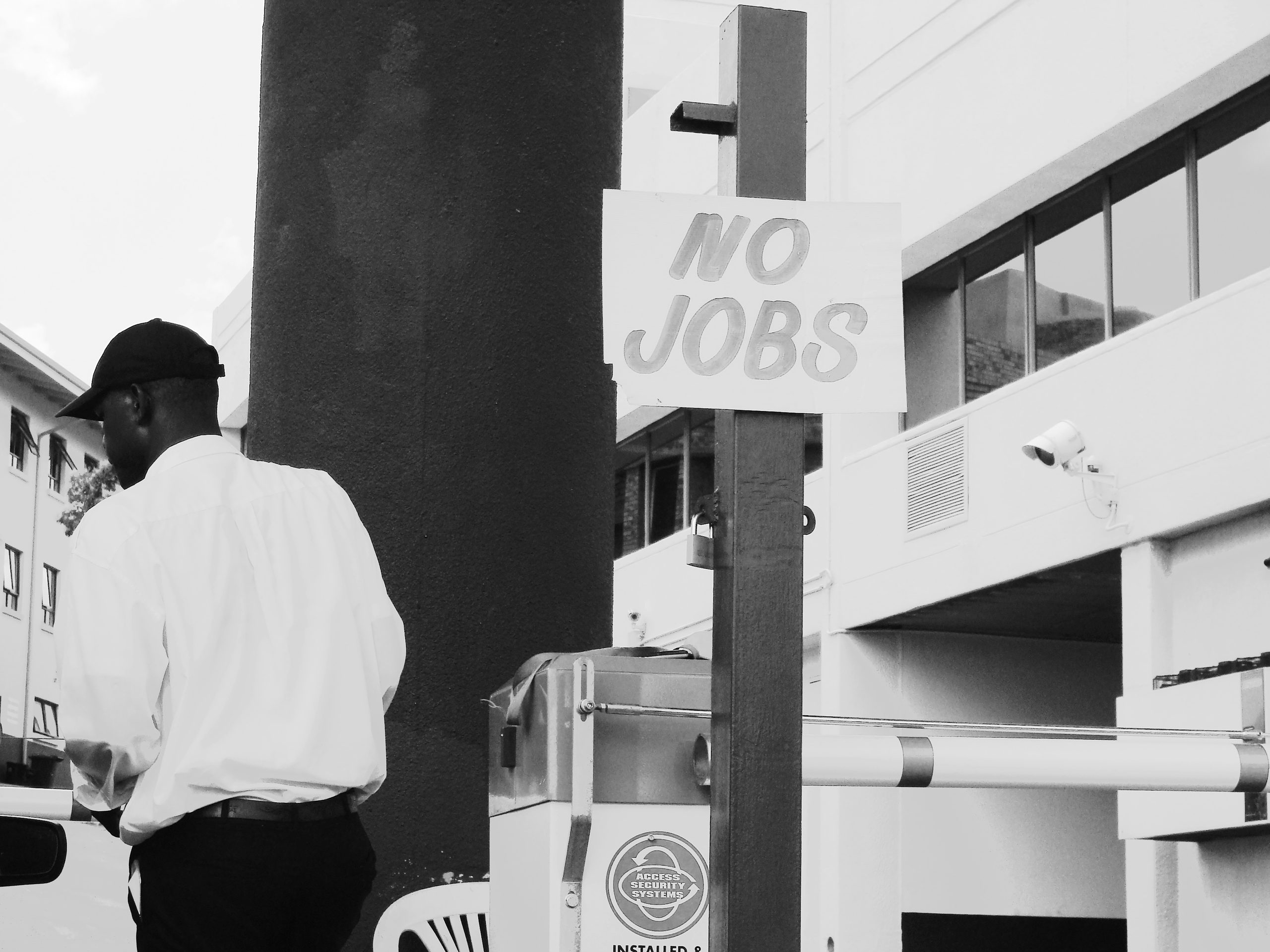
Did Harvard eliminate work—or only the people who were doing it?
It's too early to declare the resulting organization healthier. The boxes can look tidy on an org chart while the actual work starts piling up on the desks of whoever's left to cover the gap.
Does every essential responsibility still have an owner? Did they remove capacity that a smaller program still needs to function?
The answers will determine whether this was genuine right-sizing or just a condensed version of the same underlying problem.
Still, the process matters. Harvard spent significant time examining their operating model before it cut heads. That’s a materially different decision from removing current capacity because you expect a new kind of capacity to arrive.
Meta’s plan reportedly imagined “pods” (smaller teams using AI) to explore more ideas with fewer people and less management. Human resources was reportedly tasked with identifying people who could accomplish the work of much larger groups with the help of AI.
Essentially, playing Moneyball with their best operators, and cutting everyone else loose.
Redesigning work around new technology isn't revolutionary. Technological shifts change what people do, how organizations operate, and which capabilities they need.
But the sequence matters.
That sequence was creating internal friction. Meta cut roughly 10% of its workforce in May. By June, Wired reported that Meta's CTO called the AI division rollout “atrocious” and acknowledged that moving too fast had damaged employee trust.
In other words, Meta removed present capacity based on future capacity that they believed would come, but hadn’t been adequately proven.
Which means SOMEONE (staff, customers, and the rest of Meta's operations) has to absorb the cost if the prediction is wrong.
AI can crank out a lot of output and accelerate activity, but more activity is not necessarily more useful capacity.
Did the tools perform reliably?
Could they protect security and quality?
Could the remaining people recover when something went wrong?
Until those conditions are demonstrated, projected capacity is still a hypothesis.
You can build a pilot around a hypothesis, but restructuring your workforce around it is a much more expensive bet.
Soitec is betting on the upside of AI in an interesting way.
The company makes special silicon wafers used in AI data centers. Demand is climbing, and Soitec has a strong position in the market.
This is exactly the kind of moment when the Expansion Reflex tends to kick in!
"Build the factory, add capacity - now before someone else captures the opportunity! Seriously, if everyone agrees this is the future, what are we waiting for?"
Soitec is waiting for commitment.
The company is locking customers into multi-year agreements - with fixed pricing, deposits, committed purchase volumes, and penalties for falling short. They're also increasing production and infrastructure in existing facilities before even thinking about building a new factory.
Soitec isn’t ignoring the opportunity or refusing to grow. They're governing their Expansion Reflex.
Customers have to prove the demand before Soitec absorbs the cost of expanding to meet it.
That changes the risk calculation.
A forecast says someone may buy, but a deposit says someone is making a commitment.
A contract doesn’t eliminate uncertainty, but it turns enthusiasm into evidence. It also keeps the organization from carrying all the risk created by someone else’s optimistic plans.
That is capacity-aware growth.
A capacity move, in and of itself, does not tell you whether it was a smart decision.
Adding capacity can strengthen an organization or create more complexity than it can support.
Removing capacity can restore sustainability or eliminate capabilities the organization still needs.
Replacing capacity can improve performance or shift the burden onto tools and people that are not ready to carry it.
The better question is whether the move aligns with what the organization is trying to accomplish and what it can realistically sustain.
The key word being "sustain".
Harvard used contraction in an attempt to correct historical expansion. Enduring institutions will see this kind of right-sizing many times in its lifetime.
Meta pursued expansion through AI-enabled output. But it may have moved too soon by counting on unproven technological capacity before it was reliably available.
Soitec is preparing to expand while requiring the opportunity to meet specific conditions first.
Each organization is making a different capacity decision because each is responding to a different combination of demand, constraints, capabilities, and risk.
Before deciding, ask:
Alignment doesn't mean choosing the safest option.
It means choosing the option that fits the organization’s purpose, capacity, timing, and evidence - and being ruthlessly honest about what the decision will require.
Before adding capacity, leaders need evidence that demand is real enough to support it.
That may mean committed revenue, deposits, signed contracts, stable funding, adequate leadership attention, or proof that existing capacity cannot meet the need.
Before removing capacity, leaders need evidence that the organization can function without it.
What work is being eliminated? What work will remain? Who will own it? What institutional knowledge could disappear? What will happen when demand spikes or something goes wrong?
And before replacing capacity, leaders need evidence that the replacement can carry the real work, not just perform well in a carefully orchestrated test case.
Can it operate reliably at scale? Does it produce useful outcomes rather than more activity? What human capacity must remain for judgment, recovery, relationships, and the problems nobody predicted?
I'm not saying to circle the decision endlessly. Sometimes waiting carries more risk than moving.
But urgency does not make an assumption true, just because you want it to be true.
The greater the cost of reversing a decision, the more evidence the move should require.
Here's the important asterisk: Not every decision deserves the same standard of proof.
A reversible experiment can stand a little more uncertainty because the organization has room to learn and recover.
But once a decision becomes expensive or difficult to undo, you need more than hope to keep the ship sailing.
The One Move That Matters® is not automatically bigger, faster, smaller, or safer.
It's the move the organization can actually sustain based on the conditions that exist, not merely the future everyone hopes will arrive.
Is your organization considering an expansion, restructuring, or AI-enabled capacity decision? I help leaders see the real decision, test the Conditions for Success, and sequence the move before momentum makes it expensive. Let’s talk.